Live coverage has ended. The full story is below.
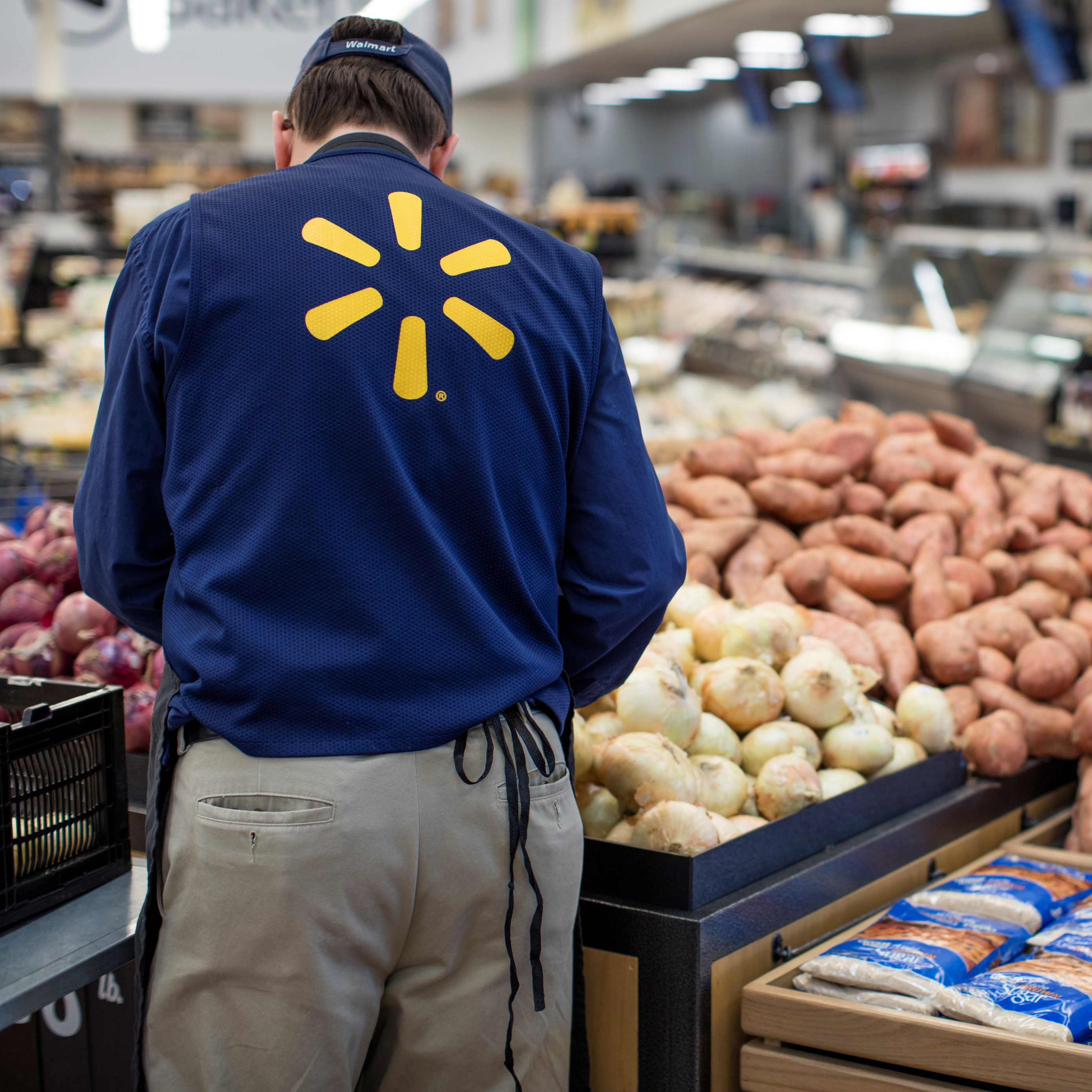
Walmart (NYSE: WMT | WMT Price Prediction) is out with earnings this morning.
Adjusted EPS of 61 cents beat by three cents. Revenue of $165.6 billion, up 2.5% yearly, beat by $1.17 billion. Its free cash flow of $0.4 billion increased by $0.9 billion.
U.S. comparable sales jumped 4.5% in the quarter, though that’s slowed from a 4.6% bump in the previous quarter, and a 5.3% increase in the third quarter of 2024. Global sales jumped 22% from 16% quarter over quarter, as well.
It also expects sales growth of 3.5% to 4.5% in the second quarter. Not only was that great news for WMT but also for Costco (NASDAQ: COST) and Target (NYSE: TGT).
However, Walmart just revealed a key economic problem
Walmart can’t absorb all the pressure from tariffs, noting:
“We will do our best to keep our prices as low as possible but given the magnitude of the tariffs, even at the reduced levels announced this week, we aren’t able to absorb all the pressure given the reality of narrow retail margins,” Walmart CEO Doug McMillon said.
After all, about a third of Walmart’s spending goes into products made outside of the U.S., including China, which raises its cost.
In addition to the potential for higher prices, we also have to consider that many Americans are starting to cut back on spending. All thanks to economic uncertainty and elevated inflation.
Unfortunately, while tariffs are lower for the next 90 days, prior and potentially higher tariffs do threaten Walmart’s lower cost model and, in the end, consumers.
As goes Walmart, so does the economy
That’s a clear warning of what could happen if the trade war worsens.
After all, the trade war is still in play. What comes after a 90-day delay is anyone’s best guess. With that, retailers, like Walmart, Costco, and Target could be forced to raise prices even more because they can’t absorb the extra cost.
Walmart is the first major US retailer to report financial results this quarter. It’s also one of the first that can provide a hint as to the mood of consumers and the impact of tariffs.
In short, tariffs are starting to have a substantial impact.
If uncertainty persists after the 90-day agreement between the US and China, an intensifying trade war could have severe negative impacts on retailers and consumers.
Contact [email protected] for any questions or corrections.