Is This What Catapults Walmart to a $1 Trillion Valuation?
An Expanding Trillion-Dollar Club Once a rare milestone, trillion-dollar valuations are becoming less exclusive, with ten companies — including tech giants like Nvidia (NASDAQ:NVDA | NVDA Price Prediction), Microsoft (NASDAQ:MSFT), and Apple (NASDAQ:AAPL) — having crossed the nine-figure mark. Walmart…

This post may contain links from our sponsors and affiliates, and Flywheel Publishing may receive compensation for actions taken through them.

An Expanding Trillion-Dollar Club
Once a rare milestone, trillion-dollar valuations are becoming less exclusive, with ten companies — including tech giants like Nvidia (NASDAQ:NVDA | NVDA Price Prediction), Microsoft (NASDAQ:MSFT), and Apple (NASDAQ:AAPL) — having crossed the nine-figure mark.
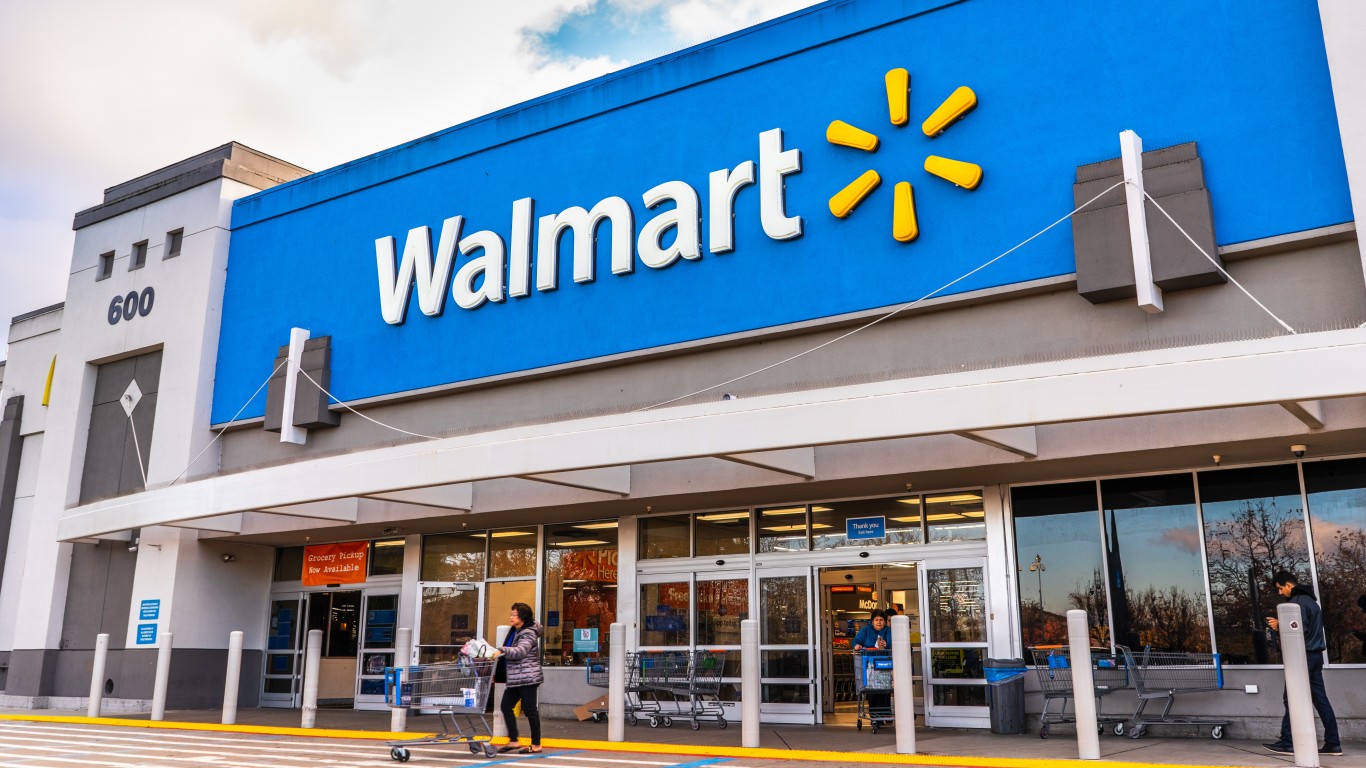
Walmart (NYSE:WMT), the world’s largest retailer, is within striking distance, boasting a current market valuation of $803.6 billion. As tariffs reshape global trade and consumer prices, Walmart’s strategic response could be the catalyst to propel it past the $1 trillion threshold.
While the retailer has long been synonymous with low prices, its ability to navigate tariff-driven cost pressures while maintaining customer loyalty and boosting revenue could elevate its stock to new heights. But will tariffs, which are driving price hikes across retail, be the key to pushing Walmart over the finish line, or will they challenge its low-price legacy?
Already Using Tariffs for Gains?
Walmart’s reputation as the low-price leader is under scrutiny as consumers on social media report significant price increases, attributing them to tariffs. Posts highlight specific examples, such certain produce shifting to per-item pricing, aligning with broader sentiment that Walmart is passing tariff costs to consumers rather than absorbing them.
Walmart would dispute this, with CFO John David Rainey telling analysts during the second-quarter earnings call, “we’re not intending to achieve any of our margin performance by passing this along to our customers and members in the form of higher prices.” Still, media reports some significant price hikes taking place.
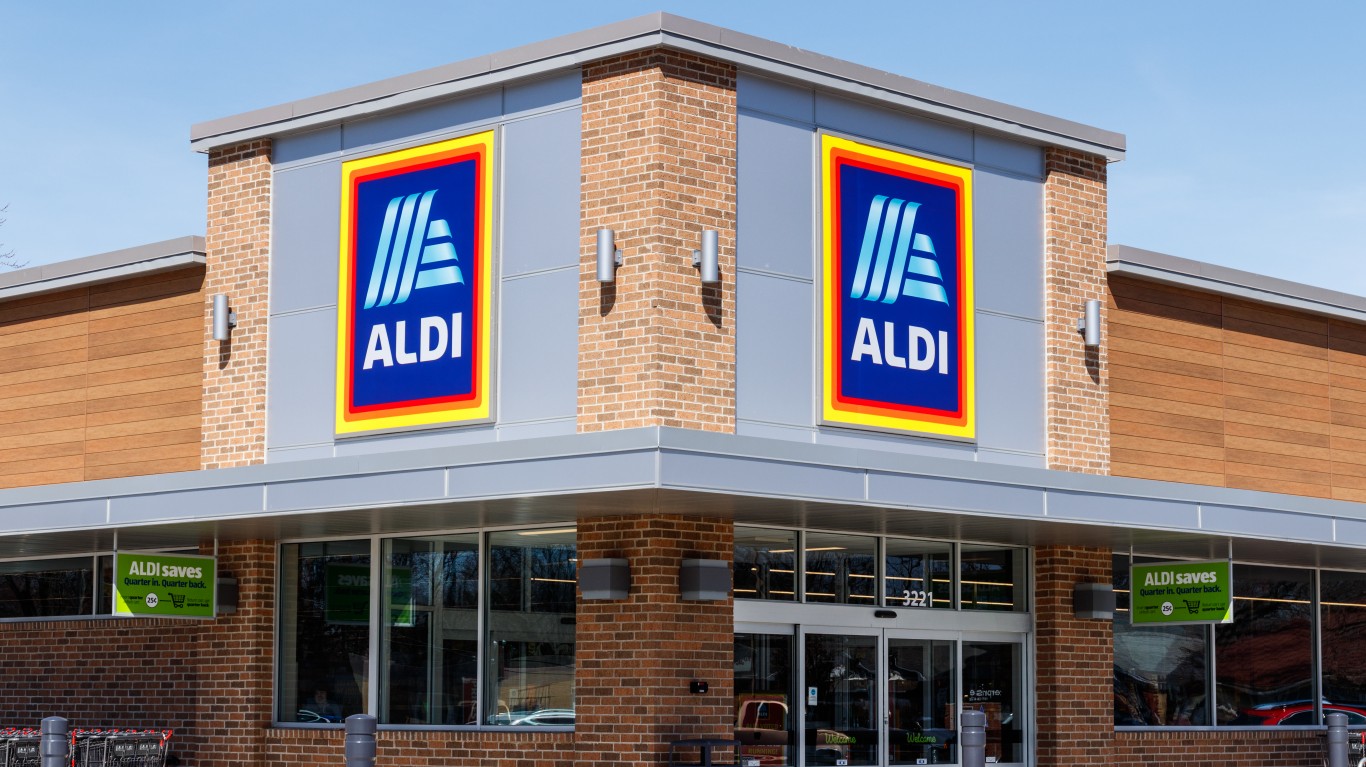
Despite its low-price image, Walmart isn’t always the cheapest. A May Ramsey Solutions study found Aldi’s 29-item grocery basket in Tennessee cost $11 less than Walmart’s, with Aldi cheaper on 24 items, including produce and dairy. A June Business Insider comparison in North Carolina showed Aldi’s basket was $27 less, with Walmart only beating Aldi on chicken thighs. Lidl’s prices were nearly identical to Walmart’s in a January Charlotte Observer study, while Publix‘s 15-item basket was $7 to $10 more expensive.
These surveys suggest Walmart’s pricing edge is slipping against discount rivals, challenging its low-price narrative.
The Core of Walmart’s Strategy
Groceries account for roughly 60% of Walmart’s U.S. net sales, a segment largely sourced domestically, shielding it from some tariff impacts compared to rivals like Target (NYSE:TGT), which relies more on imported goods.
Walmart’s CEO, Doug McMillon, emphasized in the retailer’s Q1 earnings call a commitment to keeping food prices as low as possible, using tactics like absorbing costs within categories or swapping materials (such as buying items made with fiberglass instead of aluminum) to offset tariff effects.
However, with tariffs on countries like China and others driving up costs for electronics and produce, Walmart has selectively raised prices.
If Walmart can pass on these costs without alienating its price-sensitive customer base, it could boost revenue while maintaining margins better than competitors like Kroger (NYSE:KR) or Costco (NASDAQ:COST) that lack Walmart’s e-commerce and advertising revenue streams.
Rising sales and solid margins typically drive stock price growth, and Walmart’s 4.2% U.S. comparable sales increase in Q2, fueled by groceries and health products, signals comparative strength.
If rivals absorb tariff costs to stay competitive, Walmart’s strategic price hikes could make it look like a better value, attracting higher-income shoppers and further boosting its market share.
Competitors Undergoing a Tariff Squeeze
Retailers operate on thin margins, and absorbing tariff costs long-term is unsustainable. Companies like Procter & Gamble (NYSE:PG) and Hasbro (NASDAQ:HAS) have already signaled price increases, while Target’s CEO called hikes a “last resort.”
Walmart’s scale and supplier leverage give it an edge, allowing it to negotiate better deals or spread cost increases across categories. As competitors raise prices, Walmart’s selective increases may appear less drastic, reinforcing its value proposition. This dynamic could drive investor confidence, pushing WMT’s stock closer to the $1 trillion mark.
Key Takeaway
To reach a $1 trillion valuation, Walmart needs a roughly 24.4% increase from its current market cap, equivalent to a stock price rise of about $18.50 per share (assuming 4.34 billion shares outstanding).
By guarding its bottom line through strategic price adjustments and leveraging its grocery dominance, Walmart could achieve this valuation sooner than expected, especially if competitors’ price hikes make Walmart’s offerings seem more attractive.
With its second-quarter sales growth and a diversified revenue stream, Walmart is well-positioned to capitalize on tariff-driven market shifts, meaning the retail giant will likely become a trillion-dollar stock sooner rather than later. It will arguably happen faster than some anticipated, as Walmart piggybacks on tariffs to boost revenue while maintaining its competitive edge.
Contact [email protected] for any questions or corrections.
After two decades of patrolling the dark corners of suburbia as a police officer, Rich Duprey hung up his badge and gun to begin writing full time about stocks and investing. For the past 20 years, he’s been cruising the markets looking for companies to lock up as long-term holdings in a portfolio while writing extensively on the broad sectors of consumer goods, technology, and industrials. Because his experience isn’t from the typical financial analyst track, Rich is able to break down complex topics into understandable and useful action points for the average investor. His writings have appeared on The Motley Fool, InvestorPlace, Yahoo! Finance, Money Morning, and, of course, 24/7 Wall St. He has been featured in both U.S. and international publications, including MarketWatch, Financial Times, Forbes, Fast Company, and USA Today.