AI Bubble/Crash Worries Are Gripping Wall Street: 4 Ultra-Safe Ideas for Worried Boomers
Concentrating on ultra-safe investments where the principal is protected and guaranteed makes sense with the stock market resting on a vulnerable precipice.


The concerns around an artificial intelligence bubble basically center on whether the massive investments flooding into AI can justify their enormous costs and deliver on their transformative promises. Critics worry that the sector is experiencing irrational exuberance reminiscent of the dot-com boom. Tech companies are spending hundreds of billions on AI infrastructure, startups are commanding sky-high valuations based on potential rather than profits, and enterprises are rushing to implement AI solutions without clear use cases or return on investment.
The fundamental worry is that current AI capabilities, while impressive, may not be revolutionary enough to justify the trillions in market capitalization tied to AI expectations. Many across Wall Street feel we could be overestimating the near-term impact while underestimating the time and resources needed for AI to transform industries truly. If the bubble pops, the high-energy Magnificent 7 stocks that have dominated the stock market for almost three years could tumble and take the rest of the market with them.
Although devastating, a market crash or severe correction is manageable if you are in your 40s and earning your peak income. However, for Baby Boomers who have enjoyed unprecedented gains over the past 35 years, being overweight in the stock market now is like picking up nickels in front of a bulldozer, and it could be a fatal blow to their retirement savings. Examine the data we collected on the impact of major market crashes. The recovery time can be much longer than recessions or regular bear markets, sometimes taking decades:
- The 1929 Crash lasted until 1932, and the Dow did not fully recover until November 1954.
- The dot-com stock correction/crash in March 2000 took 13 years to recover fully.
- The Panic of 1907 took the stock market 20 years to return to its pre-crash level.
The youngest Baby Boomers turned 60 last year, while the oldest are closing in on 80 in 2026. Moving most of your investments out of S&P 500 index funds and concentrating on ultra-safe investments where the principal is protected and guaranteed makes sense now, with the stock market resting at a vulnerable precipice.
Exchange Traded Treasury Bill Funds (ETFs)

Unlike open-end mutual funds, ETFs trade on major exchanges like stocks. They own financial assets such as stocks, bonds, currencies, debts, futures contracts, and commodities such as gold bars. One significant advantage ETFs have is that they can be bought or sold at any time the markets are trading. In addition, there is a large market and demand from investors for exchange-traded funds.
One of the funds we highly recommend at 24/7 Wall St. is the SPDR Bloomberg 1-3 Month T-Bill ETF (NYSE: BIL). The fund invests substantially all, but at least 80%, of its total assets in the securities comprising the index and in securities that the Adviser determines to have economic characteristics substantially identical to the financial characteristics of the securities comprising the index. The index measures the performance of public obligations of the U.S. Treasury that have a remaining maturity of 1 month or more and less than 3 months.
The State Street website says this when describing the fund:
- The SPDR Bloomberg 1-3 Month T-Bill ETF seeks to provide investment results that, before fees and expenses, correspond generally to the price and yield performance of the Bloomberg 1-3 Month U.S. Treasury Bill Index.
- Seeks to provide exposure to publicly issued U.S. Treasury Bills that have a remaining maturity between 1 and 3 months.
- Short-duration fixed income is less exposed to fluctuations in interest rates than longer-duration securities.
- Rebalanced on the last business day of the month.
The fund currently pays a 4.26% yield and a monthly dividend/interest payment of $0.3828. Investors need to know that the price of the ETF will drop by that amount when the dividend is paid. However, at $91.47 at the time of this writing, that is a tiny amount each month.
With a tiny 0.14% expense ratio and daily liquidity, it is perfect for those who cannot afford a massive loss of principal.
High-yield money market funds (HYSA)

A high-yield money market fund, or high-yield savings account (HYSA), is an investment that aims to generate income while keeping the principal relatively stable and liquid. It is considered a low-risk investment and can have higher interest rates than savings accounts. Money market funds invest in short-term securities, such as government securities, commercial paper, and corporate debt.
They are intended to be safe and not lose value. Best of all, you can withdraw cash from a money market fund without penalties. In addition, they pay interest monthly, and the FDIC insures them up to $250,000.
Here are the rates from some well-known companies that we recommend:
- American Express High Yield Savings: 3.50%
- PNC Bank High Yield Savings: 3.85%
- CIT Bank Platinum Savings: 3.85% on balances of $5,000 and more
U.S. Treasury bonds

Treasury bonds include a range of debt securities issued and backed by the U.S. government. Sell high-volatility stocks and look at the short end of the Treasury market. The two-year note, like all Treasury debt, is guaranteed by the full faith and credit of the United States and yields 3.55%. Those with the ability to look farther down the road could buy the five-year bond, which yields 3.65%, or the seven-year bond, which yields 3.85%.
Open-End Mutual Funds
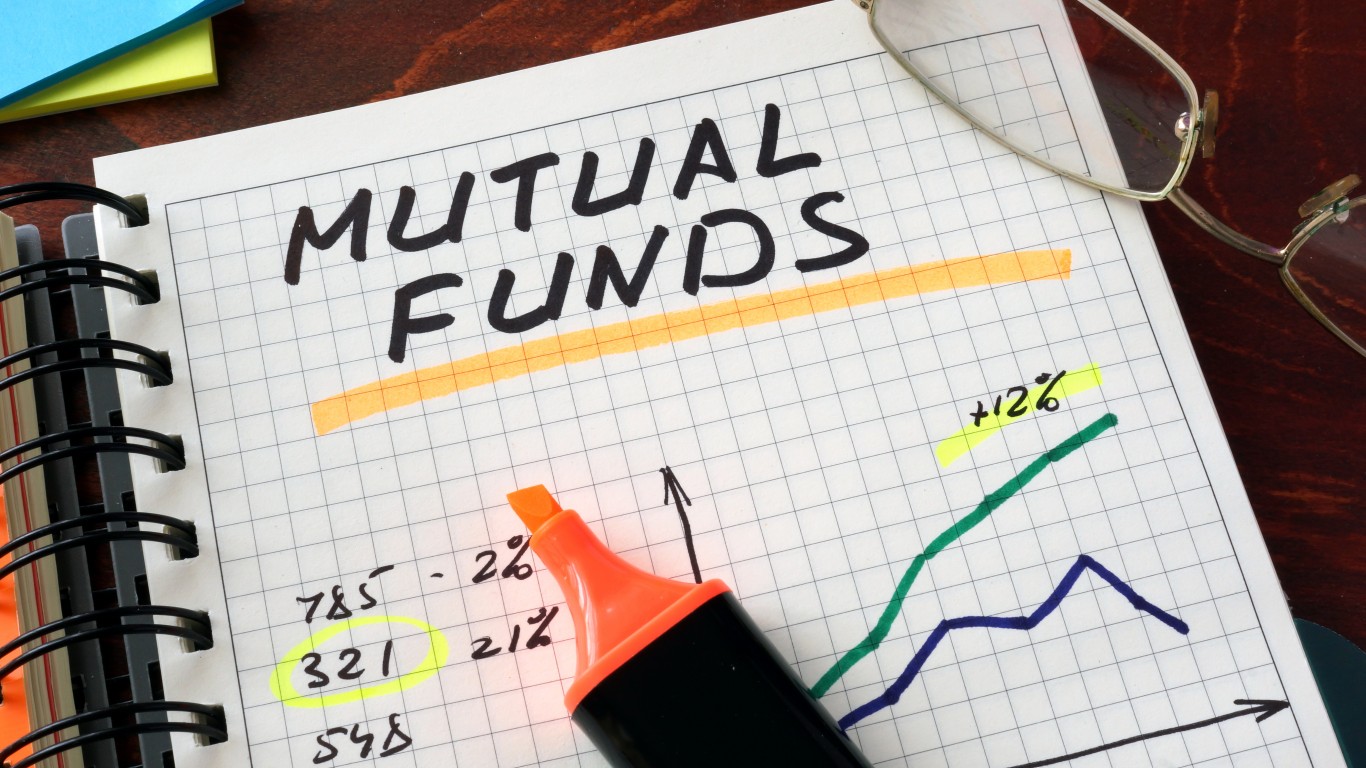
An “open-end mutual fund” is a type of investment fund that allows investors to buy or sell shares at any time, based on the current net asset value (NAV) of the fund, essentially meaning new shares are created when investors want to buy in, and shares are redeemed when investors want to sell out, providing continuous liquidity compared to closed-end funds with fixed entry and exit points; this makes open-end funds highly accessible for investors to enter and exit as needed.
Both closed-end and open-end funds provide efficient investment options. Closed-end funds trade on exchanges throughout the day, while open-end funds are typically redeemed or bought at net asset value once daily.
We recommend the BlackRock Liquidity Funds – FedFund (BFCXX), which currently yields 4.02%. The fund maintains a $1 net asset value and can be bought and sold daily.
The BlackRock website says this when describing the fund:
FedFund invests at least 99.5% of its assets in cash, U.S. Treasury bills, notes, and other obligations issued or guaranteed as principal and interest by the U.S. Government, its agencies, or instrumentalities, and repurchase agreements secured by such obligations or cash. The yield of the Fund is not directly tied to the federal funds rate. The Fund invests in securities maturing in 397 days or less (with certain exceptions), and the portfolio will have a dollar-weighted average maturity of 60 days or less and a dollar-weighted average life of 120 days or less. The Fund may invest in variable and floating rate instruments and transact in securities on a when-issued, delayed delivery, or forward commitment basis.
Four Stocks That Yield 12% and Higher Are Passive Income Kings
Contact [email protected] for any questions or corrections.
Lee Jackson has covered Wall Street analysts' equity and debt research and equity strategy daily for 24/7 Wall St. since 2012. His broad, diverse career, including a stint as creative services director at an NBC affiliate in Austin, Texas, gives him unique insight into the financial industry.
Lee Jackson's journey in the financial industry spans more than 30 years, including nearly two decades as an institutional equity salesperson at Bear Stearns, Lehman Brothers, and Morgan Stanley. His career spanned pivotal sell-side Wall Street events, from the dot-com rise and bubble to the Long-Term Capital Management debacle, 9/11, and the Great Recession of 2008. This reflects his resilience and adaptability amid market volatility.
Lee Jackson’s practical financial industry experience, gained through a career at some of the biggest banks and brokerage firms, is complemented by a lifetime of writing across various platforms. This unique combination allows him to shed light on the intricacies of Wall Street in a way only someone with deep insider experience and knowledge can. Moreover, his extensive network across Wall Street continues to provide direct access for him and 24/7 Wall St., a privilege few firms enjoy.
Since 2012, Jackson’s work for 24/7 Wall St. has been featured in Barron’s, Yahoo Finance, MarketWatch, Business Insider, TradingView, Real Money, The Street, Seeking Alpha, Benzinga, and other media outlets. He attended the prestigious Cranbrook Schools in Bloomfield Hills, Michigan, and has a degree in broadcasting from the Specs Howard School of Media Arts.