Salesforce Commands 70% Premium Over Adobe Despite Lower Margins on Agent Bet
Adobe (NASDAQ: ADBE | ADBE Price Prediction) and Salesforce (NYSE: CRM) both reported earnings showing software giants racing toward AI through completely different routes. Adobe embedded generative tools into its creative suite and launched standalone AI products. Salesforce built an…

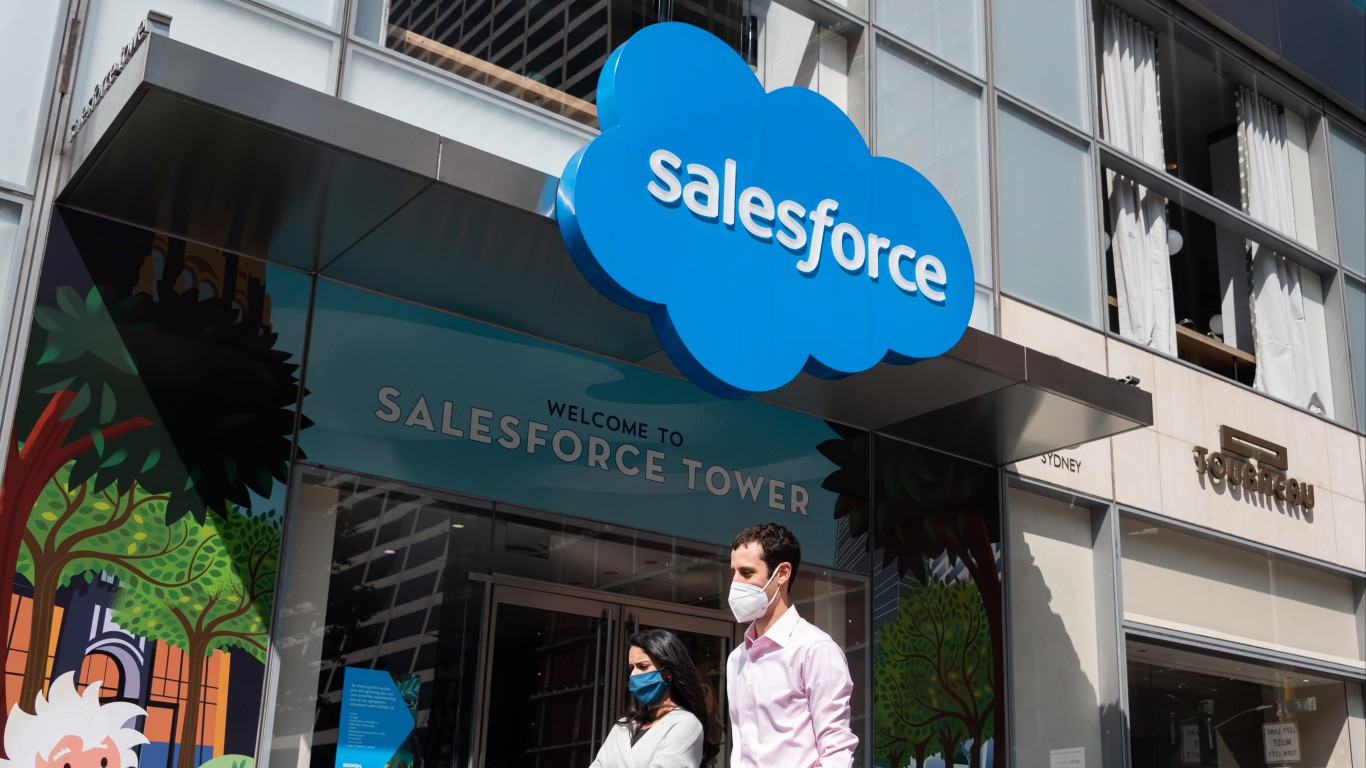
Adobe (NASDAQ: ADBE | ADBE Price Prediction) and Salesforce (NYSE: CRM) both reported earnings showing software giants racing toward AI through completely different routes. Adobe embedded generative tools into its creative suite and launched standalone AI products. Salesforce built an entire autonomous agent platform designed to handle tasks without human intervention.
Creative Tools Meet AI Agents
Adobe’s Q3 fiscal 2025 results centered on speed. The company hit $5 billion in AI-influenced annual recurring revenue, surpassing its full-year target early. Digital Media ARR reached $18.59 billion, up 11.7% year over year. CEO Shantanu Narayen said AI represents “the biggest opportunity for Adobe in decades.” GenStudio products, including Workfront and Firefly Services, now exceed $1 billion in ARR and are growing over 25% annually. Adobe’s AI assistant for Acrobat saw 70% adoption among eligible customers.
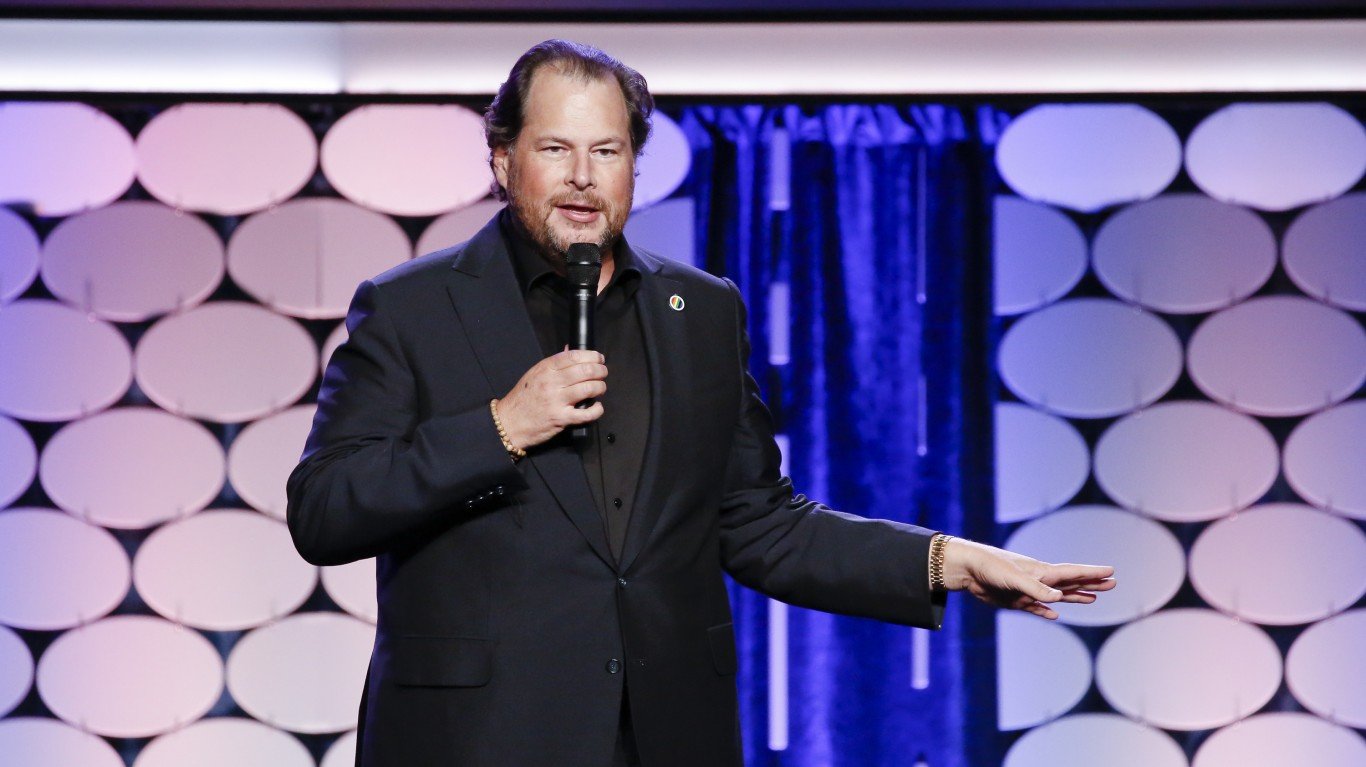
Salesforce’s Q2 fiscal 2026 revenue of $9.33 billion grew 8% nominally and 9% in constant currency. The company processed 25 trillion Einstein AI transactions during the quarter and manages 250 petabytes of customer data. CEO Marc Benioff announced Agentforce, a platform for autonomous AI agents that go beyond copilots to handle complete workflows. He told analysts, “The future isn’t about having a sales force or a service force… the future is about also having an agent force.” Early customer deployments showed 90% resolution rates for patient and employee inquiries.
Profitability Versus Scale
The financial profiles diverge sharply. Adobe reported a 30% net profit margin on $23.2 billion in trailing twelve-month revenue. Salesforce posted 16.9% margins on $39.5 billion in revenue. Adobe’s return on equity hit 52.9% compared to Salesforce’s 11.2%. Operating margins followed the same pattern: 36.3% for Adobe, 22.8% for Salesforce.
| Metric | Adobe | Salesforce |
| Net Margin | 30.0% | 16.9% |
| Operating Margin | 36.3% | 22.8% |
| ROE | 52.9% | 11.2% |
| Revenue (TTM) | $23.2B | $39.5B |
Yet Salesforce trades at a 34x trailing P/E ratio while Adobe sits at 20x. The market values Salesforce’s larger scale and agent strategy over Adobe’s superior profitability. Salesforce also showed faster earnings acceleration, with 33.3% year-over-year EPS growth versus Adobe’s 11.2%.
Different Paths to AI Revenue
Adobe monetizes AI by adding premium features to existing subscriptions and launching new products like Acrobat Studio. The company uses its own Firefly models alongside partnerships with OpenAI, Google Gemini, and others. This multi-model approach lets customers choose tools while keeping Adobe as the interface layer.
Salesforce built a three-tier architecture: Customer 360 applications at the base, Data Cloud in the middle, and an agent layer on top. Benioff described this as extending companies with AI workforces that augment human employees. Data Cloud and Agentforce platform already generates $1.2 billion in ARR, growing 120% year over year according to analyst reports.
Market Performance and Valuation
Adobe’s stock fell 38% over the past year while Salesforce held steadier. The two companies trade at different valuation multiples despite their profitability differences. Adobe trades at a 20x trailing P/E ratio with a 30% net margin, while Salesforce trades at 34x with a 17% net margin. Adobe’s higher profitability metrics include a 30% net margin and 52.9% return on equity compared to Salesforce’s 17% margin and 11.2% ROE. Salesforce’s agent strategy represents a significant shift in enterprise software architecture, though the company faces execution challenges as it scales the platform. Analysts have set price targets that reflect different views on each company’s AI strategy execution and growth potential.
Contact [email protected] for any questions or corrections.
I write to invest, and I invest to spend more time with nature. Usually all at the same time. I'm a retired equities guy who saw a recession or four, and lives for what comes out of the other side of them.
I cover stocks across the board cause even though I feel like I've seen it all, there's always another way out there to make, and lose money. I want to help you do more of the former, and none of the latter. Making money with friends is my oxygen.
Let's go!