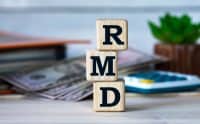
Today Is the Last Day to Take Your RMDs Without a Steep Penalty
Saving for retirement in a traditional IRA or 401(k) can make more sense than socking money away in a Roth account. That’s because traditional retirement accounts give you a tax break on your contributions. If you’re a higher earner…


Saving for retirement in a traditional IRA or 401(k) can make more sense than socking money away in a Roth account. That’s because traditional retirement accounts give you a tax break on your contributions.
If you’re a higher earner in a higher tax bracket, that tax break may be very valuable to you. Plus, you might earn too much money to contribute to a Roth IRA directly, making a traditional IRA a better bet.
But there’s a downside to having your savings in a traditional retirement plan. Once you turn 73 (or 75 if you were born in 1960 or any year after), you need to start planning for required minimum distributions (RMDs). And if you haven’t arranged for your 2025 RMD already, you may want to get moving ASAP.
Don’t risk a steep RMD penalty
If you turned 73 this year, you can defer your first RMD to April 1 of next year. That may not be the best move, since it will mean having to take two RMDs the same calendar year. But it’s an option if you’ve yet to take your RMD for 2025 and don’t want to scramble.
However, if it’s not your first RMD, the absolute last day to take that withdrawal penalty-free is December 31. So if you haven’t initiated that RMD already, you should basically drop whatever you’re doing and make arrangements for that money to come out of your account today.
If you don’t take your RMD on time, you face a 25% penalty on the amount you fail to remove. And while it’s possible to get that penalty reduced to 10% if you correct your mistake within two years, that could still end up being a lot of money to lose.
Say you’re looking at a $20,000 RMD this year. Your best-case scenario is a $2,000 penalty, and your worst-case scenario is a $5,000 penalty, if you don’t take that withdrawal by Dec. 31.
Now that said, in some cases, the IRS may be willing to waive your penalty entirely. But there needs to be a good reason for it.
If you can prove that you didn’t take your RMD on time because of an illness or injury, an administrative glitch, or incorrect advise on behalf of someone managing your account, then you may be let off the hook as far as a penalty goes. But the IRS won’t waive your penalty because you got distracted or forgot.
Making the most of your RMD
If you have home repairs or other big expenses you’ve been putting off, your RMD could be a great way to cover those costs. But what if you don’t have an obvious use for the money?
If that’s the case, don’t spend it. Instead, reinvest it. You can’t put it back into a tax-advantaged retirement account, but you can use it to buy stocks or ETFs in a taxable brokerage account, purchase bonds, or set up a CD ladder.
Otherwise, consider using the money for something special. Treat your grown kids to a vacation in 2026. Upgrade some furniture, even if there’s nothing wrong with it. Or treat yourself to that watch or piece of jewelry you’ve always wanted.
Your RMD represents money you’ve saved. As long as you plan for the tax bill it’s apt to trigger, there’s no reason not to try enjoying that money to the fullest.
Contact [email protected] for any questions or corrections.
Maurie Backman has more than a decade of experience writing about financial topics, including retirement, investing, Social Security, and real estate. Her work has appeared on sites that include The Motley Fool, USA Today, U.S. News & World Report, The Washington Post, and Kiplinger.
Prior to becoming a full-time financial writer, Maurie worked in the financial industry trading distressed debt. She then changed course and spent a few years designing electronic toys. After a stint in content marketing and UX, she shifted back into writing and has since covered everything from the housing market to estate planning to Medicare.
When she's not busy writing, Maurie can be found hiking, walking her dogs, driving her kids to their various sports practices and games, and curling up with a good book. She cooks on occasion and bakes way too often.