Carvana Drops 15% This Week: Here’s The 3 Biggest Storylines
Carvana’s wild ride hit a speed bump this week. The online used car retailer dropped 14.98% over the past five trading days, closing at $343.19 on Friday. That’s a steeper decline than the broader market’s 1.29% dip and the Consumer…

This post may contain links from our sponsors and affiliates, and Flywheel Publishing may receive compensation for actions taken through them.

Carvana’s wild ride hit a speed bump this week. The online used car retailer dropped 14.98% over the past five trading days, closing at $343.19 on Friday. That’s a steeper decline than the broader market’s 1.29% dip and the Consumer Discretionary sector’s 1.54% slide. Year to date, Carvana (NYSE:CVNA | CVNA Price Prediction) is down 18.68%, though it’s still up 26% over the past year.
Three storylines explain what’s driving the selloff and what it means for the company’s trajectory.
Insider Selling Raises Eyebrows
Carvana’s executive team has been systematically liquidating shares. On February 2, 2026, CFO Mark Jenkins sold 12,058 shares across 21 separate transactions at prices ranging from $393.05 to $418.87. COO Benjamin Huston unloaded 10,628 shares the same day. The day before, eight executives sold at the identical price of $401.11, suggesting coordinated Rule 10b5-1 plan execution.
The pattern extends back months. In December 2025, Chief Product Officer Daniel Gill sold 120,000+ shares at prices between $429 and $476. COO Huston dumped 100,000+ shares during the same period. What’s notable: executives are exercising stock options at $0.0 and immediately selling rather than holding newly vested equity.
There are no open-market purchases in the data, only liquidations of compensation. That’s not a confidence signal. If we zoom back an entire year, we find 55 open market buys, so it’s a little striking that there have been so few recently.
Retail Investors Sound the Alarm
Reddit sentiment turned decidedly bearish this week, with activity spiking on February 13. The dominant narrative shifted from valuation concerns to something more serious. On February 11, a post titled “Carvana CVNA Should Delay Earnings Report and Come Clean on Accounting Discrepencies” gained traction with 38 upvotes and 29 comments. By February 13, the conversation escalated to fraud allegations, with a post titled “Carvana $CVNA Fraud Comes To Light” drawing 153 upvotes and 145 comments.
The retail crowd is also positioning for downside. Options traders in r/options were discussing puts on February 11, signaling hedging or outright bearish bets. Sentiment scores dropped from 18 on February 5 to 10-12 by February 13, with the category remaining “Very Bearish” throughout.
Competitive Landscape Deteriorates
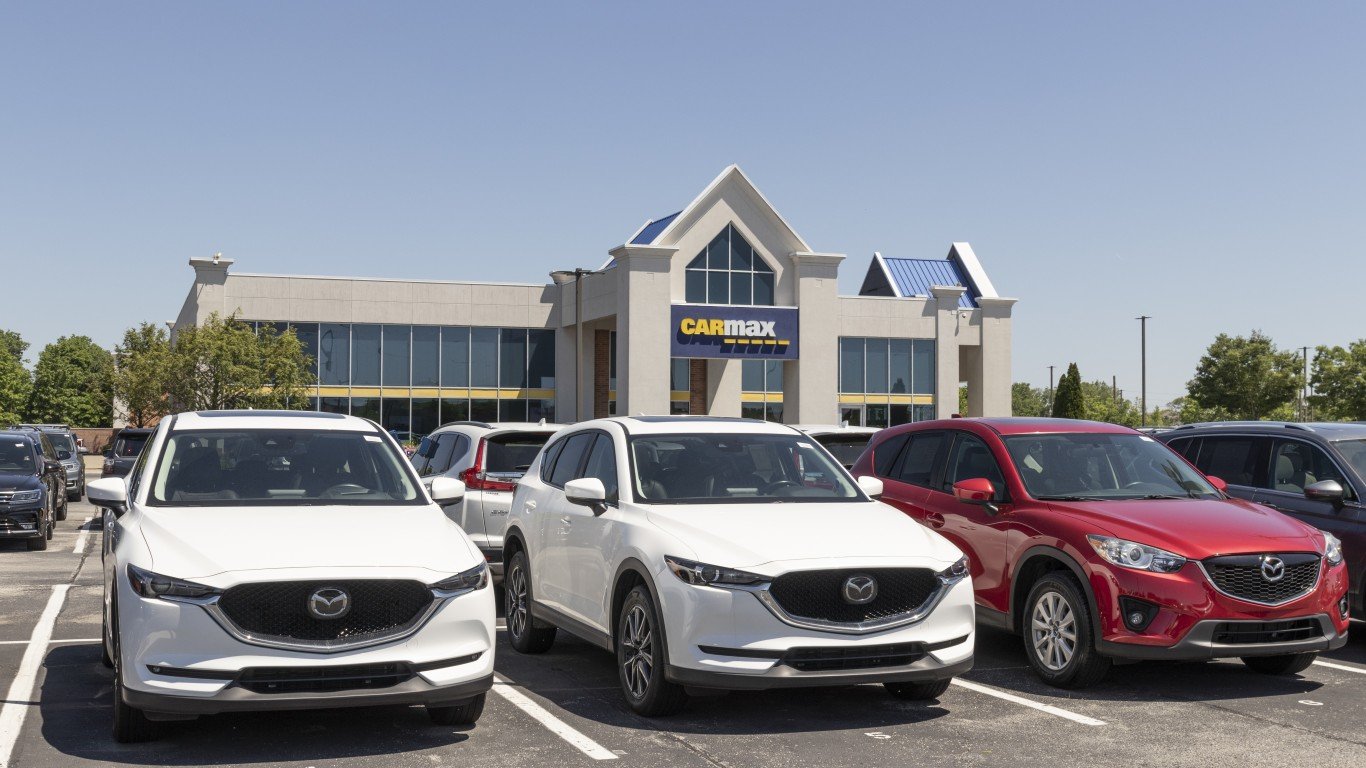
CarMax Inc (NYSE:KMX), Carvana’s primary competitor, dropped 12.19% this week, nearly matching Carvana’s decline. That’s significant because it suggests sector-wide pressure rather than company-specific issues. CarMax trades at 15x trailing earnings with a $6 billion market cap, while Carvana sits at 78x earnings with a $74.6 billion valuation. The valuation gap matters when both companies face the same headwinds.
If consumers are tightening spending on vehicles, both Carvana and CarMax feel it. The difference is Carvana’s valuation leaves no room for error, while CarMax trades like a mature retailer navigating a tough environment.
Contact [email protected] for any questions or corrections.
Eric Bleeker, CFA has been investing for more than 20 years. He began his career working at Microsoft before joining Motley Fool, one of the largest publishers of financial research. In his 15 years at Motley Fool Eric served as the General Manager for Fool.com and led coverage in the Technology & Telecom sector. In addition, he was a featured columnist and has hosted dozens of investing seminars attended by more than a million total investors. Eric has more than 1,000 financial bylines to his name and has been featured in The Wall Street Journal, CNBC, Fox Business, and many other leading publications. He is currently focused on artificial intelligence investing and is a CFA Charterholoder.