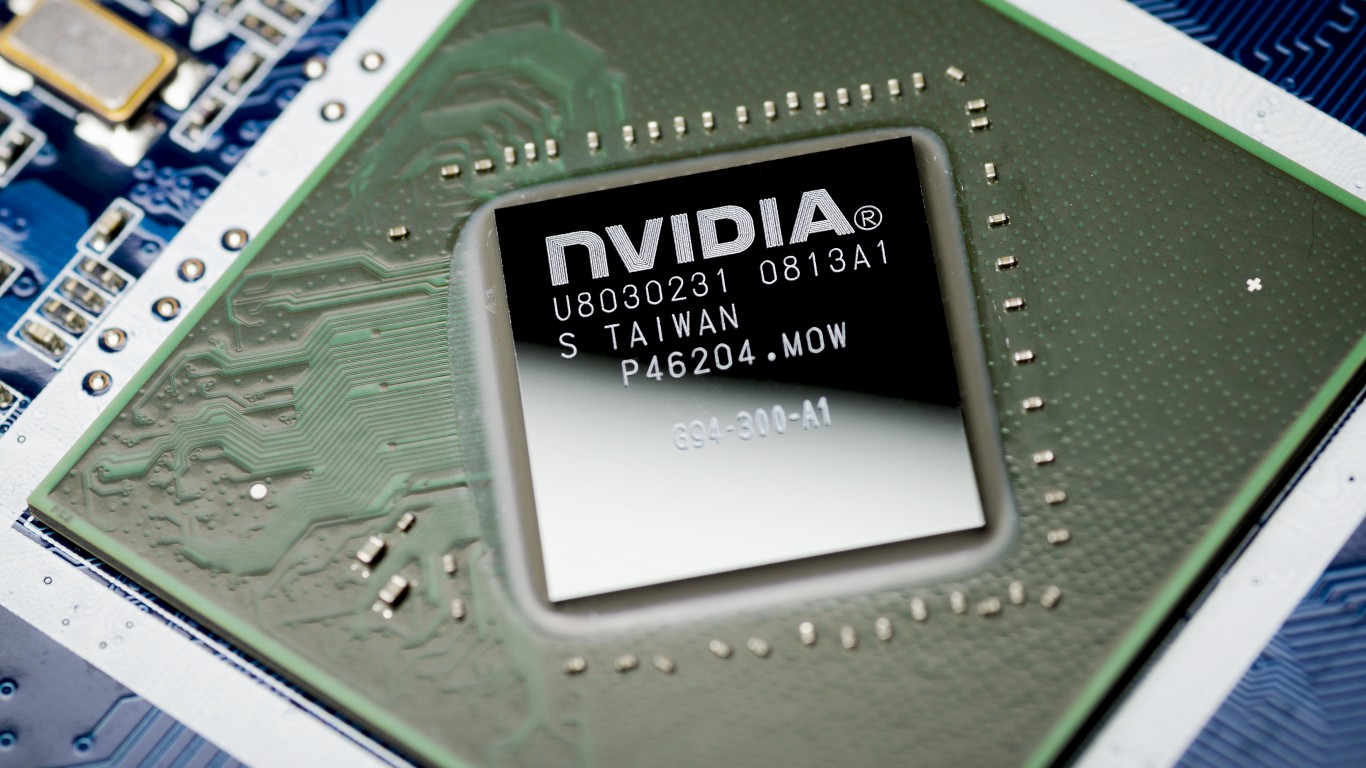
Jensen Huang Says Compute Power is the “New Natural Resource” of the Modern Era
Nvidia (NASDAQ:NVDA | NVDA Price Prediction) CEO Jensen Huang has been quite vocal in the past few months, and it’s really helped clear some of the haze that’s surrounding the industry. Undoubtedly, the AI revolution seems to be taking another…

This post may contain links from our sponsors and affiliates, and Flywheel Publishing may receive compensation for actions taken through them.
Nvidia (NASDAQ:NVDA | NVDA Price Prediction) CEO Jensen Huang has been quite vocal in the past few months, and it’s really helped clear some of the haze that’s surrounding the industry. Undoubtedly, the AI revolution seems to be taking another big step higher after spending much of last year in a calmer phase.
With Claude Opus 4.6 turning many of its users into believers, and GPT-5.3-Codex also taking the world by storm, it’s hard not to think that the pace of AI advancement is starting to pick up again. Perhaps it’s too fast for the comfort of many shareholders hanging onto their SaaS holdings. While the latest agentic wave of coding tools may very well pave the way for some form of AGI sooner rather than later.
In the meantime, though, it’s really hard to be an investor in the middle of a tug-of-war between the table-pounders and skeptics. The bulls are incredibly bullish, with expectations that digital labor could cause mass displacement that we’re not ready for. At the same time, there are also skeptics who see a bubble who don’t think the more than $600 billion spent by big tech this year will amount to a decent return.
The stakes are incredibly high, either way. But given the action we’ve witnessed in tech markets in response to new releases from the likes of Anthropic and OpenAI, it’s impossible to ignore. In any case, it feels like the main constraint for a more rapid advancement might lie in a lack of energy to get compute where it needs to be for the next generation of profoundly energy-intensive models.
The natural resource that firms can’t get enough of
If hives of capable AI agents are poised to be run for hours without human oversight, that’s going to result in a massive compute bill. And the infrastructure may not be there quite yet. And as shocking as some of the CapEx bills of the mega-cap tech titans are, it might be necessary just to get the ball rolling. As Jensen Huang put it, compute power is the “new natural resource.”
As big tech walks (or perhaps sprints) down the path of the “largest infrastructure buildout in human history,” perhaps the semiconductor space is the better place to be for those who don’t mind paying up for profitability in the present. That said, delaying one’s gratification by going for the heavy AI spenders that aren’t yet generating huge returns from the technology may be the more profitable way to go, especially after the carnage in the Mag Seven names.
Even Nvidia, which could have another big sales surge on the horizon, seems like a great deal at around 24.0 times forward price-to-earnings (P/E). Compute is the “new natural resource,” and Nvidia stands out as the biggest and most effective miner of such a resource in this AI revolution.
It’s not just Nvidia that stands to win from the compute boom
Moving ahead, the rest of the Mag Seven are going to want to gain more control over the resource. Whether we’re talking about designing custom silicon, nuclear energy deals, securing capacity at the fab, or securing other parts that go into building a data center, the big question is what will happen once the natural resource that is AI compute becomes more of a commodity that more firms can produce.
Personally, I think Nvidia can keep sailing higher as consumption continues to melt up and bottlenecks become the biggest risk to advancement. Perhaps slowed advancement is the bigger risk than blowing hundreds of billions, especially if the technology ends up being profoundly more useful over a timeline that’s far more aggressive than the market expects. In such a climate, it’s hard not to view compute as anything less than a resource in short supply that leading innovators can’t get enough of.
Wherever there’s a gold rush, you can expect a rush of people to grab shovels. As always, there’s a risk of disappointment if too many chase the opportunity at the same time. That said, given how incredibly expensive it is to get enough picks and shovels to yield a magnitude of compute to move the needle, perhaps investors might wish to view the CapEx wall that the Mag Seven is running into as not a bad thing, but the cost of doing business to stay magnificent in the AI age.
Contact [email protected] for any questions or corrections.
Joey is a 24/7 Wall St. contributor and seasoned investment writer whose work can also be found in publications such as The Motley Fool and TipRanks. Holding a B.A.Sc in Computer Engineering from the University of British Columbia (UBC), Joey has leveraged his technical background to provide insightful stock analyses to readers.
Joey's investment philosophy is heavily influenced by Warren Buffett's value investing principles. As a dedicated Buffett disciple, Joey is committed to unearthing value in the tech sector and beyond.