A Shipping ETF No One Has Heard Of Has Quietly Run 700%, Tripling Micron’s Rally V1
If you put $10,000 into the Breakwave Tanker Shipping ETF (NYSEARCA:BWET) on the last trading day of 2025 and did nothing, by the close on May 26, 2026 you were sitting on about $83,000. The fund went from $19.26 a…

This post may contain links from our sponsors and affiliates, and Flywheel Publishing may receive compensation for actions taken through them.

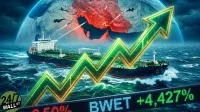
If you put $10,000 into the Breakwave Tanker Shipping ETF (NYSEARCA:BWET) on the last trading day of 2025 and did nothing, by the close on May 26, 2026 you were sitting on about $83,000. The fund went from $19.26 a share on December 31, 2025 to $160.22 on May 26, 2026, a 731.68% year-to-date move. Over the same window, Micron Technology (NASDAQ:MU | MU Price Prediction), the loudest memory-and-AI story in large-cap semis, ran from $285.28 to $895.88, a 214.04% gain. BWET tripled it, and most readers have never heard the ticker said out loud.
The shape of the move is what makes it interesting. Micron crossed a $1 trillion market cap on the back of a $13.64 billion revenue quarter, up 56.6% year over year, with HBM order books reportedly stretching into 2027. That is a fundamentals story that a CFA can defend. BWET is a $30 million pile of crude oil tanker freight futures sitting inside an ETF wrapper, and it ran three times harder. The headline number is the byproduct of a very specific kind of accident.
What BWET Actually Owns, And Why That Matters
The first thing to fix is the assumption baked into the name. Despite the word “Shipping” in the title, BWET sidesteps tanker operator equities like Frontline and Scorpio entirely. It holds near-dated freight futures (FFAs) tied to the daily charter rate for crude oil tankers, primarily the VLCC class that hauls Middle East barrels to Asia. When the spot rate to lease one of those ships goes up, the futures the fund holds go up with it. The product launched in May 2023 as a sibling to Breakwave’s earlier dry-bulk fund and spent most of its first eighteen months as a sleepy, illiquid commodity wrapper that nobody had a reason to own.
The mechanism inside the ETF is leverage by another name. Freight rates do not behave like equities. A VLCC charter rate can go from $30,000 a day to $400,000 a day in a month if the supply of available ships in the right ocean suddenly does not match the demand, because the world only has so many supertankers and you cannot conjure new ones in a quarter. When that gap opens, the futures curve repositions violently, and a fund holding near-dated contracts catches the entire move on the nose.
The Catalyst Was A War, Not A Cycle
What happened this year traces to a geopolitical rupture priced through a very thin futures market, well outside a normal freight cycle. The U.S.-Iran conflict that escalated in the first quarter of 2026 turned the Strait of Hormuz, the chokepoint that roughly a fifth of the world’s seaborne oil moves through, into an insurance nightmare. In early March, the cost of hauling crude from the Middle East to China hit a record $423,736 per day, with war-risk insurers pulling coverage on Gulf routes. The EIA flagged the Middle East-to-Asia VLCC rate as the highest reading since at least November 2019.
That is the mechanism. Ships that were already scarce became radioactive on the routes that matter most, charterers bid up the alternatives, and a futures product that is essentially a pure-play on that one number went vertical. CNBC’s ETF Edge segment in April pegged BWET at more than 600% year-to-date at the time, with VettaFi’s Cinthia Murphy describing inbound questions about the fund as a flood, and noting that the move started before the war actually broke out, as tanker supply was already tight heading into the year. By comparison, the U.S. Oil Fund was up close to 90% as of late April and the Energy Select Sector SPDR Fund (NYSEARCA:XLE) was up around 23%. Owning the barrel was a fine trade. Owning the boat was the trade.
Micron’s rally is the opposite kind of story, and that is the point of comparing them. Micron’s Cloud Memory Business Unit revenue nearly doubled to $5.28 billion in fiscal Q1 2026 at a 66% gross margin, and management guided fiscal Q2 to $18.70 billion in revenue and $8.42 in non-GAAP EPS. CEO Sanjay Mehrotra called the company “an essential AI enabler”, and at $895.88 a share the market is broadly agreeing with him. Micron’s 214% year is a durable demand cycle being repriced by a market that finally believes the numbers. BWET’s 731% year is a chokepoint going dark.

The Distribution Trap And The Cherry-Picked Window
A note on the math before the forward look, because BWET in particular makes this easy to get wrong. Futures-based commodity ETFs do not behave like equity funds. They can pay out large variable distributions, they can suffer roll losses when the futures curve is in contango, and the price chart you see on a brokerage app is not always the total return. The 731% year-to-date figure above is the adjusted price series from Fuse, which folds distributions back in. The one-year number is even more striking at 1,310.39% from $11.36 to $160.22, but you should read that with the understanding that a $30 million fund trading freight futures is the kind of vehicle where a single bad week can erase a quarter’s gains. BWET was already down 15.96% in the week ending May 26 and 7.8% on that single session, even as Micron ripped 19.29% on the same day.
What To Actually Watch From Here
The forward look writes itself once you accept what the mechanism is. BWET is a bet on a specific number, the spot VLCC rate out of the Persian Gulf, staying elevated or going higher, rather than on global trade or a broader shipping renaissance. That number stays elevated because ships cannot or will not transit Hormuz at normal insurance rates, with secular demand a secondary factor at best. The leading indicators are unusually concrete for a fund this exotic. Watch the Baltic Exchange’s daily VLCC TD3C assessment (Middle East Gulf to China), watch Lloyd’s List for war-risk insurance premiums on Gulf transits, and watch the EIA’s weekly tanker rate snapshot. If those three readings normalize, the futures curve flattens fast and a fund holding the front of that curve gives back the move at a similar speed to how it earned it. The CNBC piece reported the Baltic Dry Index, a separate and unrelated benchmark, was up about 41% year-to-date and 6% in the trailing week, which is a normal cyclical number. The tanker side ran twenty times harder because the tanker side is where the war is.
Micron’s watchlist is different in kind. The Cloud Memory unit’s 66% gross margin, the HBM order book into 2027, and hyperscaler capex commitments are what hold up an $895 share price. Memory is famously cyclical, and the open question is whether the AI-driven mix shift has structurally raised the floor before the next downcycle arrives. The conditions for Micron’s rally are broadly intact at a much higher valuation, which changes the expected forward return even if the direction stays the same.

BWET’s setup is the opposite. The conditions that produced 731% in five months are, by design, the conditions a rational person hopes do not persist. A ceasefire headline, a re-opening of Gulf insurance markets, or a credible diplomatic off-ramp would pull the rug out of the futures curve in days, not quarters. The fund did exactly what it was built to do, and it did it inside a regime that nobody should want extended. The math worked once, for reasons that were specific and unpleasant, and the next reader who buys it at $160 is no longer buying the trade. They are buying the world staying broken.
Contact [email protected] for any questions or corrections.
I am a long time investor and student of business, and believe finding good companies that can become great investments is the best game on earth. After 20 years of writing and researching the public markets it is clear that individuals have never had more tools and information to take control of their financial lives. From ETFs and $0 commissions to cryptos and prediction markets there has never been a greater democratization of access to investing.
I write to help people understand the investments available to them so they can make the best choice for their portfolio, whether they're starting out or looking for income in retirement.