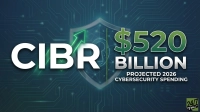
Why Cybersecurity ETF CIBR Belongs in Every Retirement Portfolio Right Now
Every major data breach that makes headlines is also a sales call for the companies inside First Trust NASDAQ Cybersecurity ETF (NYSEARCA:CIBR). The question for retirement investors isn’t whether cybersecurity spending will grow. It’s whether this particular fund delivers on…

This post may contain links from our sponsors and affiliates, and Flywheel Publishing may receive compensation for actions taken through them.

Every major data breach that makes headlines is also a sales call for the companies inside First Trust NASDAQ Cybersecurity ETF (NYSEARCA:CIBR). The question for retirement investors isn’t whether cybersecurity spending will grow. It’s whether this particular fund delivers on that growth story in a way that earns a spot in a long-term portfolio.
What CIBR Is Actually Built to Do
CIBR tracks the Nasdaq CTA Cybersecurity Index, giving investors broad exposure to companies whose primary business involves protecting digital infrastructure. With $10.6 billion in assets under management and a 0.58% expense ratio, it sits in the mid-range for sector ETFs on cost. The fund holds 31 positions, mixing pure-play security firms like CrowdStrike (NASDAQ:CRWD | CRWD Price Prediction) and Palo Alto Networks (NASDAQ:PANW) with larger infrastructure companies like Cisco (NASDAQ:CSCO) and Broadcom (NASDAQ:AVGO).
The return engine is straightforward: equity appreciation driven by rising enterprise security budgets. There are no options overlays, no leverage, and no income gimmicks. The 0.94% dividend yield is negligible, so this is a growth-oriented holding, not an income one.
The Performance Gap Investors Need to See
Over the past decade, CIBR has outpaced the broader market, returning 311% compared to SPY’s 246% — a meaningful edge driven by the secular rise in enterprise security spending. But the more recent picture tells a different story.
Valuation compression in high-growth tech names has weighed on CIBR over the past five years, where it returned 52% versus SPY’s 80%. That underperformance has deepened over the past year as growth expectations for pure-play security firms reset sharply, leaving CIBR down roughly 3.65% while the broader market continued climbing.
Retail investors on Reddit are asking the right question. A recent thread in r/stocks titled “What Cybersecurity ETF can you recommend?” drew 19 comments comparing CIBR to alternatives like HACK and BUG, suggesting investors are actively pressure-testing the category rather than buying blindly.
The Real Tradeoffs
Concentration is the most underappreciated risk here. The top 10 holdings represent nearly 64% of the portfolio, meaning a rough stretch for CrowdStrike or Palo Alto Networks ripples hard through the fund. CIBR is also down nearly 12% year-to-date through February 27, a sector-specific drawdown while the broader market has held flat.
The structural tailwind is real. AI-powered deepfake fraud is accelerating security spending, with analysts describing cybersecurity as moving from a discretionary IT line item to core infrastructure. That shift supports the long-term thesis, but it doesn’t cushion near-term volatility.
Retirement investors evaluating thematic technology exposure may weigh CIBR’s long-term outperformance against its concentration risk, low income, and recent underperformance relative to the broader market. Those considerations are particularly relevant for investors with shorter time horizons who may be more sensitive to drawdown risk.
Contact [email protected] for any questions or corrections.
I am a long time investor and student of business, and believe finding good companies that can become great investments is the best game on earth. After 20 years of writing and researching the public markets it is clear that individuals have never had more tools and information to take control of their financial lives. From ETFs and $0 commissions to cryptos and prediction markets there has never been a greater democratization of access to investing.
I write to help people understand the investments available to them so they can make the best choice for their portfolio, whether they're starting out or looking for income in retirement.