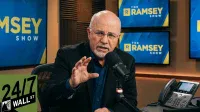
Dave Ramsey’s Warning to High Earners: ‘You Cannot Out-Earn That Level of Stupidity’
Kate called The Ramsey Show with a specific frustration: her husband had switched trucks seven times in six years, changed vehicles twice in the past year alone, and communicated each decision by text message. The household earns well. His technology…


Kate called The Ramsey Show with a specific frustration: her husband had switched trucks seven times in six years, changed vehicles twice in the past year alone, and communicated each decision by text message. The household earns well. His technology and logistics company netted approximately $1.2 million last year, and their combined household income exceeds $600,000. The real question is what this pattern is actually costing them, and what it reveals about how financial decisions get made inside a high-income household.
Dave Ramsey’s verdict was immediate: “He can afford to lose the money. But he’s disrespecting his wife.” Ramsey then went further, predicting outright business failure: “He’s going to fail as an entrepreneur. And the reason I know that is I coach 10,000 businesses through EntreLeadership, and entrepreneurs who do not listen to their wives don’t make it long-term. You cannot out-earn that level of stupidity.”
Ramsey is right about the marriage problem. The financial mechanics underneath this story, though, deserve a closer look, because they apply well beyond truck-obsessed entrepreneurs.
What Seven Truck Trades Actually Cost
Kate said they are “usually losing money on this transaction.” She is correct, and the math explains why even a high earner should care. According to Kelley Blue Book, the average transaction price for a new full-size pickup truck reached $65,964 in March 2026, up 2.8% from a year earlier and sitting more than $16,000 above the average price of all new vehicles. Vehicles typically lose 20% to 25% of their value in the first year. Each truck trade, assuming the vehicle is held briefly before being swapped, carries a depreciation loss that can reach into the tens of thousands per transaction. Across seven trades, the cumulative loss can be substantial, depending on how long each truck was held and the specific models involved.
That is a meaningful drag on even a $1.2 million income. The damage compounds in ways pure income comparisons obscure: those dollars, invested rather than surrendered to depreciation, would grow over time. The opportunity cost extends beyond the transaction loss itself to everything those dollars could have become through compounding growth.
The Deeper Financial Pattern This Reveals
High income creates a specific financial blind spot: the belief that affordability equals wisdom. A household earning $600,000 a year can absorb a $15,000 loss without feeling it in the monthly budget. But the same cognitive shortcut that justifies the truck trade tends to surface in business decisions too.
Ramsey named it directly: “The arrogance that is attached to this means he’s also not listening to his key leaders when they’re speaking up and saying this is a dumb idea. He’s not listening to anybody because he freaking thinks he’s Superman, and this is going to lead to him hitting the wall.”
Unilateral decision-making in a household mirrors unilateral decision-making in a business. Both carry the same structural risk: no check on bad ideas before they become expensive ones. Kate described the communication pattern plainly: “His idea of consulting with me is basically just texting me, telling me what he’s gonna do.” That is notification after the decision is already made, not consultation.
The broader economic backdrop makes this pattern more precarious than it looks on paper. Consumer sentiment has collapsed to near-historic lows, with the University of Michigan index hitting an all-time low of 44.8 in May 2026 before recovering to 49.5 in June and a preliminary 54.4 in July. All three readings sit far below the long-run historical average of roughly 83.8. Meanwhile, the national personal savings rate fell to just 3% in May 2026, down sharply from 4.5% in January. High earners are not immune to broader economic tightening, and businesses that depend on consumer spending, including logistics companies, face real headwinds when households pull back this hard.
Who This Pattern Hurts Most
If the household has $600,000 in income and zero savings, the truck habit is a structural problem. A rough business quarter would leave the family in a thin financial position despite the headline income number. High-income households that spend at the level of their income, rather than a fraction of it, are often one disruption away from genuine financial stress. A logistics company with a single founder who makes unilateral decisions is precisely the kind of business where that disruption can arrive fast and without warning.
The household that benefits least from this pattern is one with three kids, a second marriage, and a business whose net income can swing sharply from year to year. That is precisely Kate’s situation.
What Kate (and Anyone in a Similar Position) Should Do Next
Ramsey recommended marriage counseling, the right starting point for the relationship dynamic. The financial mechanics need attention too.
- Calculate the actual depreciation loss per vehicle trade by comparing the purchase price to the trade-in or sale price for each of the seven transactions. The number will likely be uncomfortable, and that discomfort is useful data for the conversation.
- Establish a joint spending threshold that requires mutual agreement before any major purchase is made. Many financial planners suggest a figure between $500 and $2,000 for discretionary purchases. For a household at this income level, setting it at $5,000 or $10,000 is reasonable, but the specific number matters less than the agreement itself.
- Model what those cumulative depreciation losses would look like invested over ten years. A financial planner can run this scenario in under an hour. Seeing the opportunity cost in dollar terms tends to reframe the conversation from “can we afford it” to “is this the best use of this money.”
Ramsey’s warning carries weight: “Five years from today, this is not going to be pretty. You’re gonna get what you tolerate.” The truck trades are a symptom of a decision-making structure where one person’s preferences override shared financial planning. That structure is expensive in a marriage, and fatal in a business.
Editor’s note: This update refreshes the average full-size pickup truck transaction price to $65,964 (March 2026, per Kelley Blue Book), replaces the earlier University of Michigan consumer sentiment figure of 56.4 with the most current readings (a record-low 44.8 in May 2026, recovering to 49.5 in June and a preliminary 54.4 in July), and updates the national personal savings rate to 3% as of May 2026, down from the 4% figure previously cited.
Contact [email protected] for any questions or corrections.
I am a long time investor and student of business, and believe finding good companies that can become great investments is the best game on earth. After 20 years of writing and researching the public markets it is clear that individuals have never had more tools and information to take control of their financial lives. From ETFs and $0 commissions to cryptos and prediction markets there has never been a greater democratization of access to investing.
I write to help people understand the investments available to them so they can make the best choice for their portfolio, whether they're starting out or looking for income in retirement.