SanDisk Pops 4% as AI Demand and NAND Price Tailwinds Keep the Memory Chip Sector Hot
SanDisk (NASDAQ:SNDK | SNDK Price Prediction) shares are up 4% in early trading Thursday, continuing a remarkable run in the memory chip sector. This follows yesterday’s 9.86% single-day gain, which carried the stock from $710.80 to $780.90. SanDisk stock is…

This post may contain links from our sponsors and affiliates, and Flywheel Publishing may receive compensation for actions taken through them.
SanDisk (NASDAQ:SNDK | SNDK Price Prediction) shares are up 4% in early trading Thursday, continuing a remarkable run in the memory chip sector. This follows yesterday’s 9.86% single-day gain, which carried the stock from $710.80 to $780.90.
SanDisk stock is up 2,314% over the past year, climbing from $32.35 to $815. A stock that’s expanded more than 23 times in 12 months continuing to grind higher deserves careful examination.
The engine behind the rally is clear: AI data centers require enormous amounts of NAND flash storage, and SanDisk is a primary supplier of enterprise SSDs feeding that buildout. As long as AI infrastructure spending accelerates, the demand case for NAND remains compelling.
AI Demand and NAND Pricing Keep the Bull Case Alive
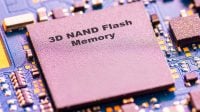
NAND flash memory is the storage technology inside enterprise solid-state drives, the devices AI data centers use to store and retrieve massive datasets that power model training and inference. SanDisk’s datacenter segment generated $440 million in revenue in Q2 FY2026, up 76% year over year, driven directly by hyperscalers accelerating their AI infrastructure deployments.
The pricing environment is adding fuel. A 10% NAND flash memory price hike has demonstrated real pricing power, and analysts have linked a structural NAND shortage to conditions unlikely to ease before 2028. That supply-demand imbalance keeps institutional money interested even at elevated prices. For more context, this earlier look at the sector-wide memory shortage provides useful detail.
Analyst support has been consistent. BofA Securities carries a Buy rating on SanDisk stock with a $900 price target, and Goldman Sachs analyst Wamsi Mohan also holds a Buy with a $900 target. The consensus across Wall Street sits at “Outperform” or “Buy,” with 14 analysts rated Buy and 6 rated Hold, against zero Sell ratings.
Recent Catalysts Add Strategic Depth
Beyond AI demand, SanDisk has been making moves that expand its memory footprint. The company announced a $1 billion investment in Nanya Technology, acquiring approximately a 3.9% stake and securing a multi-year DRAM supply agreement. That deal signals ambition to diversify beyond NAND into DRAM, the memory type most critical for AI model inference workloads.
The company also partnered with SK Hynix to develop High Bandwidth Flash memory solutions for the AI inference era, and extended its Kioxia joint venture through 2034, securing manufacturing capacity for the long term. These are structural positioning moves, not one-quarter tailwinds.
Moreover, SanDisk’s Q3 FY2026 guidance reinforced momentum. Management guided for revenue of $4.4 billion to $4.8 billion and non-GAAP EPS of $12 to $14, with non-GAAP gross margins expected between 65% and 67%. SanDisk CEO David Goeckeler described the quarter’s performance as underscoring “the critical role that our products play in powering AI and the world’s technology.”
The Bear Case Deserves Honest Treatment
A stock up over 2,300% in a year carries real questions about sustainability. SanDisk stock trades above the consensus analyst price target of $770.32, which technically implies the stock is priced ahead of fair value. That’s a yellow flag worth noting.
Geopolitical risk is real for any semiconductor company with manufacturing exposure in Asia, and SanDisk’s reliance on its Flash Ventures joint venture with Kioxia concentrates supply chain risk. Tariff volatility and trade policy uncertainty remain active concerns. Technical traders have flagged elevated volatility as a two-sided risk, with yesterday’s 9.86% single-day move illustrating just how sharply this stock can swing.
The memory sector faced a scare in late March when Google’s TurboQuant algorithm, which reduces the memory footprint of large language models by 6x without accuracy loss, triggered an initial selloff. Analysts largely dismissed the concern by invoking Jevons Paradox: efficiency improvements tend to lower costs and expand demand rather than shrink it. That rebound in sentiment held, but the episode reminds us that the narrative can shift quickly.
What to Look for Now
Western Digital (NASDAQ:WDC), SanDisk’s former parent company, is also having a strong run, up 97% year to date. Both companies share deep ties through the storage sector and have benefited from the same AI infrastructure buildout. Earlier technical analysis flagging Golden Crosses in both SNDK and WDC pointed to sustained upside momentum for the storage trade.
Composite sentiment for SanDisk currently sits at 67.05, classified as bullish with medium confidence, with the score up 9.13 points over the past 30 days. Reddit’s r/wallstreetbets community has been active on the name, with one widely-shared post titled “SNDK still looks strong, just trading the bands for now” reflecting the technical trading focus among retail participants.
SanDisk’s next earnings call is scheduled for April 30 at 1:30 p.m. Pacific Time. That report will be the next major test of whether the AI demand story translates into numbers that justify the stock’s extraordinary valuation. Watch for whether today’s gains hold into the close ahead of that catalyst.
Contact [email protected] for any questions or corrections.
David Moadel is financial writer specializing in stocks, ETFs, options, precious metals, and Bitcoin. David has written well over 1,000 articles for leading online publications, helping investors understand markets, income strategies, and risk.His work has appeared in The Motley Fool, InvestorPlace, U.S. News & World Report, TipRanks, ValueWalk, Benzinga, Market Realist, TalkMarkets, Finmasters, 24/7 Wall St., and others.With a master’s degree in education, David has taught at the elementary, high school, and college levels. That teaching background shapes his writing style: clear, educational, and practical. David has also built a loyal social-media audience by providing trustworthy financial content on YouTube, X/Twitter, and StockTwits.