Trump’s $500 million Spirit Airlines rescue collapsed before the Friday deadline. 17,000 workers learned they were jobless by Saturday morning
The most consequential decision in the final week of Spirit Airlines’ 34-year history was not made in a White House briefing room or at a Department of Transportation hearing. It was made in a creditor conference call, and what was…

The most consequential decision in the final week of Spirit Airlines’ 34-year history was not made in a White House briefing room or at a Department of Transportation hearing. It was made in a creditor conference call, and what was really on the table was a spreadsheet that no longer worked.
On the call were the major bondholders of Spirit Aviation Holdings, including Ken Griffin’s Citadel and Ares Management Corp., and the question was whether to accept the rescue terms the Trump administration had put forward against the backdrop of a financial plan that had collapsed in real time.
Spirit’s March 2026 restructuring plan had been built on $2.24/gallon jet fuel.
But by late April, after Operation Epic Fury and the Strait of Hormuz closure, spot prices were $4.51, a 101% variance that punched roughly $100 million in unplanned costs into the airline’s books in under two months. The proposal in front of creditors: a $500 million federal injection that would give the U.S. government a 90% equity stake in the reorganized carrier, with the Pentagon agreeing to use Spirit’s excess capacity to move troops and cargo for the escalating Middle East conflict.
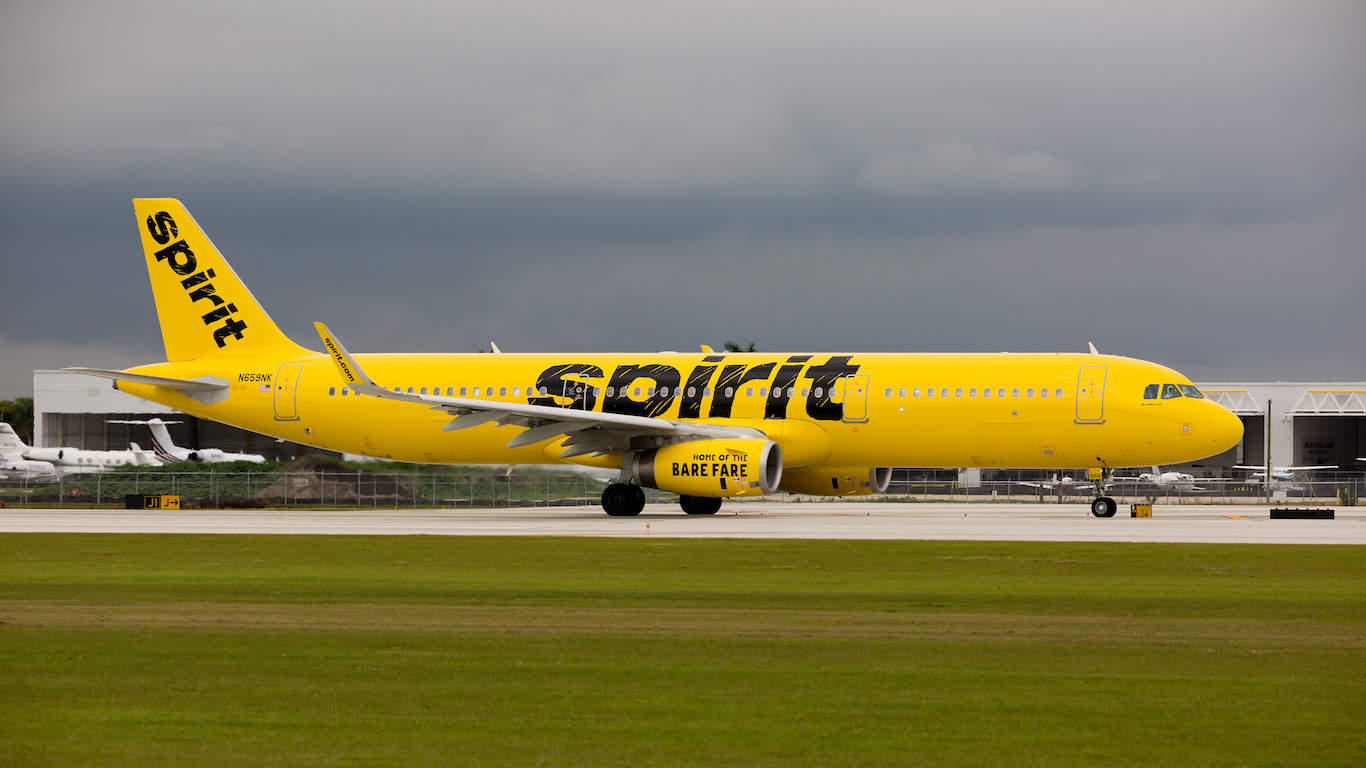
The creditors said no. By Friday, the deadline had passed. By Saturday morning on May 2, 2026, Spirit had ceased operations and 17,000 workers were unemployed.
The story of Spirit’s collapse is usually told as an antitrust story, the 2024 JetBlue merger block, Judge William Young’s “failing firm” ruling. Those are real factors. But the biggest cause of the May 2 liquidation was that the same Middle East crisis Washington was trying to solve with Spirit’s fleet had already destroyed the financial assumptions creditors had signed off on weeks earlier.
A small set of bondholders looked at a model that no longer balanced and concluded that liquidating Spirit’s assets would recover more than reorganizing the company around numbers that kept moving against them.
What $500 million was actually buying
The plan was unusual. It was not a Treasury loan or a tax holiday. It was direct federal equity, taking a 90% stake in a publicly traded airline. The closest precedent is the 1979 Chrysler bailout, which involved loan guarantees rather than majority ownership.
The Pentagon piece was novel: with U.S.-Israeli operations against Iran intensifying, Spirit’s narrowbody Airbus fleet, A320neo and A321neo aircraft averaging just 5.5 years old, would have been repurposed for troop and cargo transport. President Trump reportedly pushed for the deal personally.
Citadel and Ares had absorbed losses through Spirit’s August 2025 Chapter 11 process. The rescue package’s terms would have layered new federal equity above their existing senior claims, converting their position into something materially worse, and doing it on top of a fuel-cost shock that had already burned through the cushion built into the March plan.
For these creditors, the math was clean: a liquidation would let them recover Spirit’s narrowbody fleet, among the most liquid airline assets in a global market still wrestling with OEM delivery delays. AerCap, the largest Spirit lessor, had already negotiated $150 million in aircraft recoveries during the 2025 bankruptcy. Senior creditors are not in the business of accepting subordination, particularly not to backstop a plan whose core inputs had moved 100% in the wrong direction.
Why a Republican president couldn’t get a Republican bailout
Inside the GOP, the bailout did not have the support it needed. Sean Duffy opposed federal equity in a private airline as a matter of principle. Senators Ted Cruz and Mike Lee voiced strong opposition to “taxpayer-funded bailouts for failing private enterprises.” This in-party opposition gave Treasury and DOT lawyers no clean political path. It also surfaced a substantive split inside the party about industrial policy, one that, until now, had not been on opposite sides of the same fight over a single deal.
The market reaction confirmed what creditors had calculated. JetBlue rose 7.4% on the day of the liquidation. Frontier rose 8.8%. Bank of America analysts called the outcome a “net positive” for the surviving carriers’ structural health. The asset-recovery story for Spirit’s fleet, primarily owned by lessors holding 76% of its airframes, has played out cleanly, without the fire-sale dynamics that typically accompany chaotic airline collapses.
Who walked out with what they wanted
Three things are now true that were not before. Federal rescue packages structured as equity-with-priority over senior creditors will face creditor blocking power in any future case. Republican opposition to industrial-policy bailouts has been tested in a high-stakes case and held. And the costs Trump tried to prevent, 17,000 lost jobs, the regional economic concentration in Fort Lauderdale, Orlando, Las Vegas, Detroit, are now being paid by the people he was trying to protect.
The deeper lesson is about timing. Operation Epic Fury and the Hormuz closure did not just hurt Spirit’s operations. They invalidated the financial model creditors had agreed to weeks earlier, in the same stroke that made Spirit’s fleet militarily attractive to the Pentagon. The administration was trying to solve two problems with one airline at the exact moment the second problem was making the first one unsolvable on the original terms.
It is hard to identify a single decision-maker in this chain whose individual logic was wrong. The collective outcome is that none of them got what they wanted, except Citadel and Ares Management, who walked out of the conference call with the same senior position they walked in with.
Editor’s note (May 6, 2026): This article’s headline has been revised. The previous headline attributed the rescue plan’s collapse to two specific bondholders; the revised version reflects that the decision was made collectively by Spirit’s full senior creditor group.
Contact [email protected] for any questions or corrections.
Don Lair writes about options income, dividend strategy, and the kind of boring-but-durable investing that actually funds retirement. He's the founder of FITools.com, an independent contributor to 24/7 Wall St., and a former writer for The Motley Fool.