Morgan Stanley Just Cut Its U.S. Growth Forecast Because Gas Prices Are “More Than Enough” to Wipe Out Bigger Tax Refunds
Morgan Stanley’s U.S. economics team has trimmed its growth forecast for the year, and the reasoning is refreshingly specific: the pump is going to swallow the refund. On the firm’s Thoughts on the Market podcast, the team cut its U.S.…

This post may contain links from our sponsors and affiliates, and Flywheel Publishing may receive compensation for actions taken through them.

Morgan Stanley’s U.S. economics team has trimmed its growth forecast for the year, and the reasoning is refreshingly specific: the pump is going to swallow the refund. On the firm’s Thoughts on the Market podcast, the team cut its U.S. growth outlook by roughly 0.3 to 0.4 percentage points, with elevated energy prices doing most of the work.
The anchor argument from the team: “Higher gas prices that we have now and likely to have for the rest of the year are going to be more than enough to offset any boost to consumer spending from the higher tax refunds this year.”
The Setup Behind the Cut
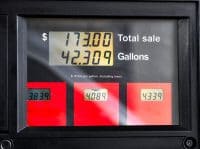
The data backs the concern. WTI crude touched $114.58 a barrel on April 7, 2026, the high of the recent dataset, and was still trading at $99.89 on April 27. For comparison, April 2025 WTI ranged $59.55 to $72.12 a barrel. That repricing is showing up in household budgets. BEA monthly data shows gasoline outlays jumped to $503.7 billion (annualized) in March 2026 from $422.4 billion in February.
The macro picture is already softening. Real GDP grew 2.0% in 2026 Q1, with personal consumption contributing just 1.6%, the weakest reading in the recent cycle. The savings rate has slipped to 4.0% from 5.2% a year earlier, leaving households with less cushion to absorb a fuel shock.
Gas vs. Refunds: One Macro Variable Cancels Another
Tax refunds typically arrive as a discretionary tailwind in the spring. Morgan Stanley’s point is that gasoline is now a non-discretionary cash drain large enough to cancel that lift. Layered on top, already restrictive monetary policy and tight financial conditions amplify the energy drag rather than cushion it.
If gas prices remain high for the long term and if the investments surrounding AI slow down, growth could come down even faster. That said, Morgan Stanley won’t be proven right if oil prices decrease quickly and investments into AI keep accelerating. Hyperscalers spending hundreds of billions out of their record balance sheet is plenty of stimulus for the economy.
The Inflation Nuance Bond Investors Should Watch
Here is where the call gets interesting for portfolio decisions. The energy PCE index rose 11.56% month-over-month in March 2026 and 14.43% year-over-year. Core PCE moved only 0.29% on the month and 3.2% year-over-year. The Morgan Stanley team expects limited pass-through to core inflation, consistent with the historical pattern where energy spikes lift headline prints and then fade.
Slower growth without a sticky core inflation problem is a very different macro regime than stagflation. For equity investors, the read-through points to consumer-facing names where wallet share is most exposed to fuel costs. For bond investors, the question is whether the Fed treats this as a demand drag (dovish) or a headline inflation flare (hawkish hold). Investors can listen to the full Morgan Stanley podcast here for the team’s framing in their own words.
What to watch next: the trajectory of WTI through summer driving season, the next core PCE print, and whether Q2 personal consumption decelerates further from the 1.6% Q1 reading.
Contact [email protected] for any questions or corrections.
Omor Ibne Ehsan is a writer at 24/7 Wall St. He is a self-taught investor with a focus on growth, cyclical, and dividend equities that have strong fundamentals, value, and long-term potential. He also has an interest in high-risk, high-reward investments such as penny stocks.