Hedge Fund Manager Admits, “My Personality Won’t Allow Me” to Invest Like Buffett
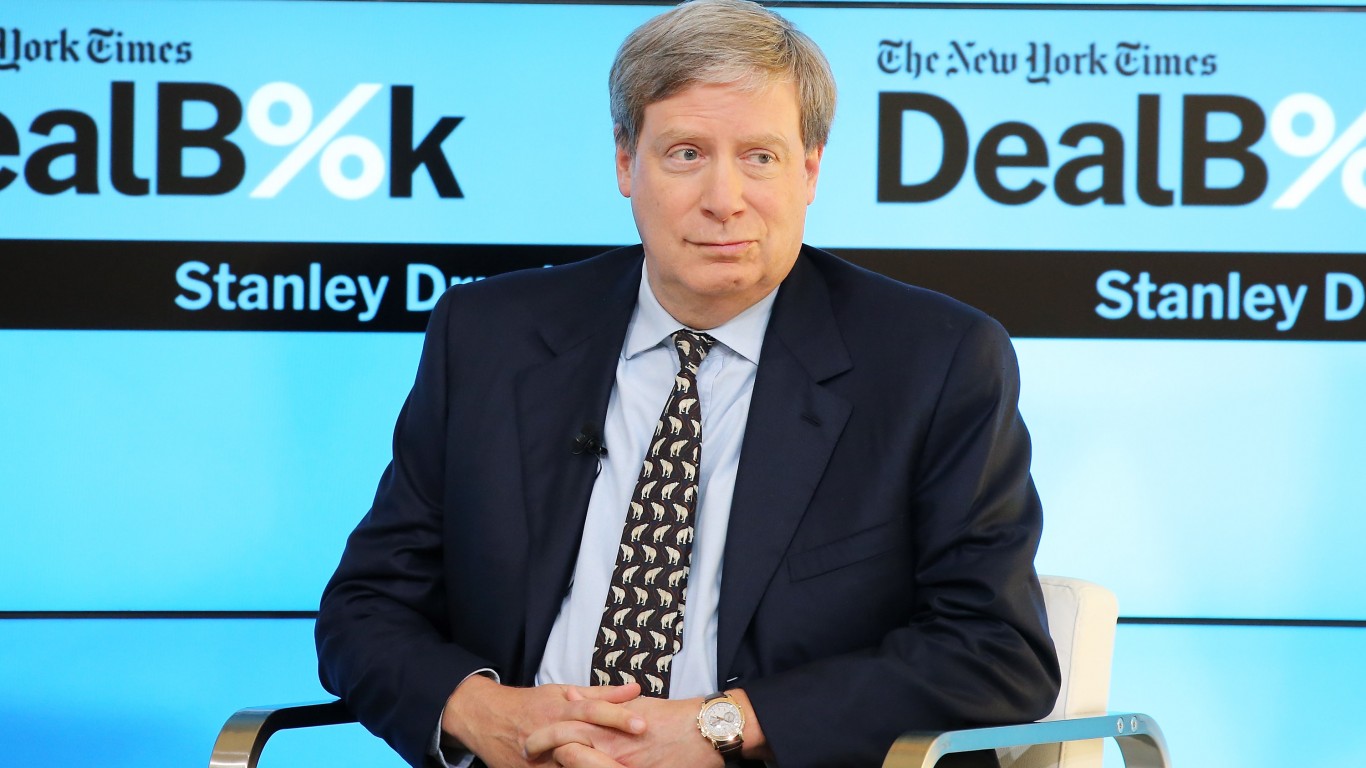
On Animal Spirits Podcast Episode 463, Michael Batnick zeroed in on something more revealing than the doom-laden statistics a hedge fund manager had just rolled out. The manager cited stock market cap to GDP at 252% versus 65% in 1929…


On Animal Spirits Podcast Episode 463, Michael Batnick zeroed in on something more revealing than the doom-laden statistics a hedge fund manager had just rolled out. The manager cited stock market cap to GDP at 252% versus 65% in 1929 and 170% in 2000, and warned that “the 10-year forward return is negative when you buy the S&P with a P/E of 22.” But Batnick honed in on a different admission: “My personality won’t allow me” to invest like Warren Buffett.
That single line explains more about bearish forecasting than any valuation chart.
The Dalio 1982 Anchor
Batnick’s comparison: Ray Dalio predicted a depression in 1982, at the start of “perhaps the greatest bull market of all time.” Dalio built one of the most successful hedge funds in history. The depression call did not stop him, because the call was never the point. “certain personality types are more well-suited for certain types of investment disciplines,” and bearish calls are often “all personality-driven.”
When a perma-bear hands you a thesis, you are reading their psychological profile as much as their spreadsheet.
The Numbers Bears Are Citing Aren’t Wrong
Co-host Ben Carlson conceded the market “is obviously not cheap.” The data backs that up. The 10-year Treasury yield sits at 4%, in the 88th percentile of the past year’s range, which mathematically compresses the multiples investors will pay. University of Michigan consumer sentiment is at 53.3, deep in pessimistic territory and in the 27th percentile historically. Real GDP grew just 2% in Q1 2026 after a 1% Q4 2025 report.
Yet the SPDR S&P 500 ETF (NYSEARCA:SPY) is up 31% over the past year and 257% over the past 10 years. Since the CAPE-ratio debate began heating up in 2014-2015, SPY has returned 301% from January 2, 2014 through May 6, 2026. A decade-plus of bearish valuation calls have coincided with one of the strongest equity runs in modern history.
The “Over-Equitized” Counter
Carlson pushed back on the idea that Americans are over-allocated to stocks: “Why wouldn’t Americans piggyback people like Elon Musk” when “almost all of the wealth has been created by equity?”
The BEA’s corporate profits data reinforces this. Total corporate profits hit $4,352.1 billion in Q4 2025, up 10% year over year, with domestic profits representing 86% of the total. Profits have climbed from $3,172.5 billion in Q1 2022 to $4,352.1 billion in Q4 2025. Equity ownership is the mechanism through which households participate in that growth.
What to Watch
The Q4 2025 report VIX at 17.39 sits in the normal range, down 28% over the past month from the March 2026 peak of 31.05. Bearish forecasts arriving in calm-market windows deserve extra scrutiny because the data does not justify the fear. Before adopting a strategist’s call, ask whether the prediction reflects the market or simply matches the personality of the person making it.
Contact [email protected] for any questions or corrections.
Joel South covers large-cap stocks, dividend investing, and major market trends, with a focus on earnings analysis, valuation, and turning complex data into actionable insights for investors.
He brings more than 15 years of experience as an investor and financial journalist, including 12 years at The Motley Fool, where he served as an investment analyst, Bureau Chief, and later led the Fool.com investing news desk. He has also co-hosted an investing podcast and appeared across TV and radio discussing market trends.