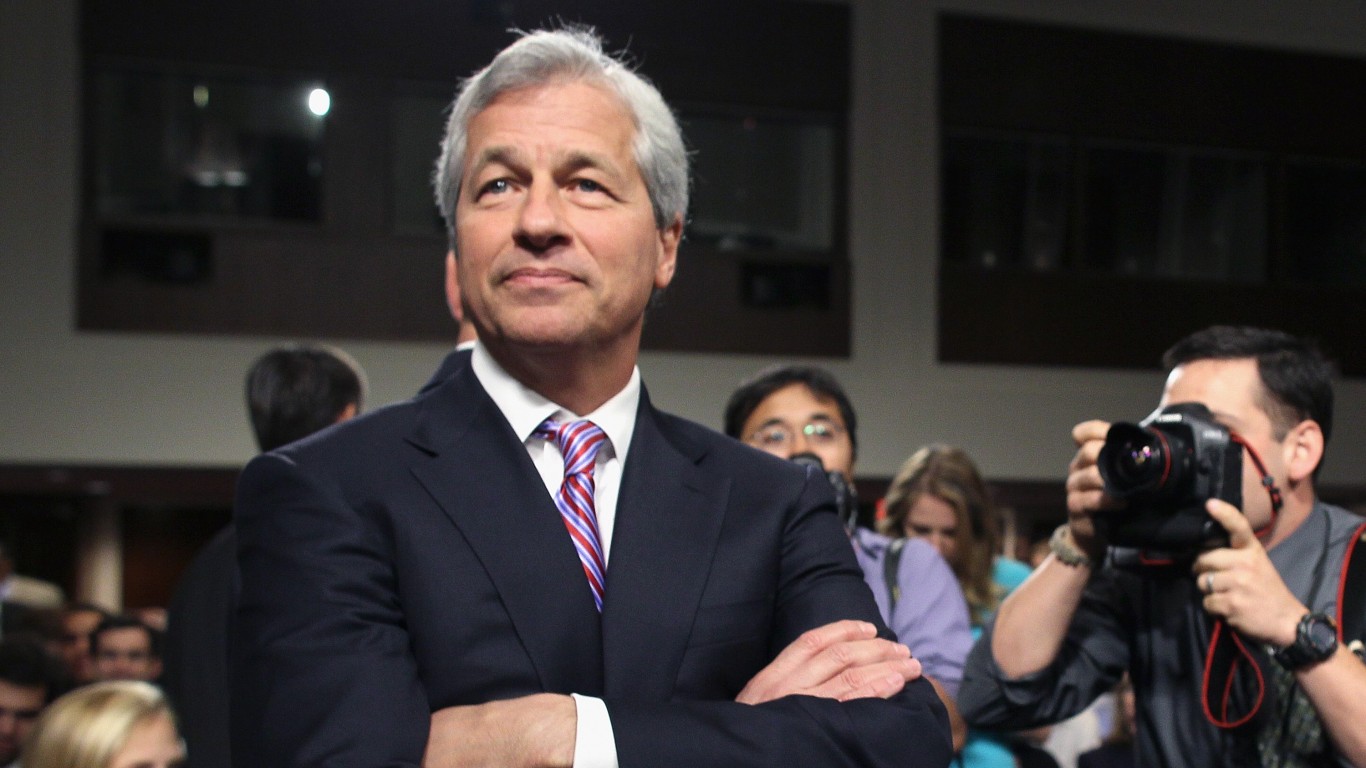
What Happens to JPMorgan Chase If Jamie Dimon Steps Down?
Jamie Dimon has given no indication he plans to leave imminently, but after more than twenty years atop JPMorgan Chase (NYSE: JPM | JPM Price Prediction), the question is fair. He has been CEO since December 2005, making him the…


Jamie Dimon has given no indication he plans to leave imminently, but after more than twenty years atop JPMorgan Chase (NYSE: JPM | JPM Price Prediction), the question is fair. He has been CEO since December 2005, making him the longest-serving major U.S. bank CEO. His departure would test whether the franchise is the man or the institution.
Why Dimon Matters More Than a Typical Bank CEO
Dimon guided the firm through the 2008 financial crisis (Bear Stearns and Washington Mutual acquisitions at the government’s request) and the 2023 regional bank crisis (First Republic acquisition). His annual shareholder letter is read in the White House, on Capitol Hill, and by global central bankers. That regulatory and political influence does not appear on any income statement. The company said:
Our long-standing position has been that the agency should calculate each component of the capital requirements correctly without regard to what that may mean for any specific firm or for the broader industry.
The Succession Bench Is Unusually Deep
The 2024 reshuffle put four executives in contention. Jennifer Piepszak and Troy Rohrbaugh are co-CEOs of the Commercial and Investment Bank, Marianne Lake runs Consumer and Community Banking, and Mary Erdoes runs Asset and Wealth Management. Daniel Pinto, the longtime president and “spare CEO,” retired during a prior leadership transition. Recent insider activity backs the bench: Erdoes and Rohrbaugh bolstered their stakes following equity vesting, signaling internal faith in the firm’s leadership transition.
Financial and Strategic Risk
The valuation does not price in heroics. Shares trade at a trailing P/E of 14 and forward P/E of 14, with a price-to-book of 2.353 and a 1.93% dividend yield. Q1 2026 produced $49.836 billion in revenue and $16.494 billion in net income, with record Markets revenue of $11.6 billion (up 20% YoY) and IB fees up 28%. Dimon said in the report:
We have ample amounts of capital and liquidity, with $291 billion in CET1 capital, $572 billion in total loss-absorbing capacity and $1.5 trillion in cash and marketable securities.
The genuine risk centers on the political access built over two decades and the firm’s status as the implicit phone call of last resort during stress, with multiple compression a secondary concern.
The Bull Case for Life After Dimon
The franchise is enormous: $4.9 trillion in total assets, #1 U.S. retail deposit share for the fifth consecutive year, and #1 global investment banking fees with 9.8% wallet share. The board authorized a $50 billion buyback effective July 2025, and the quarterly dividend has risen to $1.50 after two raises in 2025. Analyst consensus is constructive: five Strong Buy, eight Buy, 12 Hold, and no Sell ratings, with a consensus price target of $342.32. Prediction markets price the probability of JPMorgan Chase failing by June 30, 2026, at just 1.1%.
Verdict and What to Watch
A Dimon transition is more a test of regulatory standing than a valuation event. The underlying business would keep executing. Watch the tone of the first post-Dimon shareholder letter, how a new CEO handles the next stress moment, whether the largest corporate clients keep their treasury and advisory mandates concentrated at JPMorgan, and the level of Washington engagement. The Q2 2026 results in July are the next checkpoint.
Contact [email protected] for any questions or corrections.
Trey has been an editor and author at 24/7 Wall St. for more than a decade, where he has published thousands of articles analyzing corporate earnings, dividend stocks, short interest, insider buying, private equity, and market trends. His comprehensive coverage spans the full spectrum of financial markets, from blue-chip stalwarts to emerging growth companies.
Beyond 24/7 Wall St., Trey has created and edited financial content for Benzinga and AOL's BloggingStocks, contributing additional hundreds of articles to the investment community.
Trey's editorial expertise extends across multiple publishing environments. He served as production editor at Dearborn Financial Publishing and development editor at Kaplan, where he helped shape financial education materials. Earlier in his career, he worked as a writer-producer at SVE. His freelance editing portfolio includes work for prestigious clients such as Sage Publications, Rand McNally, the Institute for Supply Management, the American Library Association, Eggplant Literary Productions, and Spiegel.
Outside of financial journalism, Trey writes fiction and has been an active member of the writing community for years, moderating workshop sessions at regional conventions.