Prediction: This Is Wall Street’s Next Trillion-Dollar Stock
Once a rare milestone reserved for the most dominant corporations, trillion-dollar stock valuations have become increasingly common in today’s dynamic market. Just a decade ago, Apple’s (NASDAQ:AAPL) | AAPL Price Prediction 2018 breakthrough as the first U.S. company to hit…


Once a rare milestone reserved for the most dominant corporations, trillion-dollar stock valuations have become increasingly common in today’s dynamic market. Just a decade ago, Apple’s (NASDAQ:AAPL) | AAPL Price Prediction 2018 breakthrough as the first U.S. company to hit $1 trillion was historic. Now, 10 U.S.-listed stocks have crossed this threshold, reflecting the explosive growth of technology and innovation-driven sectors.
- Apple
- Microsoft (NASDAQ:MSFT)
- Nvidia (NASDAQ:NVDA)
- Amazon (NASDAQ:AMZN)
- Alphabet (NASDAQ:GOOG)(NASDAQ:GOOGL)
- Meta Platforms (NASDAQ:META)
- Broadcom (NASDAQ:AVGO)
- Taiwan Semiconductor (NYSE:TSM)
- Berkshire Hathaway (NYSE:BRK-A)(NYSE:BRK-B)
- Tesla (NASDAQ:TSLA)
Fueled by advancements in AI, cloud computing, and digital infrastructure, these companies have leveraged massive scale, loyal customer bases, and robust cash flows to achieve valuations once thought unattainable.
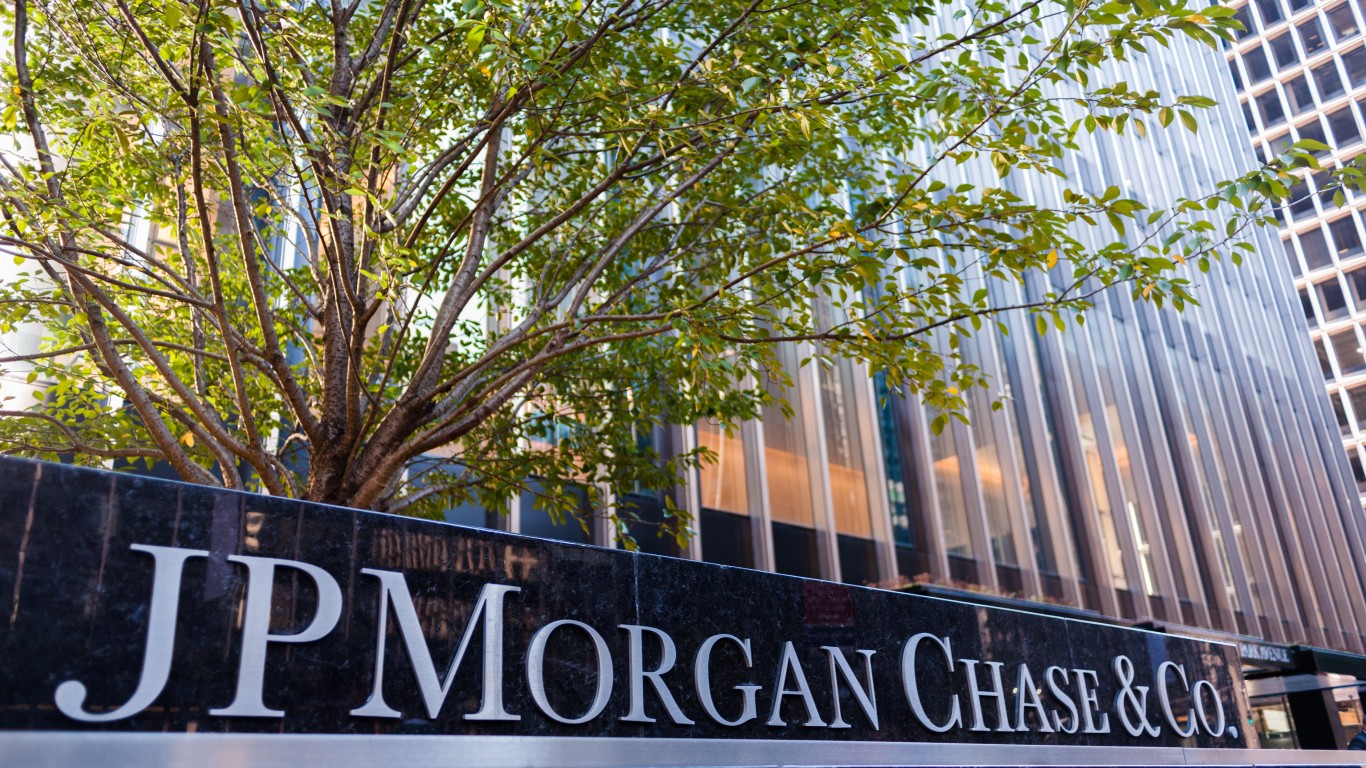
As the U.S. economy expands and market concentration grows, the trillion-dollar club is no longer an exclusive enclave, prompting speculation about which powerhouse will join next. One leading contender: JPMorgan Chase (NYSE:JPM), a financial giant poised for a historic leap.
Why JPMorgan Chase Could Be the Next Trillion-Dollar Stock
JPMorgan Chase is the largest U.S. bank by assets with a market cap of approximately $736 billion. It is a strong candidate to become the first financial stock to reach a $1 trillion valuation, potentially by 2030.
Several factors underpin this potential. First, JPMorgan’s diversified business model spans consumer banking, investment banking, commercial banking, and asset management, with nearly $4 trillion in assets and consistent revenue streams.
Its leadership under CEO Jamie Dimon, who has navigated the bank through crises like those in 2008 and 2020 while delivering 288% stock growth and 411% total return over the past decade, bolsters investor confidence.
Analysts, including Morgan Stanley’s Betsy Graseck, project that a “soft landing” economy with sustained high interest rates could drive JPMorgan’s net interest income higher, complemented by increased fees from credit cards, mortgages, and investment banking.
A favorable regulatory environment under the Trump administration could further accelerate JPMorgan’s ascent. Looser antitrust regulations are expected to spur mergers and acquisitions (M&A), where JPMorgan excels as a top advisor, collecting substantial fees. A recent report from S&P Global says first-quarter M&A deals are up 15% from the same period last year.
A revitalized IPO market and potential corporate tax cuts could also enhance profitability, leaving more capital for investment and stock buybacks, which JPMorgan has historically leveraged effectively. Higher interest rates, with the Federal Reserve forecasting fewer rate cuts in 2025, benefit banks by widening loan margins. JPMorgan’s strong balance sheet positions it to capitalize.
An Uncanny Ability to Grow
Trading at a price-to-earnings ratio of 13, JPM stock has room for multiple expansion, making a 36% climb to $1 trillion feasible if momentum persists.
JPMorgan’s strategic acquisitions, like Bear Stearns, Washington Mutual, and First Republic, demonstrate its ability to seize opportunities during market stress, expanding its deposit base and market share.
Unlike tech-heavy trillion-dollar companies, JPMorgan’s valuation growth would stem from traditional financial strengths: scale, stability, and adaptability. However, risks remain. A potential economic slowdown, driven by Trump’s tariff policies, could dampen consumer lending, as seen in Dimon’s cautious 2025 outlook.
Rising 10-year Treasury yields above 5% could also trigger equity sell-offs, impacting valuations. Additionally, succession concerns linger, as Dimon’s eventual retirement could introduce uncertainty, though his 2026 stock option vesting suggests continuity.
Key Takeaways
Despite these hurdles, JPMorgan’s fundamentals and market position make it a compelling contender. Its outperformance against peers like Bank of America (NYSE:BAC) and the Financial Select Sector SPDR ETF (NYSEARCA:XLF), coupled with a 11% year-to-date gain in 2025, signals robust momentum.
To reach $1 trillion, JPMorgan needs a stock price of approximately $341 per share, a 27% increase from its current $269 per share price target. It is a goal, though, analysts deem achievable with sustained economic tailwinds.
For investors, JPMorgan offers a blend of stability and growth, plus a consistent history of paying and growing its dividend, making it a standout in the race to the trillion-dollar club.
Contact [email protected] for any questions or corrections.
After two decades of patrolling the dark corners of suburbia as a police officer, Rich Duprey hung up his badge and gun to begin writing full time about stocks and investing. For the past 20 years, he’s been cruising the markets looking for companies to lock up as long-term holdings in a portfolio while writing extensively on the broad sectors of consumer goods, technology, and industrials. Because his experience isn’t from the typical financial analyst track, Rich is able to break down complex topics into understandable and useful action points for the average investor. His writings have appeared on The Motley Fool, InvestorPlace, Yahoo! Finance, Money Morning, and, of course, 24/7 Wall St. He has been featured in both U.S. and international publications, including MarketWatch, Financial Times, Forbes, Fast Company, and USA Today.