Petrobras and Vale Fuel EWZ’s Huge Payouts, But You Shouldn’t Expect Consistency
The iShares MSCI Brazil ETF (NYSEARCA:EWZ) has rallied alongside Brazilian equities, lifting shares roughly 48% over the past year. EWZ pays a variable semi-annual distribution funded by dividends from the largest Brazilian companies. After a powerful 2024 through 2025 commodity…

The iShares MSCI Brazil ETF (NYSEARCA:EWZ) has rallied alongside Brazilian equities, lifting shares roughly 48% over the past year. EWZ pays a variable semi-annual distribution funded by dividends from the largest Brazilian companies. After a powerful 2024 through 2025 commodity cycle, holders want to know whether the next checks will sustain or fade. EWZ’s distribution is structurally durable but mathematically unpredictable, and understanding that contradiction is what holders need.
How the distribution gets written
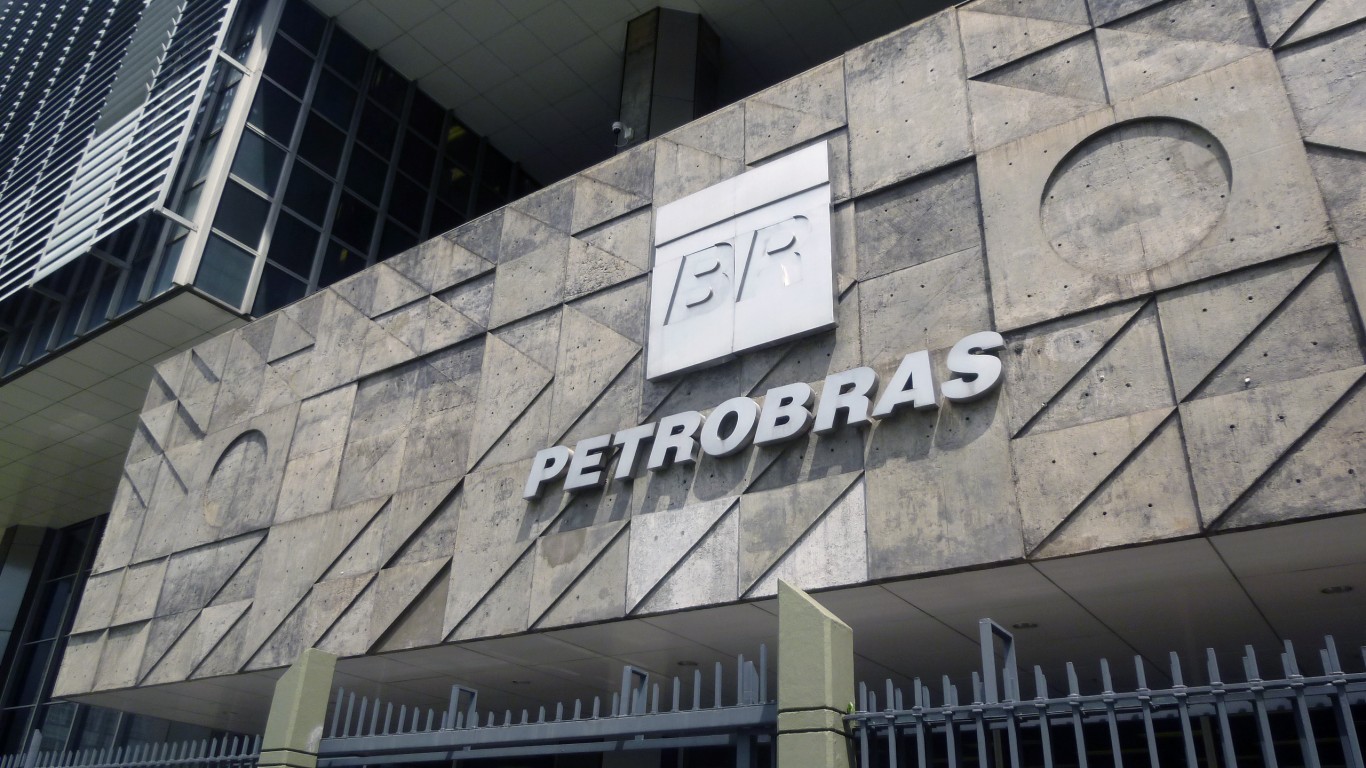
EWZ tracks the MSCI Brazil 25/50 Index and holds roughly 50 large- and mid-cap Brazilian stocks, with iron-ore miner Vale, state oil company Petrobras, and the country’s big banks (Itaú Unibanco, Banco Bradesco, Banco do Brasil) typically commanding the largest weights. The fund collects whatever those companies pay in Brazilian reais, converts proceeds to dollars, deducts the 0.59% expense ratio, and passes the rest along twice a year. The distribution is whatever Brazilian corporate boards decide to send out, translated through the BRL/USD rate.
That mechanic explains the recent swings. The June 2025 distribution came in at $0.52, the December 2025 payment at $1.03, plus a January 2026 reconciliation of $0.11. What matters is whether the underlying companies still have the cash to pay.
Commodity cash flow drives payouts
Petrobras and Vale dominate distribution capacity. WTI crude sits at almost $110 a barrel, in the 98th percentile of its 12-month range against a one-year average of $69. Petrobras is a dividend machine when oil holds above $80 and a dividend cutter when it sinks below $60, so current levels point to elevated payouts ahead. Iron ore has stayed firm enough to keep Vale’s variable dividend policy active.
The risk is exactly that dependency. Brazilian commodity producers do not smooth payouts the way US dividend aristocrats do. Petrobras moved to a free-cash-flow-linked formula in 2023, and Vale already pays based on a percentage of operating cash flow. When commodities turn, the dividend turns with them, often within one or two quarters.
Banks and currency volatility
The Financials sleeve, the index’s largest, has been the steadier income contributor. Itaú and Banco do Brasil run healthy capital ratios and high-teens returns on equity, with interim dividend and interest-on-capital payments more predictable than commodity payouts.
Currency does the rest of the work. The real currently fetches roughly $0.20, well off its 2020 through 2021 lows. A weaker real shrinks every dollar distribution even when reais payouts grow. Political risk, BRICS realignment chatter, and fiscal noise out of Brasília routinely move the currency several percent in a quarter, and that volatility passes straight through to EWZ holders.
The performance reality
EWZ is up roughly 48% over the past year and 22% year to date at $39 a share. The ten-year total return is just 133%, well behind the S&P 500 over the same stretch. The yield is real, but holders are not earning it on a calm asset. Owning EWZ for income means accepting commodity-cycle whiplash plus currency translation.
The verdict
EWZ’s distribution will keep arriving twice a year and will continue to reflect whatever Brazilian dividends and exchange rates produce. Stability is a separate question. The payment will keep moving. Holders seeking smooth, growing income are better served by a US dividend-growth fund. Holders who want direct exposure to Brazilian commodity cash flows, with the currency and political risk that comes with it, own the right ticket. Just do not budget around the next check.
Contact [email protected] for any questions or corrections.
After 15 years on Wall Street with 7 of them as Director of Corporate and Municipal Bond Trading for a NYSE member firm, I started my own project and corporate finance consultancy. Much of the work involves writing business plans, presentations, white papers and marketing materials for companies seeking budgetary allocations for spinoffs and new initiatives or for raising capital for expansion or startup companies and entrepreneurs. On financial topics, I have been published under my own byline at The Motley Fool, 247wallst.com, DealFlow Events’ Healthcare Services Investment Newsletter and The Microcap Newsletter, among others. Additionally, I have done freelance ghostwriting writing and editing for several financial websites, such as Seeking Alpha and Shmoop Financial. I have also written and been published on a variety of other topics from music, audiophile sound and film to musical instrument history, martial arts, and current events. Publications include Copper Magazine, Fidelity (Germany), Blasting News, Inside Kung-Fu, and other periodicals.