This Copper ETF Returned 156% in a Year and Pays 9.7% While You Wait for the 4x Case to Play Out.
The Sprott Junior Copper Miners ETF (NASDAQ:COPJ) is the highest-beta public-market vehicle for betting that AI data center buildout breaks the copper supply curve over the next two years. COPJ already returned 156% over the trailing year, so the market…


The Sprott Junior Copper Miners ETF (NASDAQ:COPJ) is the highest-beta public-market vehicle for betting that AI data center buildout breaks the copper supply curve over the next two years. COPJ already returned 156% over the trailing year, so the market has started pricing this. The real question for anyone buying COPJ now is whether the second leg, the one that needs hyperscaler capex to sustain through 2027, actually arrives.
What COPJ actually owns
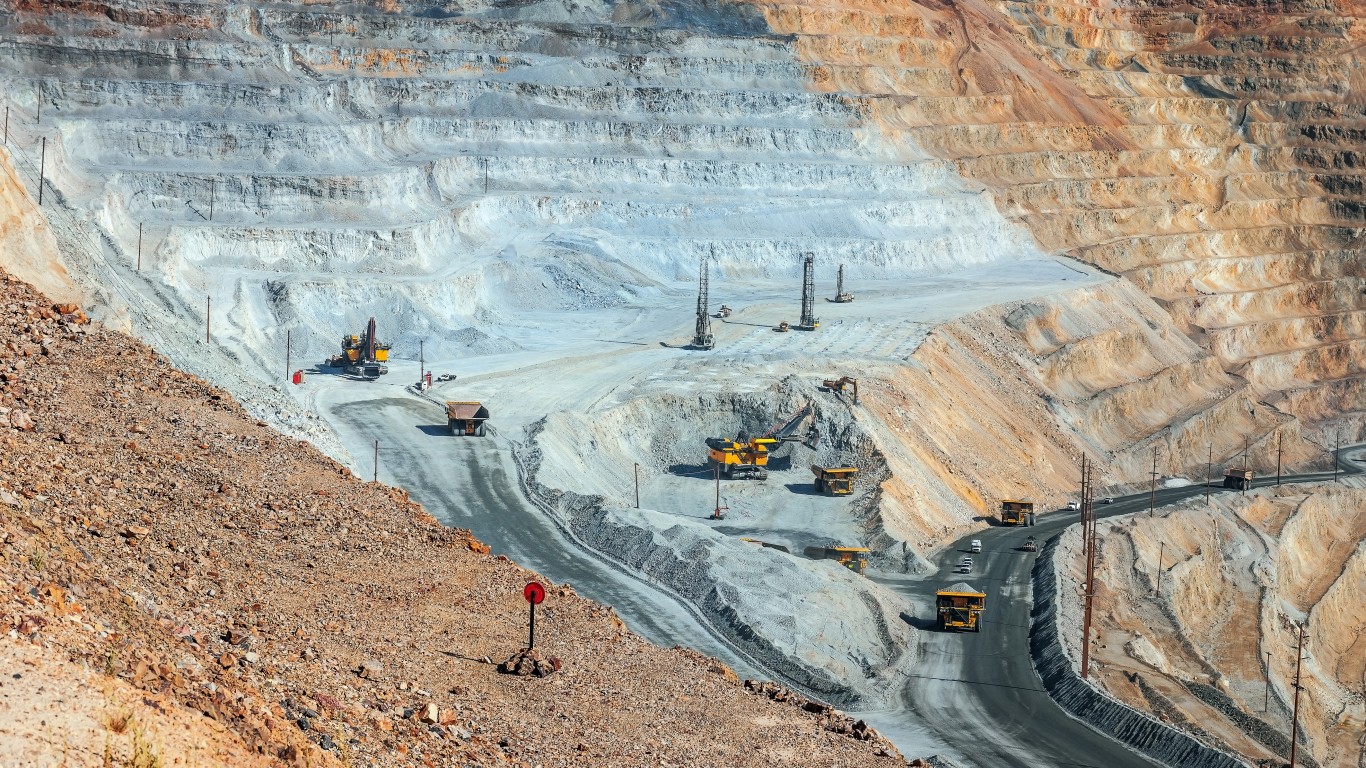
The fund holds a basket of junior copper miners, with the top 10 accounting for 46.7% of net assets. These are mostly exploration and development companies rather than fully producing majors. The expense ratio runs 0.76%, fair for a thematic small-cap basket but well above Global X Copper Miners ETF (NYSEARCA:COPX), which holds the majors.
The return engine is copper price multiplied by operating leverage. A marginal-cost junior barely breaks even at $7,000 per ton copper and becomes very profitable at $12,000 per ton. The same move barely shifts earnings at a fully developed producer like Freeport. Juniors function as the call option on the commodity, with all the convexity and decay that implies.
Performance against the cheaper alternative
COPJ gained 109% in calendar 2025 versus 97% for COPX. Over the trailing year COPJ ran 156% against COPX at 132%. Juniors did what juniors do in a copper bull. They overshot.
The 2026 year-to-date reversal matters. COPJ is up 19% while COPX is up 26%. Majors have led the most recent leg because rotating capital wants producing tons, not exploration optionality. The “juniors always win” frame breaks down inside short windows, and holders need the stomach for those mean reversions.
The 4x case, with the math
Copper traded past $12,000 per ton in late December 2025, and JPMorgan projects an average of $12,075 per ton through 2026. BloombergNEF flags a structural deficit driven by AI data centers, electrification, and slow new-mine permitting. If hyperscaler capex holds and copper runs to $15,000 to $18,000 per ton over 24 months, which is what the deficit math implies, economics for juniors holding viable deposits change qualitatively. Marginal producers swing to high margins. Development-stage names become takeover targets. The basket re-rates on both earnings and acquisition premia. That compounding is where a 4x outcome lives.
Where this trade breaks
The same operating leverage cuts both ways. Three constraints define COPJ ownership.
- Concentration in small, illiquid names. Many underlying companies are exploration-stage, and a meaningful share will never produce a pound of copper. The ETF wrapper diversifies single-name risk without eliminating it.
- Macro sensitivity. If AI capex slows, China stimulus disappoints, or supply ramps faster than expected through recycling and new Chilean projects, juniors get hit first and hardest.
- Volatility you have to sit through. COPJ moved 18% in the single week ending May 12, 2026. Anyone who flinches at drawdowns will sell at the wrong moment.
Who should hold it
COPJ fits as a small, high-conviction sleeve, roughly 3% to 7% of equity exposure, for an investor who already owns core positions and wants direct leverage to data center power demand. Anyone needing the position to behave like a normal stock next quarter is in the wrong fund. COPX is the cleaner, cheaper, less volatile version of the same trade for those who want copper exposure without the volatility tax. The 4x case is real math grounded in supply-demand asymmetry. It still requires two more years of hyperscaler capex doing what it has been doing, which is a bet you should size accordingly.
And while you hold, you get an annual yield of ~9.7%.
Contact [email protected] for any questions or corrections.
Omor Ibne Ehsan is a writer at 24/7 Wall St. He is a self-taught investor with a focus on growth, cyclical, and dividend equities that have strong fundamentals, value, and long-term potential. He also has an interest in high-risk, high-reward investments such as penny stocks.