Bitcoin Is Down 7 Percent This Year But Bitcoin Mining ETFs Are Up Over 50 Percent. This Is The Real Crypto Story of 2026
Spot Bitcoin has spent 2026 grinding lower while the companies that mine it have ripped higher. iShares Bitcoin Trust ETF (NASDAQ:IBIT), the largest spot Bitcoin ETF on the market, is down roughly 13% year to date, tracking Bitcoin itself almost…


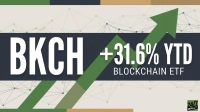
Spot Bitcoin has spent 2026 grinding lower while the companies that mine it have ripped higher. iShares Bitcoin Trust ETF (NASDAQ:IBIT), the largest spot Bitcoin ETF on the market, is down roughly 13% year to date, tracking Bitcoin itself almost tick for tick as the coin has slid from around $87,000 at year end to roughly $75,800. Meanwhile, Valkyrie Bitcoin Miners ETF (NASDAQ:WGMI) is up over 50% in the same window, and Global X Blockchain ETF (NASDAQ:BKCH) is up close to 38%.
That gap is the real crypto story of 2026. When the underlying commodity is weak but the producers of that commodity are screaming higher, something structural is happening underneath the spot price. For Bitcoin, that something is post-halving economics colliding with a hash rate arms race and an AI infrastructure pivot that has rerated mining companies as something closer to data center operators than levered crypto bets.
Why the miners are leaving spot Bitcoin behind
The April 2024 halving cut block rewards in half, which on paper should have crushed miner economics. Instead, the industry consolidated around the most efficient operators, hash prices stabilized, and the survivors emerged with lower cost structures and far more leverage to any uptick in Bitcoin. That is the classic equity leverage effect: when a miner’s all-in cost to produce a Bitcoin sits well below the spot price, every dollar of revenue above that breakeven flows to operating profit at a multiple.
The second engine is the AI pivot. Companies that built gigawatts of power-dense infrastructure to mine Bitcoin are now leasing that capacity to hyperscalers and GPU tenants. IREN, Core Scientific, TeraWulf, and Applied Digital have all signed or expanded high-performance computing deals, and the market is paying a data center multiple for that revenue. The mining ETFs are riding both engines at once.
IBIT: the clean baseline, and what it is telling you
IBIT exists to do one thing and it does it well: hold Bitcoin and pass the price through. The fund holds nearly 100% physical Bitcoin with a sliver of cash, and BlackRock’s fact sheet lists the expense ratio at 0.33% gross, though the US-listed fund has historically been quoted at a lower post-waiver rate.
The investment logic is simple. If you want Bitcoin exposure inside a brokerage account or IRA without dealing with wallets, keys, or exchange custody, IBIT is the cleanest tool. It is also the right benchmark for this article. Year to date, IBIT is down about 13%, which is what direct Bitcoin exposure has actually delivered. That is the number every miner ETF is being measured against.
The tradeoff with IBIT is the same tradeoff Bitcoin has always carried: no operating leverage, no cash flow, no second engine. When Bitcoin goes down, IBIT goes down. There is nothing in the structure to cushion or amplify the move.
WGMI: the high-octane miner trade
WGMI is the standout on this list and deserves the most attention. It is an actively managed, pure-play basket of Bitcoin mining equities, and its 2026 numbers show exactly why miners are not a one-for-one Bitcoin proxy. The fund is up over 50% year to date, up more than 18% in just the past week, and up roughly 268% over the past 12 months, all while Bitcoin itself is firmly in the red over the same one-year window.
That spread is the equity leverage thesis in action. When a miner can produce a Bitcoin for, say, $40,000 and sell it at $75,000, the gross margin per coin is enormous, and any operational improvement (newer ASICs, cheaper power contracts, higher hash rate share) drops straight to the bottom line. Layer on the AI hosting revenue that several of WGMI’s holdings now generate, and you get a basket that responds to two distinct demand curves: digital scarcity and compute scarcity.
What you should understand before buying it: WGMI is volatile in both directions. Mining stocks have historically traded at three to five times the beta of Bitcoin itself, which is wonderful in a rally and brutal in a drawdown. Hash rate competition, energy costs, ASIC depreciation, and regulatory pressure are all real and recurring risks. The same equity leverage that delivered the 2026 returns can run in reverse just as quickly.
BKCH: the broader infrastructure play
BKCH is the contrarian pick on this list, and it earns its spot by widening the aperture beyond miners. The fund holds 35 positions across roughly $238 million in net assets, with miners making up roughly half the book and the rest spread across exchanges, custodians, and mining hardware. IREN tops the entire fund at about 12%, with Coinbase, Applied Digital, Bitmine Immersion, TeraWulf, Riot Platforms, Cipher Mining, Hut 8, Core Scientific, and Bitfarms filling out the top ten.
That mix is why BKCH is up close to 38% year to date rather than the 50%-plus that WGMI has delivered. You give up some miner beta in exchange for exposure to the rails of the crypto economy: exchange fee revenue, custody, and the AI/HPC hosting layer that companies like Applied Digital and IREN now sit at the center of. The top 10 holdings represent about 80% of net assets, so concentration is real, but it is concentrated across business models rather than a single one.
The tradeoff: BKCH carries an roughly 11% cash position via a BNY Mellon repo, which dampens upside in fast rallies. And because Coinbase moves more on trading volumes and stablecoin economics than on hash rate, BKCH will not capture the full miner squeeze in a Bitcoin breakout.
Which fund fits which investor
If you want Bitcoin and only Bitcoin, IBIT is the right tool, and the 2026 drawdown is the price of admission for an asset that has still compounded at extraordinary rates over five and ten-year windows. If you believe the miners’ AI pivot and post-halving cost structure have permanently rerated the group, WGMI offers the cleanest, highest-beta exposure, with the understanding that the same leverage cuts both ways. BKCH is the choice for investors who want crypto infrastructure exposure without making an all-in bet on hash rate economics, accepting lower upside in exchange for a broader business mix.
The divergence between spot Bitcoin and the miners reflects the market pricing in a structural change in what these companies actually are. Whether that rerating holds depends on Bitcoin’s next move and on whether the AI hosting contracts keep arriving. Both are worth watching closely from here.
Contact [email protected] for any questions or corrections.
After 15 years on Wall Street with 7 of them as Director of Corporate and Municipal Bond Trading for a NYSE member firm, I started my own project and corporate finance consultancy. Much of the work involves writing business plans, presentations, white papers and marketing materials for companies seeking budgetary allocations for spinoffs and new initiatives or for raising capital for expansion or startup companies and entrepreneurs. On financial topics, I have been published under my own byline at The Motley Fool, 247wallst.com, DealFlow Events’ Healthcare Services Investment Newsletter and The Microcap Newsletter, among others. Additionally, I have done freelance ghostwriting writing and editing for several financial websites, such as Seeking Alpha and Shmoop Financial. I have also written and been published on a variety of other topics from music, audiophile sound and film to musical instrument history, martial arts, and current events. Publications include Copper Magazine, Fidelity (Germany), Blasting News, Inside Kung-Fu, and other periodicals.