“Demand for Data Center Power Continues to Outpace Expectations” — Josh Brown’s Case for Heavy Assets Over AI Hype
Josh Brown, CEO of Ritholtz Wealth Management and a fixture on CNBC’s Halftime Report, has built a new ETF around a simple idea: own the businesses that artificial intelligence cannot replace. Speaking on The Compound and Friends podcast, Brown unveiled…

This post may contain links from our sponsors and affiliates, and Flywheel Publishing may receive compensation for actions taken through them.

Josh Brown, CEO of Ritholtz Wealth Management and a fixture on CNBC’s Halftime Report, has built a new ETF around a simple idea: own the businesses that artificial intelligence cannot replace. Speaking on The Compound and Friends podcast, Brown unveiled the Halo ETF (NYSEARCA:LOHA), a rules-based strategy built by Roundhill Financial focusing on companies with “heavy assets, low obsolescence risk.” Brown disclosed he serves in a limited consulting role for Roundhill.
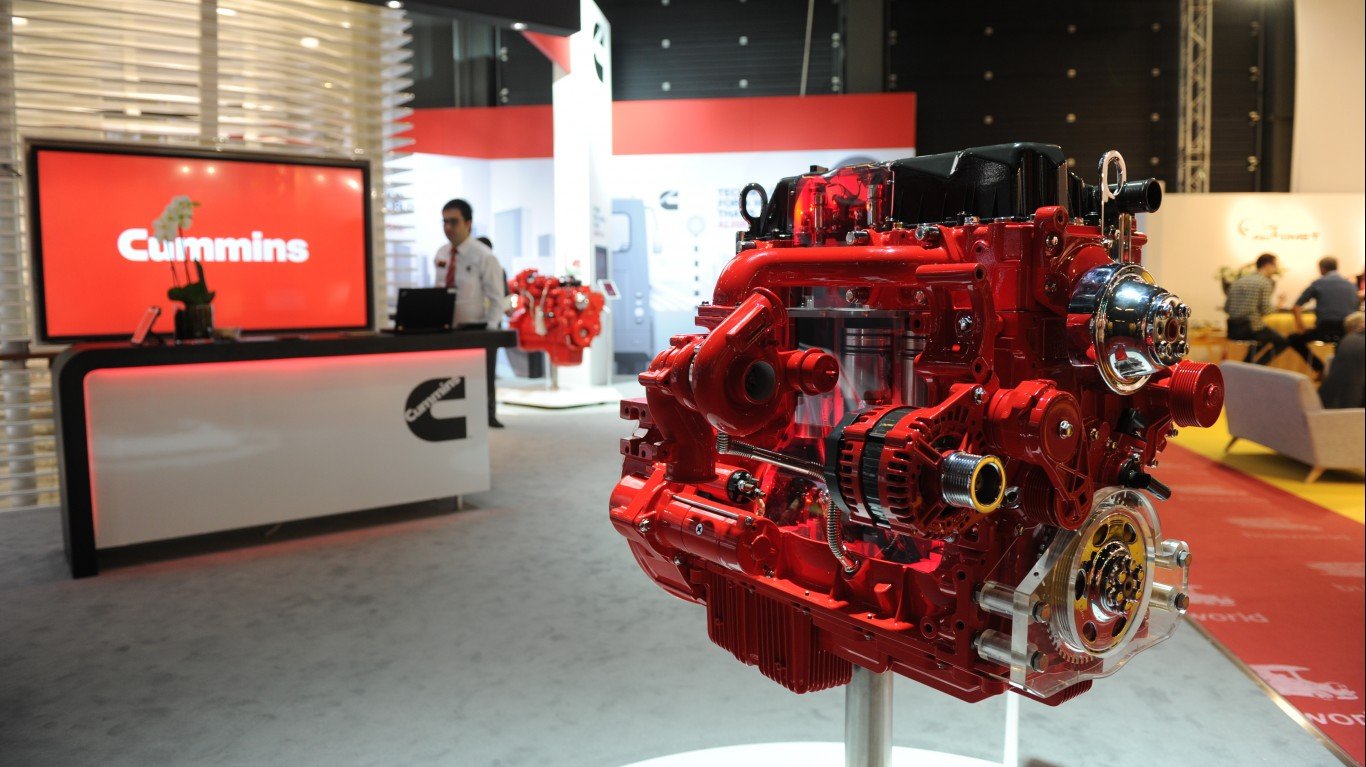
The construction is deliberately contrarian. Financials are completely excluded, tech represents only 1%, and communications services 1%. Industrials carry the load at 36% of the portfolio, and the index is equal-weighted so no single name dominates. Brown’s framing: “No one’s going to disrupt the copper mine, like, for obvious reasons. And, you know, Cummins is making engines. You can’t just ChatGPT myself an engine.”
Michael Batnick captured the spirit of the list in one sentence: “these are not individual stocks anybody buys except for Philip Morris.” That is the point. The fund leans into names retail investors typically ignore while traditional indices funnel capital toward a handful of mega-cap technology stocks.
The Top Holdings, Decoded
Cummins (NYSE:CMI | CMI Price Prediction) is the clearest example of the AI paradox at the core of Brown’s thesis. The engine and power systems maker is up 27.5% year to date and 102.19% over the past year, riding data center backup power demand. Power Systems revenue jumped 19% YoY to $1.96 billion at a 29.5% EBITDA margin in Q1 2026. CEO Jennifer Rumsey told investors that “demand for data center power generation across a range of our products continues to outpace expectations” and raised full-year revenue guidance to growth of 8% to 11%.
Southern Copper (NYSE:SCCO), which Brown cited as a quintessential halo stock, has climbed 37.14% year to date and 120.06% over one year. Q1 2026 net income rose 66.7% to $1.579 billion as copper prices gained 37.5%. Cash cost per pound went negative at -$0.11. Every data center on the planet needs the metal Southern Copper digs out of the ground.
AutoZone (NYSE:AZO) is the e-commerce-resistance pick. Q3 fiscal 2026 EPS came in at $38.07, beating the $36.17 estimate by 5.26%, with domestic commercial sales up 10.4% to $1.40 billion. The stock has cooled, falling 13.45% year to date, but the operating model, an aging US vehicle fleet and a dense network of 7,774 stores, has resisted Amazon for two decades.
J.B. Hunt Transport Services (NASDAQ:JBHT) embodies the physical-economy moat. Q1 2026 revenue rose 4.6% to $3.06 billion, and the stock is up 42.78% year to date. Intermodal freight networks, rail relationships, and container fleets cannot be cloned by software.
Lamar Advertising (NASDAQ:LAMR) owns billboards. The REIT posted Q1 2026 EPS of $1.00, beating the $0.84 estimate by 19.26%, with free cash flow up 25.8% to $152.4 million. Out-of-home advertising cannot be ad-blocked or skipped, and the dividend yield sits at 4.11%.
Philip Morris International (NYSE:PM) is the consumer staples anchor, with a $276 billion market cap and a regulatory moat reinforced by IQOS, available in 108 markets. Q1 2026 international smoke-free revenue surged 24.7% to $3.836 billion at a 70.0% gross margin. CEO Jacek Olczak called it “an outstanding delivery from IQOS”.
What Investors Should Watch
The Halo concept hinges on a counterintuitive observation. The companies most insulated from AI disruption are often the same ones selling picks and shovels to the AI build-out: engines that power data centers, copper that wires them, freight that hauls the equipment, and billboards that survive whatever happens to attention online. With tech crowding traditional benchmarks, Brown’s wager is that the unglamorous half of the economy deserves dedicated shelf space in a portfolio.
Contact [email protected] for any questions or corrections.
Don Lair writes about options income, dividend strategy, and the kind of boring-but-durable investing that actually funds retirement. He's the founder of FITools.com, an independent contributor to 24/7 Wall St., and a former writer for The Motley Fool.