Jensen Huang Just Dropped a Bomb on ‘AI-Proof’ College Degrees: ‘It Won’t Matter’
For the past two years, students and parents have been asking the same question: What should I study to avoid being replaced by artificial intelligence? It's a fair concern. AI can now write reports, generate software code, analyze legal documents,…

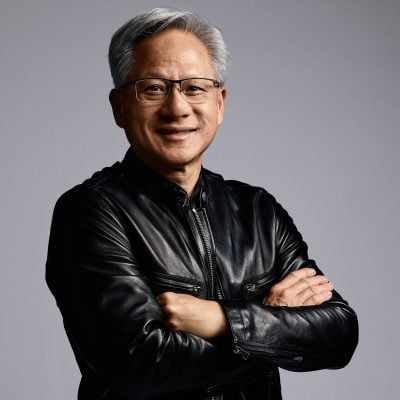
For the past two years, students and parents have been asking the same question: What should I study to avoid being replaced by artificial intelligence?
It is a fair concern. AI can now write reports, generate software code, analyze legal documents, create marketing campaigns, and even produce video content. Every new breakthrough seems to shrink the list of supposedly “safe” careers.
So when NVIDIA (NASDAQ:NVDA | NVDA Price Prediction) CEO Jensen Huang was asked what children should study to stay relevant in the AI era, his answer caught many people off guard.
“It won’t matter.”
At first glance, that sounds shocking. The deeper message, though, may be even more important for investors, workers, and students alike.
Huang’s Real Message Isn’t About Degrees
In an interview with Channel NewsAsia, Huang argued that parents shouldn’t obsess over finding an “AI-proof” major. His full quote captures the nuance: “I think that it won’t matter. All the things that used to matter are still things that are going to matter in the future.” Journalism, storytelling, design, and the arts will remain relevant in an AI-driven world, he said. Rather than selecting a field out of fear, students should ask how AI can elevate their craft and purpose.
Huang went further, identifying the traits he considers truly irreplaceable: storytelling, creativity, and judgment. These are distinctly human competencies that AI can augment but not replicate wholesale. His advice to anyone uncertain about where to begin was unexpectedly pragmatic: ask AI directly how to use it.
That view is consistent with positions Huang has held for years. Back in 2024, he suggested that coding itself might become less central as AI increasingly writes software, and that people should build deep domain expertise while AI handles more of the technical execution.
His core argument is that AI will become so widespread that every profession will use it. If true, there may not be any truly AI-proof degrees because there may not be any AI-free industries left.
The Contrast: China Takes the Opposite Approach
Huang’s advice lands in a world where governments are reaching opposite conclusions. China has been overhauling its university system at a scale unmatched anywhere else. Between 2021 and 2025, Chinese universities revoked or suspended roughly 12,200 undergraduate programs while introducing 10,200 new ones focused on AI, robotics, and advanced technology, according to China’s Ministry of Education. More than 30% of the country’s university programs were affected.
The cuts hit arts, humanities, foreign languages, and management programs hardest. One of China’s leading media schools, the Communication University of China in Beijing, canceled five arts majors in 2025, including photography, comics, visual communication design, new media art, and fashion design. University officials cited the coming era of “human-machine cooperation” as the rationale. Officials replaced those programs with technology-infused alternatives such as “intelligent imaging art” and “intelligent audiovisual engineering.”
Huang’s advice points in precisely the other direction. Where Chinese authorities are treating arts and humanities as obsolete, Huang argues those fields will retain their value and that students simply need to learn to apply AI tools within their chosen discipline.
The Contradiction Investors Should Notice
Huang has repeatedly pushed back against the narrative that AI is eliminating jobs. He has called the connection between AI and layoffs “lazy,” arguing that claims of widespread AI-driven job losses don’t hold up given how recently generative AI tools became broadly useful. Many companies, after all, were cutting workers long before ChatGPT arrived.
Yet the labor market picture is more complicated. Over the past two years, companies across technology, media, finance, customer service, and consulting have announced workforce reductions while simultaneously increasing AI investments. Some executives have explicitly tied headcount cuts to AI-driven efficiency gains.
That context matters when considering the source of Huang’s optimism. NVIDIA’s entire business is built around selling the GPUs powering this transformation. The company posted $215.9 billion in revenue for fiscal 2026, up 65% from the prior year, as enterprises rushed to build out AI infrastructure. By the first quarter of fiscal 2027, quarterly revenue had climbed further to $81.6 billion, up 85% from a year earlier. Every time a business uses AI to automate a task previously done by a human, demand for NVIDIA hardware potentially rises.
That does not make Huang wrong. But investors should weigh the incentives involved before taking any AI optimist’s commentary at face value.
What This Means for Workers and Investors
The most important takeaway from Huang’s comments is not that degrees no longer matter. Adaptability matters more. AI will not eliminate entire professions overnight, but it will reshape nearly all of them. Journalists will use AI. Lawyers will use AI. Engineers will use AI. Designers will use AI. Physicians already are.
The workers who thrive may not be those who chose the most “AI-resistant” major. They may simply be the ones who learned to use AI more effectively than their peers. That aligns with one of Huang’s sharpest observations: people are more likely to lose opportunities to someone wielding AI skillfully than to AI itself.
Key Takeaway
Jensen Huang’s “it won’t matter” comment is less about college majors and more about the future of work itself. His argument is that AI will become as universal as the internet or smartphones. If every profession uses it, then no degree enjoys permanent protection.
Investors should still separate NVIDIA’s institutional optimism from labor market reality. Huang sells the picks and shovels powering the AI revolution, and the company has every reason to emphasize AI’s benefits over its disruptions. Meanwhile, companies continue looking for ways to reduce labor costs through automation, and China’s aggressive academic overhaul shows that governments are making hard bets on which human skills will survive.
The question is no longer which careers AI will affect. According to Huang, they will all be affected. What separates workers going forward is whether they learn to use AI well within their chosen field, regardless of what that field is.
Editor’s note: This update added Huang’s full quote from Channel NewsAsia and his identification of storytelling, creativity, and judgment as irreplaceable skills, along with new context on China’s elimination of roughly 12,200 university degree programs between 2021 and 2025 and NVIDIA’s first-quarter fiscal 2027 revenue of $81.6 billion.
Contact [email protected] for any questions or corrections.
After two decades of patrolling the dark corners of suburbia as a police officer, Rich Duprey hung up his badge and gun to begin writing full time about stocks and investing. For the past 20 years, he’s been cruising the markets looking for companies to lock up as long-term holdings in a portfolio while writing extensively on the broad sectors of consumer goods, technology, and industrials. Because his experience isn’t from the typical financial analyst track, Rich is able to break down complex topics into understandable and useful action points for the average investor. His writings have appeared on The Motley Fool, InvestorPlace, Yahoo! Finance, Money Morning, and, of course, 24/7 Wall St. He has been featured in both U.S. and international publications, including MarketWatch, Financial Times, Forbes, Fast Company, and USA Today.