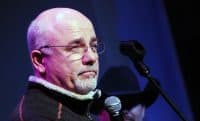
‘You’re Gonna Have Two Kids at 30 Paying Off This Loan’: Dave Ramsey to 20-Year-Old Plotting $75,000 Flight School
She paid off $13,000 in medical debt at 19, landed a $70,000 job at 20, and now wants flight school plus a house. Dave Ramsey had one warning that could unravel the whole plan.

This post may contain links from our sponsors and affiliates, and Flywheel Publishing may receive compensation for actions taken through them.

A 20-year-old called The Ramsey Show with a plan most 40-year-olds could not put together. She made $25,000 last year, paid off $13,000 of medical debt she racked up in the same year, and just landed a new job paying $70,000, about $4,800 a month. She is debt-free, on Baby Step 4, and wants to attend flight school $75,000 self-paced flight school while also saving $833 a month toward a $40,000 down payment on a $200,000 house in the next four to five years. Her question: prioritize cash-flowing school, keep investing for retirement, or start the house fund?
Dave Ramsey’s response cut straight to the risk of financing the training: “I don’t want you having two kids at 30 paying off this loan.” The stakes are real. If she borrows $75,000 instead of paying cash, that loan follows her into the years she is trying to buy a home, start a family, and build a pilot career that historically pays poorly in the first few years.
The Math Favors Paying Cash
Ramsey’s core argument is that career-training debt is different because the training itself produces the income that services it. “Your return on investment of pouring money into flight school is better than your return on investment in mutual funds. Mathematically it is,” he told her. His prescription was blunt: “Pay cash for flight school as fast as you can. Become a pilot, increase your income, use that increased income to pile cash for your house.”
On a $4,800 monthly take-home, she can throw $3,000 or more a month at flight school if she keeps her lifestyle at the same level it was on a $25,000 salary. At that pace, the $75,000 program clears in roughly two years with zero loan balance. Financing $75,000 at a typical private-loan rate would attach hundreds of dollars in monthly interest before principal moves. For context, the average credit card APR is almost 21%, a reminder of how quickly borrowed money compounds against a young earner.
George Kamel put the sacrifice window plainly: “There literally will not be another more perfect time in your life to make a sacrifice than right now.” He sketched the upside: “Let’s say at 22 you double your income, you get your pilot’s license, and you make $150,000, and you don’t have any debt. By the time you’re 24, when you want to buy this house, you’ll have way more than $200,000 saved up.”
The Variable That Changes Everything: Early-Pilot Pay
The one number that can break this plan is her actual income in years one through five of her flying career. Ramsey flagged it directly: “What does being a pilot mean to your life? How many hours a week are you working, and what is your actual income year 1, 2, 3, 4, 5? Because you’re not going to get hired to fly 747s as soon as you get through flight school.”
Regional first officers routinely start well below the $150,000 Kamel used as an upside case. If her first post-certification year lands closer to $60,000, a $75,000 loan at market rates would eat a meaningful chunk of every paycheck for years. Paying cash removes that variable entirely. Debt-free, a $60,000 starting salary still funds a growing house account. Debt-financed, the same salary funds the lender first and her future second.
The wider economy reinforces the caution. The personal savings rate has dropped to 2.8% in the second quarter of 2026, the lowest in the current dataset, with Americans spending 93.4% of disposable income. University of Michigan consumer sentiment sits at 49.5, in the bottom 10% of readings historically. Median usual weekly earnings for full-time workers ran $1,251 in the second quarter of 2026. Households have almost no buffer, which is exactly the environment where a young borrower learns the hard way that a loan taken at 20 is still a loan at 30. Housing is the other clock. The Case-Shiller National Home Price Index reached 335.1 in May 2026, in the 90th percentile historically. Splitting focus between school and a down payment slows both goals while prices keep moving.
What She Should Actually Do
- Sequence the goals. Pause the $833 monthly house savings and retirement contributions above any employer match. Redirect that cash to flight school tuition until the $75,000 is fully paid.
- Set a written pay-cash pace. Divide the $75,000 by the months you are willing to sacrifice. If 24 months, that is roughly $3,125 a month. If 30 months, roughly $2,500. Lock the number and treat it like a bill.
- Model realistic first-year pilot pay. Before enrolling, get actual salary ranges for regional carriers hiring in your region for years one through five, not airline-captain figures on recruiting brochures.
- Restart the house fund after certification. Once the license is in hand and income steps up, redirect the same monthly amount you were sending to school into the down payment account.
- Accept the learning curve. Kamel’s line matters: “100% chance you’re going to make mistakes. Let that one go.” Ramsey’s follow-up is the payoff: “When you pay cash, you don’t pay for it later.”
The freedom Kamel described is the real product here: “Not one person will ever get to tell you what to do because you’ll be in control of whatever you do next.” Borrow the $75,000 and the lender sets the pace for the next decade. Pay cash and the pilot does.
Contact [email protected] for any questions or corrections.
I am a long time investor and student of business, and believe finding good companies that can become great investments is the best game on earth. After 20 years of writing and researching the public markets it is clear that individuals have never had more tools and information to take control of their financial lives. From ETFs and $0 commissions to cryptos and prediction markets there has never been a greater democratization of access to investing.
I write to help people understand the investments available to them so they can make the best choice for their portfolio, whether they're starting out or looking for income in retirement.