Micron and SK Hynix Cross $1 Trillion Valuations as Chip Shortage Fuels AI Boom
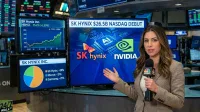
The trillion-dollar club just got two new memory chip members. Micron Technology (NASDAQ:MU | MU Price Prediction) and South Korea’s SK Hynix (000660.KS) both crossed $1 trillion in market capitalization for the first time this week, joining Samsung in a…

The trillion-dollar club just got two new memory chip members. Micron Technology (NASDAQ:MU | MU Price Prediction) and South Korea’s SK Hynix (000660.KS) both crossed $1 trillion in market capitalization for the first time this week, joining Samsung in a rarified tier of semiconductor giants. The move reflects that demand for AI infrastructure continues to outpace the industry’s ability to supply the memory chips that power it, as discussed during a recent episode of Reuters’ Morning Bid: Week in Review podcast.
As the podcast host put it, “The chip shortage is a big part of this story. They just can’t produce chips fast enough to keep up with the demand from data centers, and that means that their revenues are just going up and up.”
Why Memory Became the AI Bottleneck

For years, graphics processors grabbed most of the attention in the AI trade. Increasingly, investors are realizing that high-bandwidth memory, or HBM, has become just as important. This is because every advanced AI accelerator requires massive amounts of memory to move data efficiently. As hyperscalers race to build larger AI clusters, demand for HBM has climbed faster than suppliers can expand capacity.
Micron’s recent results show this dynamic. In fiscal Q1 2026, the company reported $13.64 billion in revenue, up 56.6% year over year, while non-GAAP EPS reached $4.78, well above analyst expectations. The company’s Cloud Memory Business Unit generated $5.28 billion in revenue with a remarkable 66% gross margin, nearly doubling from the prior year as customers locked in future HBM supply.
Profitability has improved just as dramatically. GAAP gross margin expanded to 56.0%, up from 38.4% a year earlier. Management then guided fiscal Q2 revenue to approximately $18.7 billion, with non-GAAP gross margin expected to reach roughly 68%. The combination of rising prices, constrained supply, and surging demand has created one of the strongest operating environments the memory industry has seen in years.
CEO Sanjay Mehrotra tied Micron’s performance directly to the AI boom: “Micron’s technology leadership, differentiated product portfolio, and strong operational execution position us as an essential AI enabler, and we are investing to support our customers’ growing need for memory and storage.”
AI Funding Keeps Raising the Stakes
The host pointed to a fresh data point on AI capital intensity: Anthropic raised $65 billion at a valuation of “more than $900 billion. That’s more than its key rival OpenAI.” A good portion of that raise eventually translates into GPU clusters, and every accelerator needs stacks of HBM beside it. That feedback loop is what has Micron’s Cloud Memory unit on a vertical trajectory.
The Korea Labor Wildcard
The second-order story is unfolding inside the fabs. Samsung recently reached a labor agreement designed to match compensation packages already offered by SK Hynix. According to the Reuters discussion, some workers will receive a share of chip-related profits for the first time, with certain bonus packages reportedly exceeding $400,000, partially in stock.
A caller on the podcast noted the precedent could “open a Pandora’s box for chipmakers” and set “new precedent for negotiations” across Korea, where labor power has historically been “a reason cited by international investors in the past not to invest in Korea.” For Micron shareholders, any wage-cost reset across its two largest competitors is worth monitoring.
Micron Remains the U.S. Pure Play

SK Hynix and Samsung trade on the Korea Exchange, leaving Micron as the only US-listed pure play on the same supercycle. The market has already noticed. MU now carries a market cap of roughly $1.095 trillion, a trailing P/E of 46, and a forward P/E of 9, reflecting how aggressively analysts expect the HBM-led earnings to grow. Analyst ratings stand at 9 strong buys, 30 buys, and 5 holds with zero sells.
Reddit sentiment turned euphoric around the milestone: a wallstreetbets post titled “Micron tops $1T market cap. $MU +19% after UBS raises price target from $535 to $1,625 on AI demand” drew hundreds of upvotes.

What to Watch Next
The next phase of the memory story will likely depend on three factors. First, investors will watch HBM pricing as suppliers negotiate contracts extending into 2027. Second, hyperscaler spending plans will remain under the microscope during the next earnings cycle. Third, labor developments in South Korea could influence industry cost structures if similar compensation arrangements become more widespread.
Contact [email protected] for any questions or corrections.
Thomas Richmond is a financial writer and content strategist with 5+ years of experience covering stocks and financial markets. He has published over 500 articles focused on individual stock analysis, helping investors better understand business fundamentals, stock valuations, and long-term opportunities.
Thomas previously served as a Content Lead at TIKR, a stock research platform, where he helped scale the company’s blog to hundreds of articles per month and contributed to a weekly newsletter reaching more than 100,000 investors.
Outside of work, Thomas enjoys weight lifting and soccer.