PSCT Has Doubled in a Year While the S&P 500 Returned 28.7% – Here’s Why
A dollar put into the Invesco S&P SmallCap Information Technology ETF (NASDAQ:PSCT) on the last trading day of 2025 was worth about $1.51 by the close on June 1, 2026. The same dollar in the S&P 500, via SPY, was…

This post may contain links from our sponsors and affiliates, and Flywheel Publishing may receive compensation for actions taken through them.

A dollar put into the Invesco S&P SmallCap Information Technology ETF (NASDAQ:PSCT) on the last trading day of 2025 was worth about $1.51 by the close on June 1, 2026. The same dollar in the S&P 500, via SPY, was worth about $1.11. That is the entire article in two numbers, and if you have spent the past three years listening to strategists promise that the small-cap tech rotation was, any minute now, about to arrive, those two numbers are also the receipt.
PSCT is up 50.83% year to date, going from $56.61 at the end of 2025 to $85.38 on June 1, 2026. Pull the lens back to a full year and the fund has doubled, up 100.8% from $42.52 last May 30. The S&P 500, no slouch in that same window, returned 28.7%. The gap is not a rounding error. It is the kind of spread that resets how people think about an asset class, and it deserves a closer look before anyone decides whether to chase it.
What Is Actually Inside the Wrapper
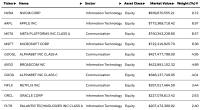
PSCT tracks the S&P SmallCap 600 Capped Information Technology index, which means the fund is, by construction, a basket of names most generalist investors have never heard of. Small-cap chipmakers, contract manufacturers, fiber and test-equipment vendors, niche software companies, IT services shops. The kind of businesses that supply the hyperscalers rather than become them. When risk appetite returns and capital starts flowing down the cap structure, this is the bucket that re-rates first because it was discounted hardest going in. That pattern is exactly what Goldman Sachs Asset Management flagged heading into the year, writing that in the small and mid-cap space they see potential opportunities among the "picks and shovels" of the AI boom and that secular small-cap growth stories should be met with outsized multiple expansion as rates retreat.
The mechanism, in other words, is not a mystery. Two of PSCT’s component stories make the point cleanly.
The Two Holdings Doing the Heavy Lifting
Viavi Solutions (NASDAQ:VIAV) is a test-and-measurement company that, until recently, traded like a slow-cycle telecom equipment vendor. As of June 1, 2026 it carries a market cap of about $11.7 billion and the stock is up 166.5% year to date, from $17.82 to $47.49. Look back twelve months and the move is even more dramatic, 421.3%. The catalyst is not a meme. Viavi’s Network and Service Enablement segment posted revenue of $321.5 million in fiscal Q3 2026, up 54.4% year over year, after the Spirent Communications integration plugged the company directly into hyperscale data center test workloads. Non-GAAP operating margin expanded 430 basis points to 21.0%, and management launched a 400G security and AI test platform for the same customers buying GPU racks by the truckload. CEO Oleg Khaykin told investors that performance was "driven by strong growth in the data center and aerospace and defense end markets" and that he expects those markets to remain strong drivers "for the foreseeable future."
Sanmina (NASDAQ:SANM | SANM Price Prediction) is the second exemplar, a contract manufacturer with a market cap of about $14.2 billion. The stock has gone from $150.07 at year-end to $264.88 on June 1, a 76.5% YTD gain. The trigger was the ZT Systems acquisition, bought from AMD for $1.36 billion net of cash and financed with $2.2 billion in new long-term debt. In fiscal Q2 2026, Sanmina put up revenue of $4.01 billion against a $3.27 billion consensus, growth of 102% year over year, with non-GAAP EPS of $3.16 versus the $2.40 estimate. CEO Jure Sola attributed the beat to ZT Systems shipments where "new accelerated compute shipments previously expected in the second half of the year" shifted into Q2. Core Sanmina, the legacy business that pre-dates the AI story, grew 7.3% organically. The rest is hyperscaler hardware.
Two companies, two different angles on the same trade. One sells the picks (test equipment for the data center). One sells the shovels (assembled AI servers). Both rerated sharply in the same six months, and both sit inside PSCT. Multiply that pattern across a basket of similarly positioned small caps and a 50% half-year stops looking like a fluke and starts looking like the mechanical consequence of the index doing what the index is built to do.
The Honest Question About What Comes Next
The same Sanmina release that justified the gain also told you what to watch. Q3 FY26 revenue is guided to $3.20 billion to $3.50 billion, a sequential step-down because the Q2 pull-forward emptied the pipeline. Non-GAAP EPS guidance for Q3 sits at $2.55 to $2.85, well below the $3.16 reported. On Viavi, the most recent month has been ugly even as the YTD chart looks heroic, with shares off 14% in the past 30 days from $55.33 to $47.49. The market is already pricing the next leg, not the last one.
That matters for PSCT in a specific way. A small-cap tech index that just doubled in twelve months is, by definition, no longer a small-cap tech index trading at distressed multiples. The valuation reset is the gain. What you are buying today is the question of whether AI capex into hyperscale data centers, aerospace and defense buildouts, and accelerated compute hardware continues to expand at the pace that has carried these names. Vanguard’s 2026 outlook puts the relevant number at $2.1 trillion in cumulative AI capital expenditure from the beginning of 2025 to the end of 2027. Goldman framed the same backdrop with a question rather than a forecast, asking whether AI-fueled growth can continue to compensate for weaker parts of the economy, and warning that a marked reversal and broad unwind of AI-related investments would be the precursor to a hard landing.
So the indicators worth watching sit upstream of the ETF price: the hyperscaler capex disclosures from the four cloud names every ninety days, the Sanmina Q3 report due in late July (does $3.20 billion to $3.50 billion hold, or does AI demand fill the hole faster than guided), and Viavi’s NSE segment growth rate, which has run between 45.8% and 54.4% year over year the last two quarters. If that NSE growth rate stays north of 30%, the thesis behind PSCT’s run is intact. If it rolls toward the mid-teens, the small-cap tech rotation will have been a six-month event rather than a multi-year regime.
The fund did, finally, what investors had been told for years it eventually would. Whether you should now own it depends less on the 50% you missed and more on whether the AI capex line on next quarter’s hyperscaler 10-Q keeps bending up. That is the only chart that matters for PSCT from here.
Contact [email protected] for any questions or corrections.
Austin Smith is a financial publisher with over two decades of experience as an investor, analyst, and advisor. He covers stocks, ETFs, Artificial intelligence and personal finance for 24/7 Wall St. Previously, he spent over a decade at The Motley Fool as a senior editor for Fool.com, portfolio advisor for Millionacres, and launched The Ascent to help reader take control of their personal finances.
His work has been featured on Fool.com, NPR, CNBC, USA Today, Yahoo Finance, MSN, AOL, Marketwatch, and many other publications. He is as an advisor to private companies, and co-hosts The AI Investor Podcast with Eric Bleeker.
When not looking for investment opportunities, he can be found skiing, running, or playing soccer with his children. Learn more about Austin's investment approach here.