





Wall Street may be turning on AI, as Oracle (NYSE:ORCL | ORCL Price Prediction) has lost a fifth of its value in just the past five days. This was a celebrated AI darling, whose CEO went on the podium next to President Donald Trump and OpenAI CEO Sam Altman a year ago.
ORCL stock is now up just 2.3% from year-ago prices, and it may not be long until it’s in the red. That’s a major shift from a company that many expected would inevitably reach $1 trillion. The market cap now is narrowly holding above $500 billion.
So, what happened?
Wall Street isn’t turning a blind eye to all the spending
Oracle recently posted its Q4 2026 earnings report, in which it trounced revenue expectations. Sales came in at $19.18 billion vs. $19.1 billion expected, though everyone on Wall Street knew Oracle would deliver a beat on the top line due to the aggressive buildout.
What they didn’t know is that Oracle is betting everything on this buildout. The real shocker driving the plunge is their forward guidance. Oracle plans to spend an eye-watering $70 billion on AI data center buildouts in the coming year. To fund this, they announced plans to raise $40 billion in new debt and equity financing.
The market has decisively shifted its stance on ambitious spending plans like this. This is not because your average Wall Street investor hates AI, but simply because a company like Oracle is getting overextended.
| Date | Oracle (ORCL) Cash in millions | Oracle (ORCL) Long-Term Debt in millions |
|---|---|---|
| 2025-05-28 | 10786.00 | 85297.00 |
| 2024-05-28 | 10454.00 | 76264.00 |
| 2023-05-28 | 9765.00 | 86420.00 |
| 2022-05-28 | 21383.00 | 72110.00 |
| 2021-05-28 | 30098.00 | 75995.00 |
| 2020-05-28 | 37239.00 | 69226.00 |
Not only is Oracle taking on tens of billions in more debt and bleeding cash, but it is also now diluting the stock. I believe it’s turning into CoreWeave (NASDAQ:CRWV) on steroids. The debt is now nearing $100 billion.
Oracle should learn from Micron
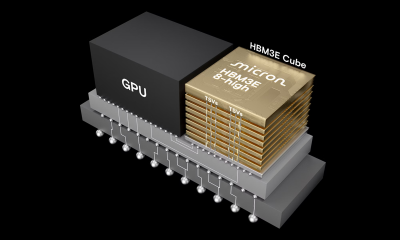
Oracle sees a future where everyone is clamoring for compute and betting the farm on it. On the other hand, Micron (NASDAQ:MU) is benefiting from companies like Oracle while setting up for a future where companies have overreacted by building out excess capacity as AI gets more efficient.
Micron has spent its cash clearing out its obligations by spending the first half of 2026 executing massive de-leveraging blitzes. This included a highly publicized $5.4 billion cash tender offer in March to wipe out senior notes. Micron has dropped its total debt load to just $10.8 billion against a $14.6 billion cash pile.
In the memory sector, when supply inevitably overtakes demand, chip prices crash, taking a company’s EBITDA down with it. By retiring debt now, Micron significantly lowers its long-term interest expenses. As a bonus, Micron will fare much better during a potential cyclical downturn if it can ensure it does not breach any debt covenants. These covenants require a healthy debt-to-EBITDA coverage ratio.
Could AI demand collapse?
Most people have no idea, and even Anthropic recently shared that it too sees three scenarios, one of which includes AI progress stalling out. Regardless, bears have been talking about an AI demand collapse for the past three years, and AI demand has accelerated explosively in that timeframe.
No matter what happens, you should not expect companies to shrug and walk away from this new technology. AI will be used, and there will be demand for it. What hangs in the balance is how much compute it will take to run a capable AI model. Right now, it takes an extremely high amount of compute to run the state-of-the-art AI model. Will this be the case two to three years into the future? I’d bet no.
The collapse in AI API pricing between early 2025 and mid-2026 has been nothing short of staggering. Over the last 18 months, the cost of frontier-level intelligence has dropped by some 70% to 85%. People were paying $150 per 1 million output tokens for GPT 4.5. Now they pay a third of that for Fable 5, which is up to 6x better on coding tasks.
These efficiency gains are set to continue, and it’s detrimental for data center betters like Oracle since AI may not need hundreds of city-sized data centers after all. I expect the stock market to keep punishing the “debt, dilute, develop” companies.
Contact [email protected] for any questions or corrections.












 Top Gaining Stocks
 Top Losing Stocks