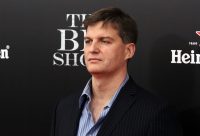
Michael Burry Called the 2008 Crash. Now He’s Shorting Nvidia to Buy This Boring Healthcare Stock.
Before Michael Burry shut down Scion Asset Management in late 2025 and pivoted to publishing a Substack newsletter warning of an “AI Bubble,” his final 13F filings reportedly disclosed put options against NVIDIA (NASDAQ:NVDA | NVDA Price Prediction) and Palantir (NASDAQ:PLTR) alongside a heavy…


Before Michael Burry shut down Scion Asset Management in late 2025 and pivoted to publishing a Substack newsletter warning of an “AI Bubble,” his final 13F filings reportedly disclosed put options against NVIDIA (NASDAQ:NVDA | NVDA Price Prediction) and Palantir (NASDAQ:PLTR) alongside a heavy rotation, around 51% of the disclosed portfolio, into health insurer Molina Healthcare. That is the documented record, a snapshot rather than a live position.
This distinction matters because Burry of The Big Short fame is now an opinion writer, not a regulated filer. Scion was deregistered, so there are no ongoing 13F disclosures to verify what he holds right now. His current commentary lives on his newsletter. The trades below are a snapshot of how he was positioned before closing the fund, paired with his ongoing public warnings about AI-era valuations.
What the final filings actually said
The pairing was tidy. Short the most crowded story in the market, long the most ignored one. The puts targeted NVIDIA and Palantir, the two names most often used as shorthand for AI-infrastructure excess. NVIDIA carries a market capitalization of roughly $4.95 trillion and a price-to-sales ratio of 19.5. NVIDIA’s forward P/E of 23x looks restrained next to Palantir, which trades at elevated multiples on both earnings and book value.
The long side was Molina Healthcare (NYSE:MOH), a Medicaid-focused managed-care operator whose shares are down 34% over the past year and trade at a price-to-sales ratio of 0.2x. The contrast is the entire trade.
The thesis, reconstructed from the data
On NVIDIA, the bear case sidesteps the operating business entirely. Q1 FY27 revenue grew 85.2% year over year to $81.61 billion, with Data Center revenue up 92%. The bear case is that hyperscaler capex cycles historically revert, that the Q2 guide assumes zero Data Center compute revenue from China, and that $119 billion of supply commitments sit on the balance sheet against customer concentration that has rarely looked this top-heavy. The stock is down 8% over the past month even as fundamentals beat estimates.
Molina is the mirror image. Q4 2025 produced an adjusted loss of $2.75 per share against a $0.50 estimate, dragged down by roughly $2.00 per share of unfavorable California Medicaid retroactive premium adjustments plus surging Medicare and Marketplace costs. CEO Joseph Zubretsky called 2026 “a trough year for Medicaid industry margins” and pointed to more than $11.00 per share of embedded earnings from new contracts in California, Texas, Georgia, Ohio and others between 2027 and 2029. The company executed a $1 billion buyback in FY25 at depressed prices. That is the contrarian setup: identifiable margin trough, contracted growth, shrinking share count.
What a retirement investor should actually take from this
Copying the short side is the wrong lesson. Put options expire, Scion no longer files, and Burry has been early or wrong on macro calls between the housing trade and now. The 13F snapshot captures only what he believed at one moment in the past.
The long side is more useful. Molina trades at a forward P/E of 21x (on 2027 earnings), with an analyst sentiment that skews cautious: 13 holds against 4 buys. Shares have rallied 9.6% year to date, suggesting the trough-margin narrative is starting to find buyers. For a retirement-focused portfolio, the thesis worth studying is the patient one: own the cyclical bottom of an essential service business, collect the buyback yield, and wait for rate restoration. That is a thesis you can underwrite yourself. The NVIDIA puts are theater.
Contact [email protected] for any questions or corrections.
Omor Ibne Ehsan is a writer at 24/7 Wall St. He is a self-taught investor with a focus on growth, cyclical, and dividend equities that have strong fundamentals, value, and long-term potential. He also has an interest in high-risk, high-reward investments such as penny stocks.