Retail Sales Surge 0.9% in May, Strongest in Three Months as Consumers Rebound
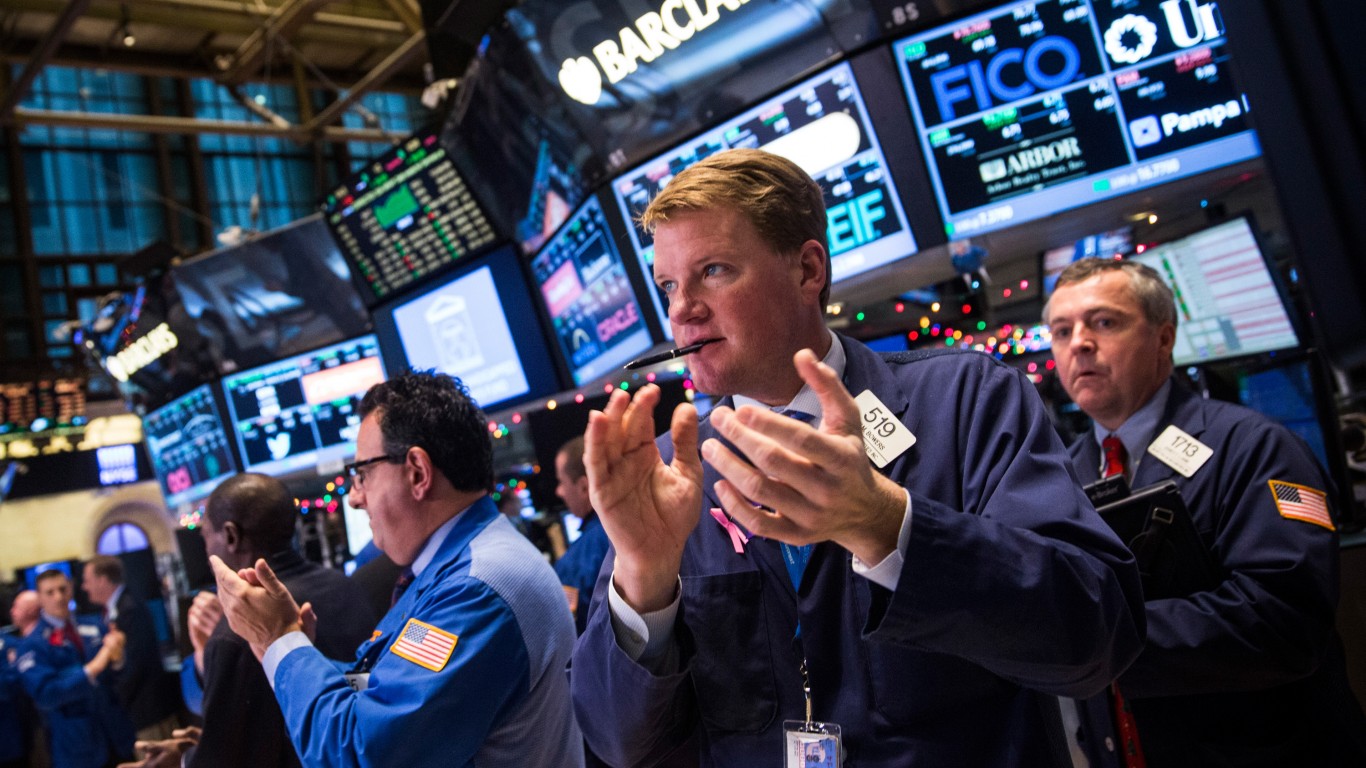
Rick Santelli read the May retail sales tape from the CME floor on Wednesday morning and the number that printed was better than the consensus wanted. Headline retail sales rose 0.9% versus the 0.6% expected. Yields barely flinched. The 10-year…

This post may contain links from our sponsors and affiliates, and Flywheel Publishing may receive compensation for actions taken through them.
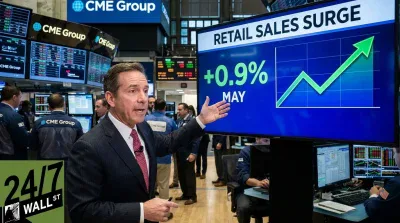
Rick Santelli read the May retail sales tape from the CME floor on Wednesday morning and the number that printed was better than the consensus wanted. Headline retail sales rose 0.9% versus the 0.6% expected. Yields barely flinched. The 10-year Treasury yield sat at roughly 4.44%, virtually unchanged, because traders looked under the hood and found that part of the strength came from something other than discretionary spending muscle.
Still, the underlying story is that the American consumer keeps showing up.
What Santelli flagged on the tape
“The advanced release for May retail sales… expected to be up 6/10 of a percent. Comes in stronger, up 9/10 of a percent. That would be the strongest since it was up 1.6 in March,” Santelli told viewers from CME headquarters. So you have a May number that ranks as the strongest monthly gain since March’s 1.6% surge, with a three-month soft patch in between. The April PCE data already hinted at this.
The Bureau of Economic Analysis showed total personal consumption expenditures running at a $21.97 trillion annualized pace in April 2026, up from $21.86 trillion in March. Momentum carried into May.
The gasoline asterisk
The data needs a caveat. Santelli flagged the catch immediately. “If we strip out autos and gas, knowing that gas prices were up about 7% in May… gas station sales are going to boost this number. And indeed they did,” he said. Retail sales are reported in nominal dollars, so when the price at the pump jumps, the dollars spent at gas stations jump with it even if Americans pumped the same number of gallons.
The BEA’s April reading already had gasoline spending climbing $28.8 billion month over month to $531.4 billion, the largest single contributor to that month’s goods strength. May extended the pattern. Autos, meanwhile, did very little, contributing only about a 1% gain, so the gas station effect was the swing factor.
The core read is the one to trust
Economists watch the control group, which strips out autos, gasoline, building materials, and food services, because it feeds directly into the GDP consumption calculation. “The control number, which is core retail sales, is quite strong, up 7/10… it’s been running pretty strong all year,” Santelli noted. A 0.7% core gain, the highest since March, reflects real demand beyond the pump.
It captures people buying things at department stores, online, at restaurants and bars (technically a separate category but directionally aligned), and at non-store retailers. The April BEA breakdown showed the same shape, with food services climbing $11.4 billion and recreation up $12.1 billion month over month. The consumer is spending across categories well beyond the gas pump.
The Fed angle, and what makes this fragile
The reason the 10-year yield barely moved is that traders had already priced in a resilient consumer. The harder question is how long this lasts when savings are this thin. Per the BEA’s personal income table, the savings rate fell to 3.7% in the first quarter of 2026, the lowest reading in eight quarters, after sitting at 6.2% as recently as the first quarter of 2024. Consumers spent $314.3 billion more in Q1 than in Q4 while disposable income grew only $305.4 billion. They are funding the marginal dollar of spending by drawing down savings, a mechanism with a finite runway.
For now, Santelli’s tape read lands where it should. A 0.9% headline beat with a 0.7% core underneath gives the Fed cover to keep waiting on rate cuts, because there is no evidence yet that the consumer is buckling. The pump did some of the work in May. The rest of the basket did the rest.
Contact [email protected] for any questions or corrections.
Omor Ibne Ehsan is a writer at 24/7 Wall St. He is a self-taught investor with a focus on growth, cyclical, and dividend equities that have strong fundamentals, value, and long-term potential. He also has an interest in high-risk, high-reward investments such as penny stocks.