Energy Infrastructure Fund Delivers 19% Gains While Paying 2.8% Yield To Income Hunters
The First Trust North American Energy Infrastructure Fund (NYSEARCA:EMLP) just paid investors $0.2993 per share for the first quarter of 2026, continuing a string of distributions that have run between roughly 29 and 31 cents for the past two years.…


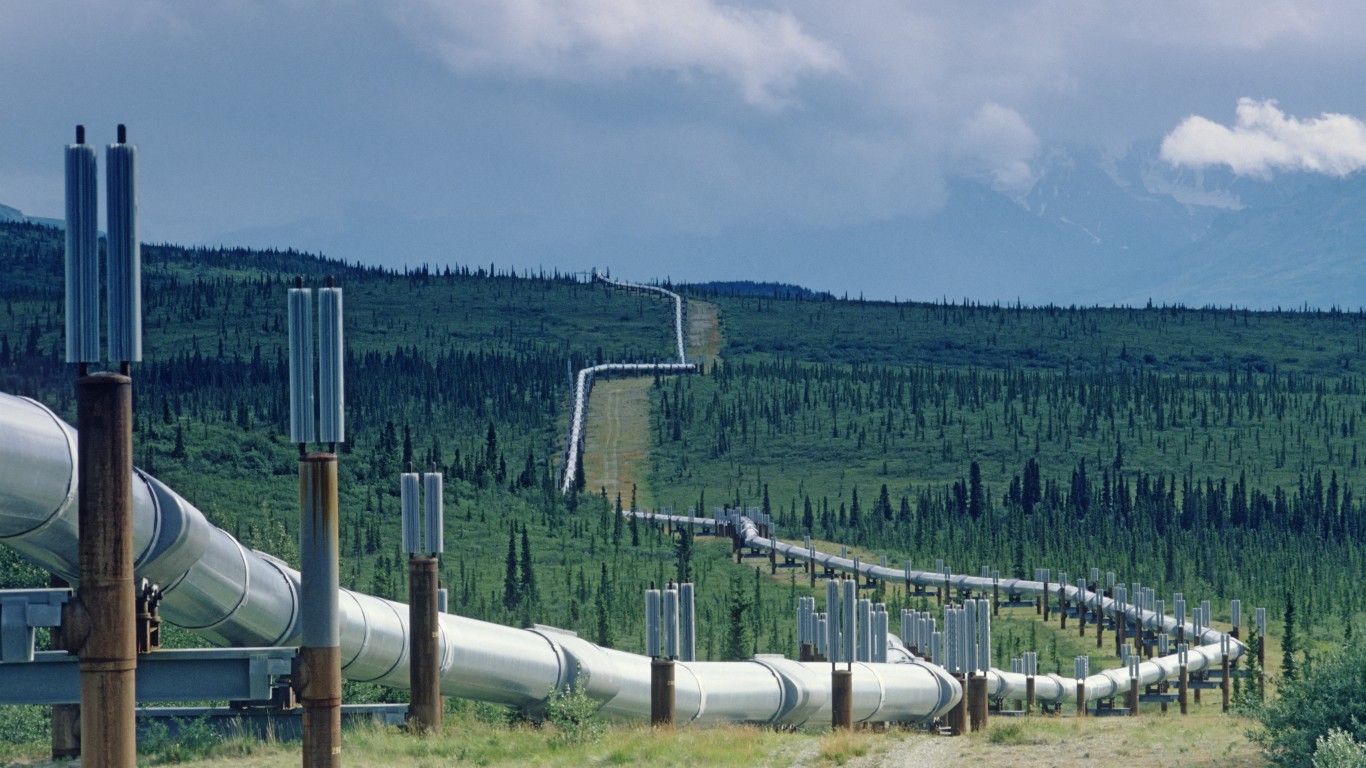
The First Trust North American Energy Infrastructure Fund (NYSEARCA:EMLP) just paid investors $0.2993 per share for the first quarter of 2026, continuing a string of distributions that have run between roughly 29 and 31 cents for the past two years. EMLP is the actively managed pipeline-and-utility fund a lot of income investors reach for when they want exposure to North American energy infrastructure without the K-1 paperwork of owning MLPs directly. At about $43 a share, that distribution pencils out to a yield in the high 2% range, and the real question is whether EMLP can keep funding it as oil swings and natural gas demand reshape the underlying cash flows.
How the fund actually pays you
EMLP is an actively managed product. Management hand-picks holdings across MLPs, Canadian income trusts, pipeline corporations, and regulated utilities, then collects the dividends and distributions those companies pay and passes them through to shareholders quarterly. The utility sleeve is the key structural choice. Regulated utilities throw off steady, rate-base-backed cash flow that does not lurch with the price of crude, which is why EMLP has historically held up better than pure-play midstream funds when energy prices roll over.
The tradeoff is fees. EMLP carries a higher expense ratio than passive peers like the Alerian Energy Infrastructure ETF (NYSEARCA:ENFR), and that drag matters because every basis point of fees comes directly out of the distribution and total return investors actually pocket. Management discretion is the thing you are paying up for, so the value of EMLP comes down to whether the team’s stock selection earns back the fee.
What the cash flow picture looks like
The macro backdrop for the income stream is supportive. WTI crude is sitting at $95.96 per barrel, in the 82nd percentile of its trailing 12-month range. High oil prices boost associated natural gas production, which pumps more volume through the pipelines EMLP owns, and that is exactly what is happening: the EIA forecasts U.S. marketed natural gas production at 121.8 Bcf/d in 2026 rising to 126.8 Bcf/d in 2027, with Permian output growing 6%. More throughput means more fee-based revenue for midstream operators, and electricity demand growth reinforces the utility holdings.
The distribution trend confirms that operating environment. Quarterly payouts have climbed from a $0.1833 trough in early 2022 to recent payments near $0.30, a recovery that mirrors improving cash flow at the underlying pipeline and utility operators rather than a reach for yield.
Total return, not just yield
The income story holds up only if the share price does too, and on that score EMLP has delivered. The fund is up 19% over the past year, 14% year to date, and 75% over five years. That means holders have collected the distribution on top of meaningful capital appreciation. The fund’s fair-zone valuation reading from February 2026 suggests the run has not stretched the multiple to a dangerous level.
The verdict on EMLP’s payout
EMLP’s distribution looks durable. Cash flows under the hood are rising with natural gas volumes and regulated utility rate cases, the payout has been moving up rather than down for three years, and the fund is not eroding NAV to fund it. The honest risks are policy-driven: a shift in energy legislation that throttles pipeline approvals or pressures utility rate structures would hit the holdings simultaneously. For an investor who wants energy infrastructure income with less commodity whiplash than a pure MLP fund, EMLP is doing what it advertises. Investors hunting for a higher headline yield and willing to accept more crude-price sensitivity would look at a midstream-only product like ENFR instead.
Contact [email protected] for any questions or corrections.
After 15 years on Wall Street with 7 of them as Director of Corporate and Municipal Bond Trading for a NYSE member firm, I started my own project and corporate finance consultancy. Much of the work involves writing business plans, presentations, white papers and marketing materials for companies seeking budgetary allocations for spinoffs and new initiatives or for raising capital for expansion or startup companies and entrepreneurs. On financial topics, I have been published under my own byline at The Motley Fool, 247wallst.com, DealFlow Events’ Healthcare Services Investment Newsletter and The Microcap Newsletter, among others. Additionally, I have done freelance ghostwriting writing and editing for several financial websites, such as Seeking Alpha and Shmoop Financial. I have also written and been published on a variety of other topics from music, audiophile sound and film to musical instrument history, martial arts, and current events. Publications include Copper Magazine, Fidelity (Germany), Blasting News, Inside Kung-Fu, and other periodicals.