Dividend Safety Check: EINC and Energy Infrastructure Income
EINC has handed investors a 30% return in six months while paying out a modest 3.6% yield, and that disconnect raises an uncomfortable question about where the real risk in this fund actually lives.


The VanEck Energy Income ETF (NYSEARCA:EINC) pays a distribution yield in the 3.2% to 3.6% range while behaving like a commodity-leveraged equity fund, with shares up about 25% year to date and roughly 27% over the past year. That gap between yield and total return defines EINC: investors are buying midstream cash flow, but the share price moves with crude. The safety question is whether the distribution itself, sourced from pipeline tolls and processing fees, can hold up through the next cycle.
How EINC Generates Its Income
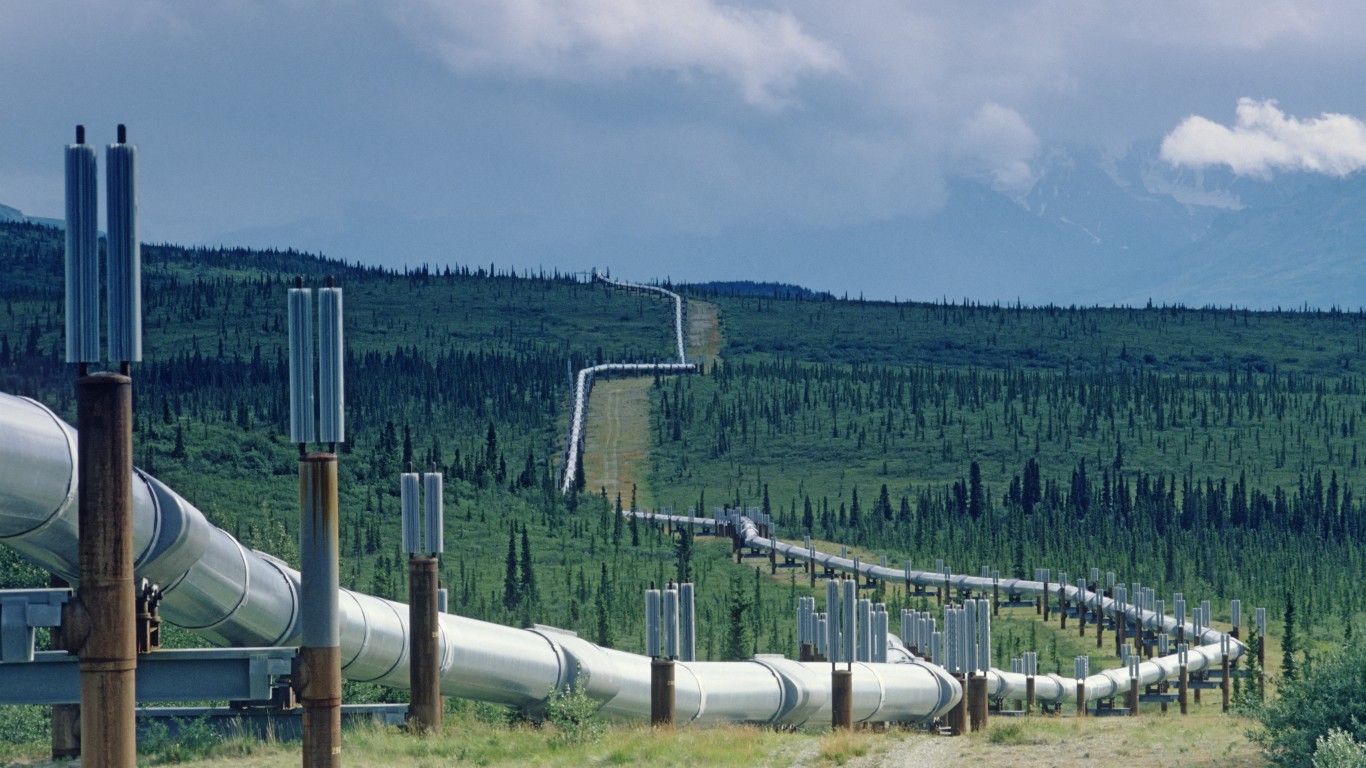
EINC is a concentrated portfolio of North American midstream energy infrastructure operators, with roughly 68% U.S. and 32% Canadian exposure and a 0.46% management fee. The fund’s income comes almost entirely from dividends paid by pipeline, gathering, processing, and storage companies such as Enbridge, TC Energy, Kinder Morgan, and others. These businesses earn most of their cash flow from long-term, volume- and capacity-based contracts rather than from selling commodities directly, which is why midstream dividends tend to survive oil price drawdowns better than upstream payouts.
What the Top Holdings Actually Pay
Williams Companies (NYSE:WMB | WMB Price Prediction) is a useful proxy for the high-quality side of the portfolio. Williams just lifted its annualized dividend 5% to $2.10 per share, marking its 52nd consecutive year of dividend payments, and guides 2026 coverage at 2.36x to 2.45x adjusted funds from operations. Williams generates more than twice the cash it needs to fund the payout, leaving room to absorb a meaningful EBITDA miss before the dividend is even a discussion. Leverage at around 4.1x is elevated but within investment-grade norms for the asset type.
ONEOK (NYSE:OKE) raised its quarterly payout 4% in January 2026 to $1.07, putting the run rate at $4.28 annualized. With roughly 90% fee-based earnings and 2026 adjusted EBITDA guided to $7.9 billion to $8.3 billion, the company carries the dividend comfortably on EPS of $5.61. The 2026 plan assumes WTI of $55 to $60, which means current spot near $96 is a tailwind rather than the base case.
Commodity Sensitivity Is Real but Indirect
The fund’s distribution tracks throughput volumes, which in turn respond to WTI. Crude has swung between $55.44 and $114.58 over the past 12 months, and Henry Hub spiked to $30.72 in late January 2026 before normalizing near $3 per MMBtu. EIA’s May outlook pegs 2026 marketed gas production at 121.8 Bcf/d, rising again in 2027. Rising volumes are what midstream operators get paid to move, and the throughput backdrop supports current payout levels even if oil drifts back toward the low end of the range.
Total Return Versus Yield
EINC delivered a 30% six-month return as crude rallied from roughly $61 to over $100. Almost none of that came from the distribution. Five-year price appreciation of 152% tells the same story. Holders should expect the price line to do most of the work on the way up and most of the damage on the way down. The income piece is the steadier component.
Distribution Looks Safe at Current Levels
EINC’s distribution looks safe at current levels. The underlying holdings are fee-based midstream operators with coverage ratios well above 1x, multi-decade dividend records, and growth capex programs aimed at LNG export and data center power demand. The fund itself is cheap to own at 46 basis points. Anyone buying EINC purely for a 3.6% yield is taking on equity-level price risk to get it. Investors who want midstream cash flow without the Canadian C-corp exposure or the commodity beta can find lower-yield, lower-volatility alternatives in broad dividend-growth ETFs. For investors comfortable with the energy cycle, the income stream here is durable.
Contact [email protected] for any questions or corrections.
After 15 years on Wall Street with 7 of them as Director of Corporate and Municipal Bond Trading for a NYSE member firm, I started my own project and corporate finance consultancy. Much of the work involves writing business plans, presentations, white papers and marketing materials for companies seeking budgetary allocations for spinoffs and new initiatives or for raising capital for expansion or startup companies and entrepreneurs. On financial topics, I have been published under my own byline at The Motley Fool, 247wallst.com, DealFlow Events’ Healthcare Services Investment Newsletter and The Microcap Newsletter, among others. Additionally, I have done freelance ghostwriting writing and editing for several financial websites, such as Seeking Alpha and Shmoop Financial. I have also written and been published on a variety of other topics from music, audiophile sound and film to musical instrument history, martial arts, and current events. Publications include Copper Magazine, Fidelity (Germany), Blasting News, Inside Kung-Fu, and other periodicals.