




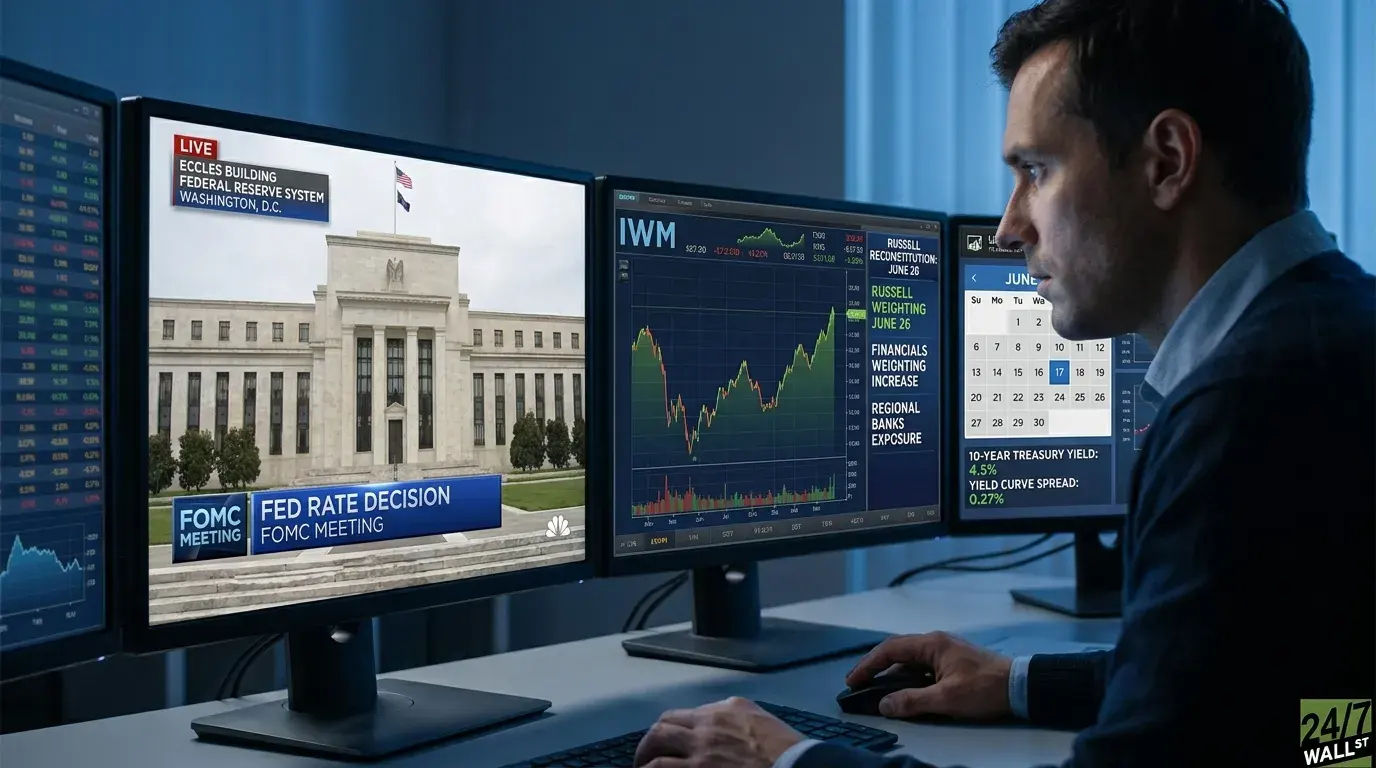
The iShares Russell 2000 ETF (NYSEARCA:IWM) has given small-cap holders a year worth celebrating. IWM is trading at $296, up 20% year to date and 41% over the trailing 12 months, breaking the three-year range trade that defined the Russell 2000 from 2022 through most of 2025. With the Fed on an extended pause and the annual Russell reconstitution landing this month, IWM holders head into the second half of 2026 with two catalysts that will decide whether this rally continues or stalls.
The Fund and Where It Sits Today
IWM tracks the Russell 2000 Index, roughly 2,000 of the smallest U.S. public companies just below the large-cap S&P 500 universe. It is the cheapest broad small-cap vehicle at a 0.19% expense ratio, and how most investors express a view that the rate cycle, the dollar, or domestic growth will favor smaller, cyclical businesses. The recent surge fits that script: IWM is up 8% in the past month alone as the VIX has moderated to almost 18 and real GDP rebounded to 1.6% in Q1 after a soft Q4.
The Macro Factor That Matters Most: The Fed’s Next Move
The single variable with the most leverage on IWM over the next 12 months is whether the Fed resumes cutting. The funds rate has been parked at 3.75% for more than six months after 75 basis points of easing last fall. That pause is the entire small-cap problem. Roughly a third of Russell 2000 constituents carry floating-rate debt, and a meaningful slice is unprofitable, meaning refinancing costs flow straight to the bottom line. The 10-year Treasury at around 4.5% sits in the 94th percentile of its 12-month range, keeping the cost of capital uncomfortably tight for these companies even with the Fed in easing mode.
What to watch: the CME FedWatch tool ahead of each FOMC meeting and the Summary of Economic Projections released quarterly. A confirmed cut by September would historically translate into outsized IWM gains; the 2019 mid-cycle pivot triggered a comparable small-cap squeeze. Also check the BLS initial jobless claims release weekly. Claims have crept back to 226,000 from an April low of 190,000, and a sustained move above 250,000 would pressure the Fed to act, helping IWM while signaling cyclical weakness that hurts small-cap earnings first.
The Fund-Specific Factor: The June Russell Reconstitution
The fund-specific event hitting IWM now is the annual Russell index reconstitution, finalizing in late June. FTSE Russell rebuilds the entire index based on May 31 market caps, and IWM mechanically rebalances to match. After a 12-month rally of 41%, this year’s rebalance will graduate the index’s biggest winners to the Russell 1000 while pulling in fallen large- and mid-caps from above. The post-reconstitution IWM will have a lower weighted-average market cap, more financials and regional banks, and a higher share of unprofitable companies than in May.
What to monitor: FTSE Russell publishes preliminary additions and deletions through late June, with final lists posted after the June 26 close. Compare incoming financials weight to outgoing tech and biotech weight. A heavier tilt toward regional banks makes IWM substantially more sensitive to the yield curve, where the 10-year minus 2-year spread has compressed to 0.27%, the tightest level in 12 months. A flatter curve squeezes bank net interest margins, and those banks will now be a larger piece of your IWM position.
The Setup From Here
If the Fed cuts by September and the curve steepens, the post-reconstitution IWM is built to outperform with its heavier financial and cyclical weights. If the Fed stays on hold into 2027 and the curve inverts again, the same rebalance becomes a liability. For investors wanting small-cap exposure with less rate sensitivity, the Invesco S&P SmallCap 600 ETF (NYSEARCA:IJR) screens for profitability, stripping out roughly the most rate-vulnerable third of the Russell 2000.

















 Top Gaining Stocks
 Top Losing Stocks