




The space industry is in the middle of a transformation. For years, investors focused on launch providers, treating rocket launches as the primary source of value. That model is changing.
Governments increasingly want companies that can build satellites, launch them, operate them, and respond quickly when national security demands it. The winners may not be the companies with the biggest rockets, but those that can provide complete mission solutions. That’s why Rocket Lab‘s (NASDAQ:RKLB | RKLB Price Prediction) latest Victus Haze mission may prove more important than the launch itself. For investors, it signals that Rocket Lab is evolving into something much larger than a small launch company.
Victus Haze Was About More Than a Rocket Launch
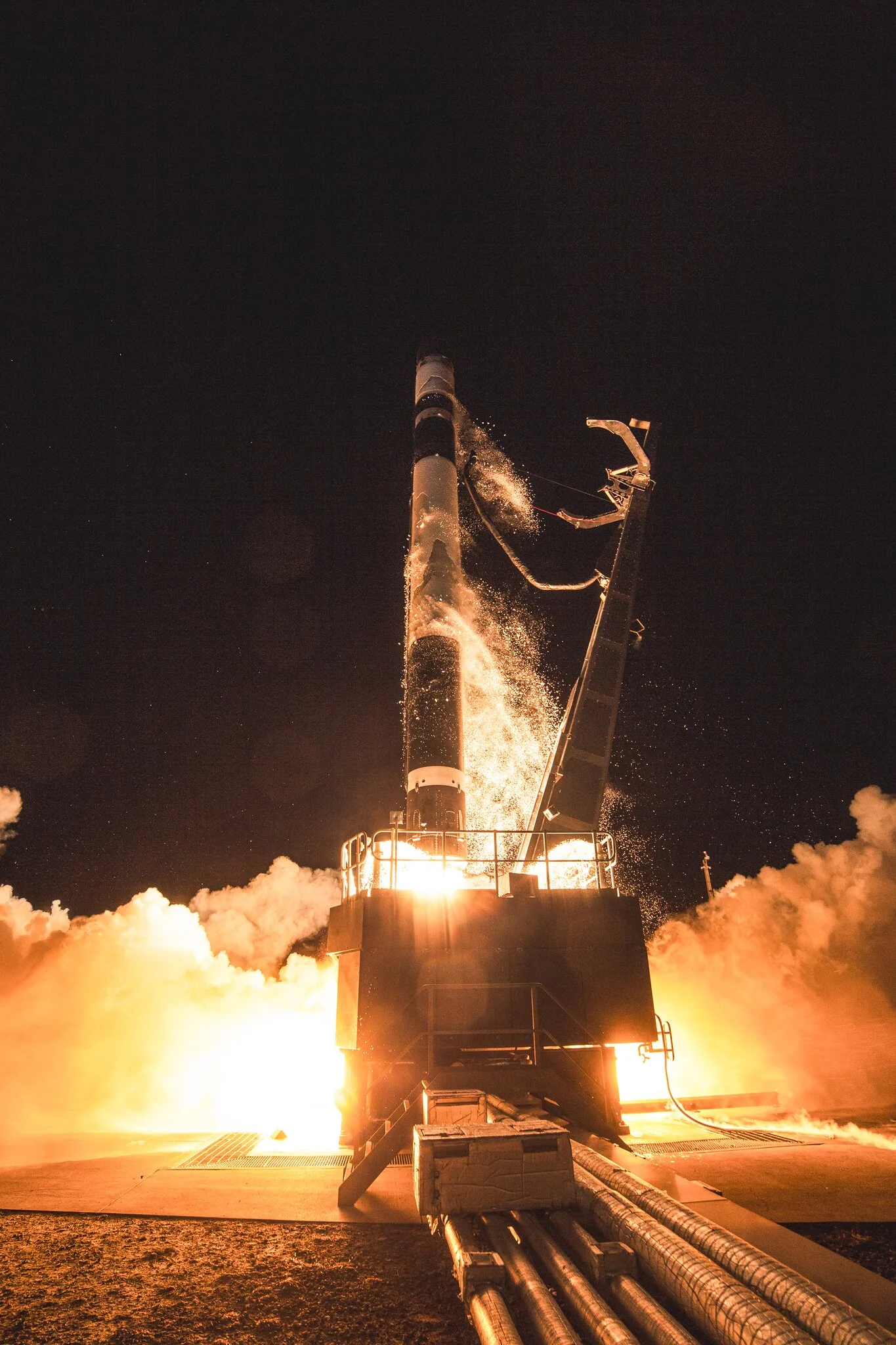
According to Rocket Lab, the company launched the Victus Haze mission just 16 hours and 42 minutes after receiving a launch order from the U.S. Space Force. That set a new record for the military’s Tactically Responsive Space (TacRS) program.
On the surface, that sounds like a simple operational achievement. In reality, it demonstrated capabilities that few competitors can match.
What makes Victus Haze unique is that Rocket Lab served as the prime contractor. The company didn’t just launch the mission. It also built the satellite, integrated the payload, conducted mission planning, and now operates the spacecraft in orbit.
Here’s what Rocket Lab controlled during the mission:
| Capability | Rocket Lab Role |
| Launch Vehicle | Electron rocket |
| Satellite Platform | Pioneer spacecraft |
| Mission Operations | In-house |
| Spacecraft Components | In-house systems and subsystems |
| Launch Execution | In-house |
That level of vertical integration resembles traditional aerospace contractors more than a standalone launch provider.
The Defense Opportunity Is Now Much Larger
The launch itself won’t materially change Rocket Lab’s financial results. The U.S. Space Force contract was worth approximately $32 million. In comparison Rocket Lab generated $601.8 million in revenue during 2025. A single $32 million contract is helpful, but it is not transformational. The opportunity comes from what Victus Haze proves.
The Pentagon increasingly wants responsive space capabilities that can deploy assets within days or even hours. As geopolitical tensions rise, governments need the ability to replace satellites, inspect spacecraft, and respond to threats quickly. Victus Haze demonstrated that Rocket Lab can provide all of those services under one roof.
That potentially positions the company for future contracts involving:
- Space domain awareness
- Military satellite production
- Responsive launch services
- On-orbit inspection missions
- National security space operations
Those markets are far larger than Rocket Lab’s traditional small-launch business.
Investors Should View Rocket Lab Differently Today
For years, critics argued that launch alone would never be a large enough market to justify premium valuations across the space sector. Surprisingly, Rocket Lab appears to agree.
The company has spent the past several years building spacecraft systems, acquiring satellite component manufacturers, and expanding beyond launch services. Victus Haze provides tangible evidence that those investments are paying off.
Compare Rocket Lab to many smaller launch competitors and the distinction becomes clear. Most can sell a launch. Rocket Lab can increasingly sell an entire mission. That creates multiple revenue streams while reducing dependence on launch frequency alone.
Granted, execution risk remains. Rocket Lab still needs to prove that these defense opportunities translate into recurring contracts and growing cash flow. The company is also investing heavily in its larger Neutron rocket program, which carries development risk.
That said, Victus Haze reduced one important uncertainty: whether Rocket Lab’s broader aerospace strategy actually works. The answer appears to be yes.
Key Takeaway
In short, Victus Haze is not important because it generated a $32 million contract. It matters because it demonstrated that Rocket Lab can function as a full-service aerospace and defense contractor. The mission showcased rapid launch, satellite manufacturing, mission operations, and spacecraft management in a single package.
For long-term investors, that changes the investment thesis. Rocket Lab is no longer just competing for launch contracts. It is positioning itself to compete for larger defense and space systems programs that could generate recurring revenue for years. Ultimately, Victus Haze may be remembered less as a launch and more as the moment Rocket Lab proved its business model extends far beyond the rocket itself.
















 Top Gaining Stocks
 Top Losing Stocks