Rocket Lab’s $8 Billion Bet Could Turn It Into the Next SpaceX
The commercial space industry is entering a new phase. Simply reaching orbit is no longer enough to build a durable business. The companies likely to create the most shareholder value over the next decade are those that control more of…

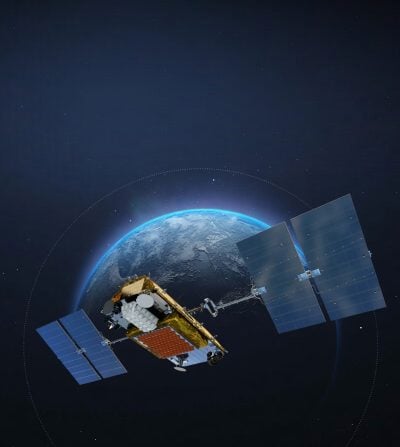
The commercial space industry is entering a new phase. Simply reaching orbit is no longer enough to build a durable business. The companies likely to create the most shareholder value over the next decade are those that control more of the space economy — from designing satellites and launching them to operating the communications networks those satellites power.
SpaceX (NASDAQ:SPCX | SPCX Price Prediction) demonstrated the power of that strategy with Falcon and Starlink. Now Rocket Lab (NASDAQ:RKLB) has taken a major step in the same direction, announcing an acquisition that could reshape its business for years to come.
Rocket Lab Is Buying More Than a Satellite Company
Rocket Lab announced it will acquire Iridium Communications (NASDAQ:IRDM) in an $8 billion cash-and-stock transaction expected to close in mid-2027. Iridium shareholders will receive $27 in cash plus Rocket Lab shares for each Iridium share they own.
Funding such a large transaction naturally raises monetary questions, and Rocket Lab also announced it secured a $3.6 billion bridge loan, giving it the financing needed to complete the acquisition while arranging longer-term capital.
The acquisition will create one of the few publicly traded companies spanning launch services, satellite manufacturing, spacecraft components, and global satellite communications.
Vertical Integration Is the Real Prize
Investors should look beyond the purchase price. Rocket Lab has steadily expanded from a small launch provider into a diversified space company through acquisitions, satellite manufacturing, spacecraft systems, and development of its larger Neutron reusable rocket. Buying Iridium extends that strategy another step by adding an established communications network that already generates recurring service revenue.
That changes Rocket Lab’s economic model. Instead of relying primarily on one-time launch contracts, it gains a business built around subscription-like connectivity services for commercial customers, governments, maritime operators, aviation, and direct-to-device applications.
The acquisition also creates operational advantages as Neutron enters service. Rocket Lab would be positioned to launch future generations of Iridium satellites using its own rocket rather than purchasing launch services from outside providers. Keeping those launches in-house lowers expenses across the satellite replacement cycle while giving Rocket Lab greater control over scheduling and deployment.
That mirrors the strategy that has helped SpaceX widen its competitive lead. Combining launch capability with ownership of the communications network allows a company to manage costs across the entire value chain instead of paying outside providers at every stage.
The Space Economy Is Becoming a Platform Business
The competitive landscape is also changing. Some companies will specialize in building spacecraft or selling launch services. Others will own integrated platforms that design satellites, manufacture them, launch them, operate the network, and collect recurring service revenue long after the rockets leave the launch pad.
Iridium fills an important gap in Rocket Lab’s business. It brings a mature global communications network, licensed spectrum, long-term government relationships, and recurring cash flow that continues long after a satellite reaches orbit.
Granted, integrating an $8 billion acquisition carries execution risk. Rocket Lab must successfully close the transaction, integrate operations, manage its financing, and bring Neutron into commercial service on schedule. Those are meaningful challenges for any company.
Still, the strategic direction is becoming much clearer.
Key Takeaway
In short, Rocket Lab is evolving from a launch company into a full-service space infrastructure platform. The proposed $8 billion acquisition of Iridium gives it communications networks, recurring revenue, licensed spectrum, and deeper government relationships, while Neutron has the potential to lower future deployment costs by bringing launches in-house.
SpaceX showed that controlling both transportation to orbit and the services delivered from orbit creates lasting competitive advantages. If Rocket Lab executes on this strategy, shareholders may eventually view this acquisition not as an expansion of its launch business but as the moment it transformed into an integrated space platform capable of competing across the entire space economy.
Contact [email protected] for any questions or corrections.
After two decades of patrolling the dark corners of suburbia as a police officer, Rich Duprey hung up his badge and gun to begin writing full time about stocks and investing. For the past 20 years, he’s been cruising the markets looking for companies to lock up as long-term holdings in a portfolio while writing extensively on the broad sectors of consumer goods, technology, and industrials. Because his experience isn’t from the typical financial analyst track, Rich is able to break down complex topics into understandable and useful action points for the average investor. His writings have appeared on The Motley Fool, InvestorPlace, Yahoo! Finance, Money Morning, and, of course, 24/7 Wall St. He has been featured in both U.S. and international publications, including MarketWatch, Financial Times, Forbes, Fast Company, and USA Today.