Ford Reputation Deeply Damaged by 741,000-Vehicle Recall
Ford Motor Company ranked No. 1 among "Mainstream Brands" in the 2026 J.D. Power Initial Quality Study, the first time it had occupied that spot since 2010. Nearly all of that positive news was wiped out by a recall of…


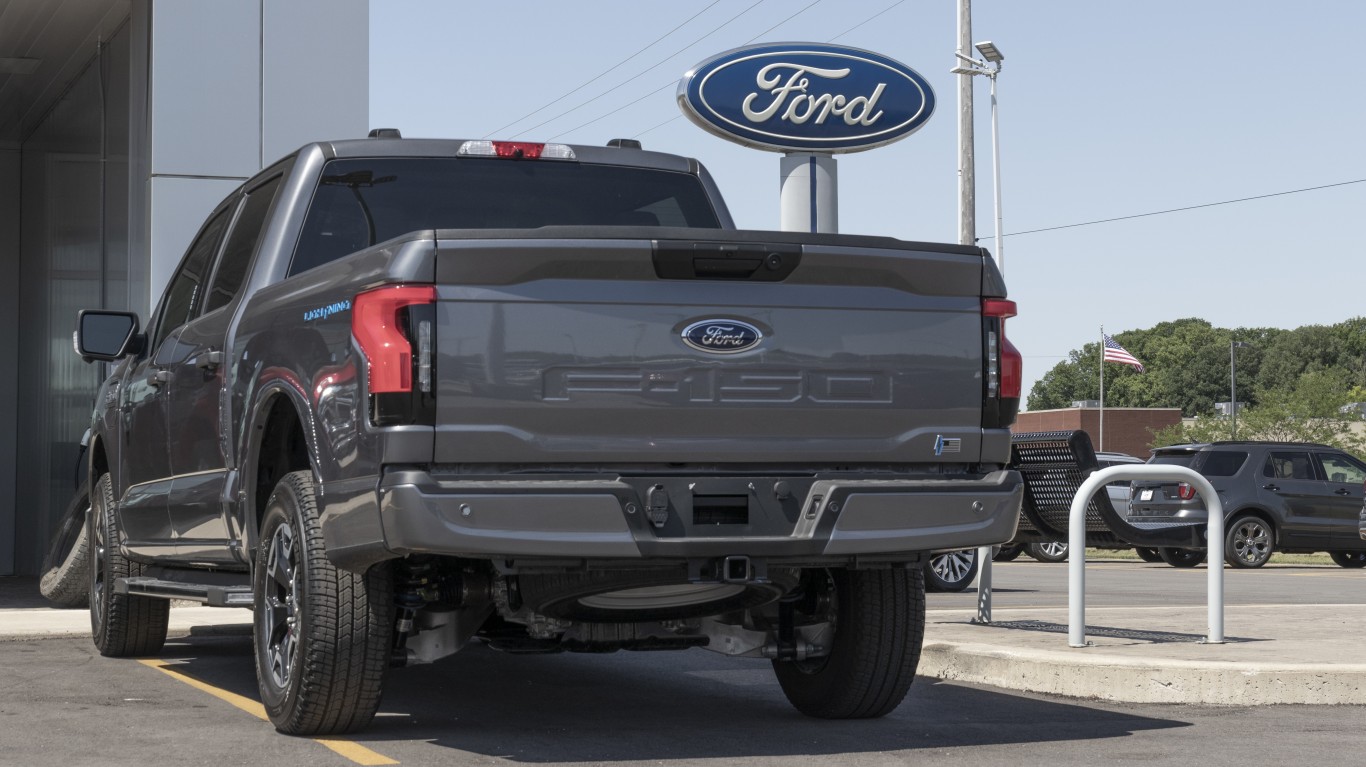
Ford Motor Company (NYSE:F | F Price Prediction) ranked No. 1 among “Mainstream Brands” in the 2026 J.D. Power Initial Quality Study, the first time the automaker has held that position since 2010. The achievement was 16 years in the making and capped a remarkable climb: Ford moved from No. 15 among mainstream brands in 2023 to the top of the rankings, recording 41 fewer problems per 100 vehicles compared with the prior year, the largest year-over-year improvement of any mainstream brand. The F-150, Mustang, and Super Duty each ranked highest in their respective segments for the second straight year, and seven of Ford’s 10 tested models placed in the top three of their segments, a higher percentage than any other automaker.
Nearly all of that goodwill evaporated on July 1, when the National Highway Traffic Safety Administration published a recall covering 741,195 trucks and SUVs over a transmission defect. The notice said, “The transmission park pawl may engage while the vehicle is in motion, resulting in park system damage.” In plain terms, the defect can allow a parked vehicle to roll away on its own.
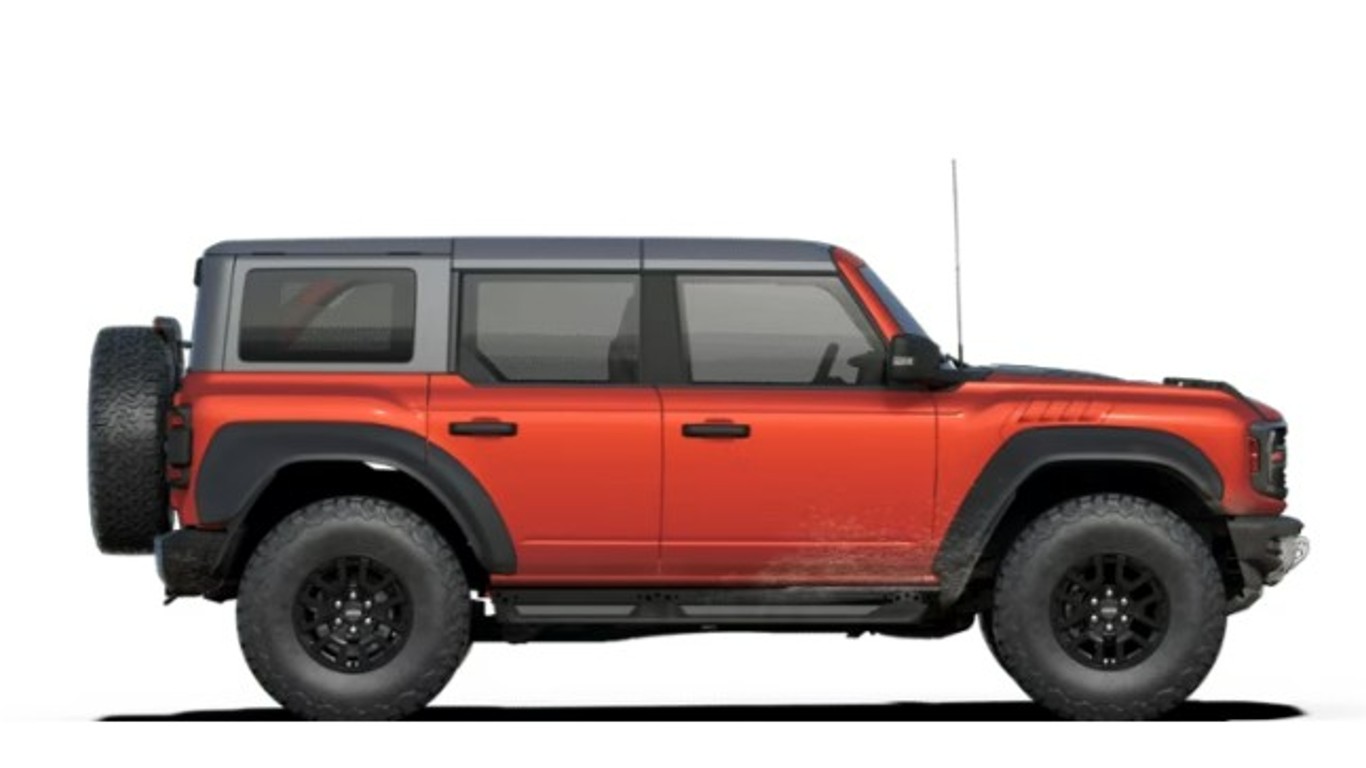
The affected vehicles include certain 2018-2021 model-year Lincoln Navigators and Ford Expeditions, 2020-2021 Ford Explorers and Lincoln Aviators, and the 2021 F-150. This recall pushed Ford’s running 2026 tally to roughly 10.3 million vehicles across 37 separate NHTSA campaigns, and the calendar year was barely half over. The largest single action of 2026 was a February recall of approximately 4.4 million trucks and SUVs over a trailer-brake-control software defect that could cause trailer taillights and braking to stop functioning.
This is not a new story for Ford. In 2025, the company issued 153 recalls covering nearly 12.93 million vehicles, shattering the previous single-year record of 77 recalls set by General Motors during the 2014 ignition-switch crisis. Ford did not merely break that record; it passed it in July 2025, then continued for five more months. In November 2024, NHTSA fined Ford $165 million for failing to issue a recall on defective rearview cameras in a timely manner, the second-largest fine the agency had ever levied.
Ford management has repeatedly promised to bring those numbers down, and there is some financial evidence of progress. The company paid $5.73 billion in warranty claims in 2025, a 2% decline from 2024’s $5.83 billion, and Ford separately said it cut warranty and materials costs by $1.5 billion in 2025 when adjusted for volume and mix. Barclays analyst Dan Levy noted four consecutive quarters of year-over-year warranty benefits heading into 2026. That trajectory is real, but it coexists with a recall pace in 2026 that, by vehicle count, already threatens to match or exceed 2025’s record.
The J.D. Power results reflect the experience of new buyers in the first 90 days of ownership. Recall campaigns, by contrast, tend to address defects in vehicles already on the road for years. Both data points are genuine, and that is precisely what makes Ford’s situation so difficult to communicate to the public. A consumer buying a new Explorer or F-150 today gets the benefit of the quality improvements that earned Ford the J.D. Power crown. A consumer who has received three recall notices on a 2020-model truck sees a different reality.
Recalls have a reputational half-life that outlasts the actual fix. The sheer scale of Ford’s campaigns over the past three years, totaling tens of millions of vehicles across hundreds of actions, has embedded itself in the public’s mental image of the brand in a way that a single quality award cannot quickly erase. The company’s challenge is not just continuing to improve build quality. It is convincing a skeptical car-buying public that the improvement is durable.
Editor’s note: This article was updated to reflect the precise recall figure of 741,195 vehicles; Ford’s 2026 running recall tally of roughly 10.3 million vehicles across 37 NHTSA campaigns as of the recall’s publication date; the 2025 full-year total of 153 recalls covering nearly 12.93 million vehicles; Ford’s warranty claims of $5.73 billion in 2025; the $165 million NHTSA fine issued in November 2024; and additional J.D. Power context including Ford’s rise from No. 15 in 2023 and its 41-problems-per-100-vehicles year-over-year improvement.
Contact [email protected] for any questions or corrections.
Douglas A. McIntyre is the co-founder, chief executive officer and editor in chief of 24/7 Wall St. and 24/7 Tempo. He has held these jobs since 2006.
McIntyre has written thousands of articles for 24/7 Wall St. He is an expert on corporate finance, the automotive industry, media companies and international finance. He has edited articles on national demographics, sports, personal income and travel.
His work has been quoted or mentioned in The New York Times, The Wall Street Journal, Los Angeles Times, The Washington Post, NBC News, Time, The New Yorker, HuffPost USA Today, Business Insider, Yahoo, AOL, MarketWatch, The Atlantic, Bloomberg, New York Post, Chicago Tribune, Forbes, The Guardian and many other major publications. McIntyre has been a guest on CNBC, the BBC and television and radio stations across the country.
A magna cum laude graduate of Harvard College, McIntyre also was president of The Harvard Advocate. Founded in 1866, the Advocate is the oldest college publication in the United States.
TheStreet.com, Comps.com and Edgar Online are some of the public companies for which McIntyre served on the board of directors. He was a Vicinity Corporation board member when the company was sold to Microsoft in 2002. He served on the audit committees of some of these companies.
McIntyre has been the CEO of FutureSource, a provider of trading terminals and news to commodities and futures traders. He was president of Switchboard, the online phone directory company. He served as chairman and CEO of On2 Technologies, the video compression company that provided video compression software for Adobe’s Flash. Google bought On2 in 2009.