GLD’s 0.40% Fee Quietly Costs You $40 Per Year on Every $10,000 While Cheaper Rivals Charge Half
Gold pays no dividend. It throws off no interest. It just sits in a London vault. Yet if you own the most famous gold ETF on Wall Street, you are quietly paying someone every single day for the privilege of…

This post may contain links from our sponsors and affiliates, and Flywheel Publishing may receive compensation for actions taken through them.

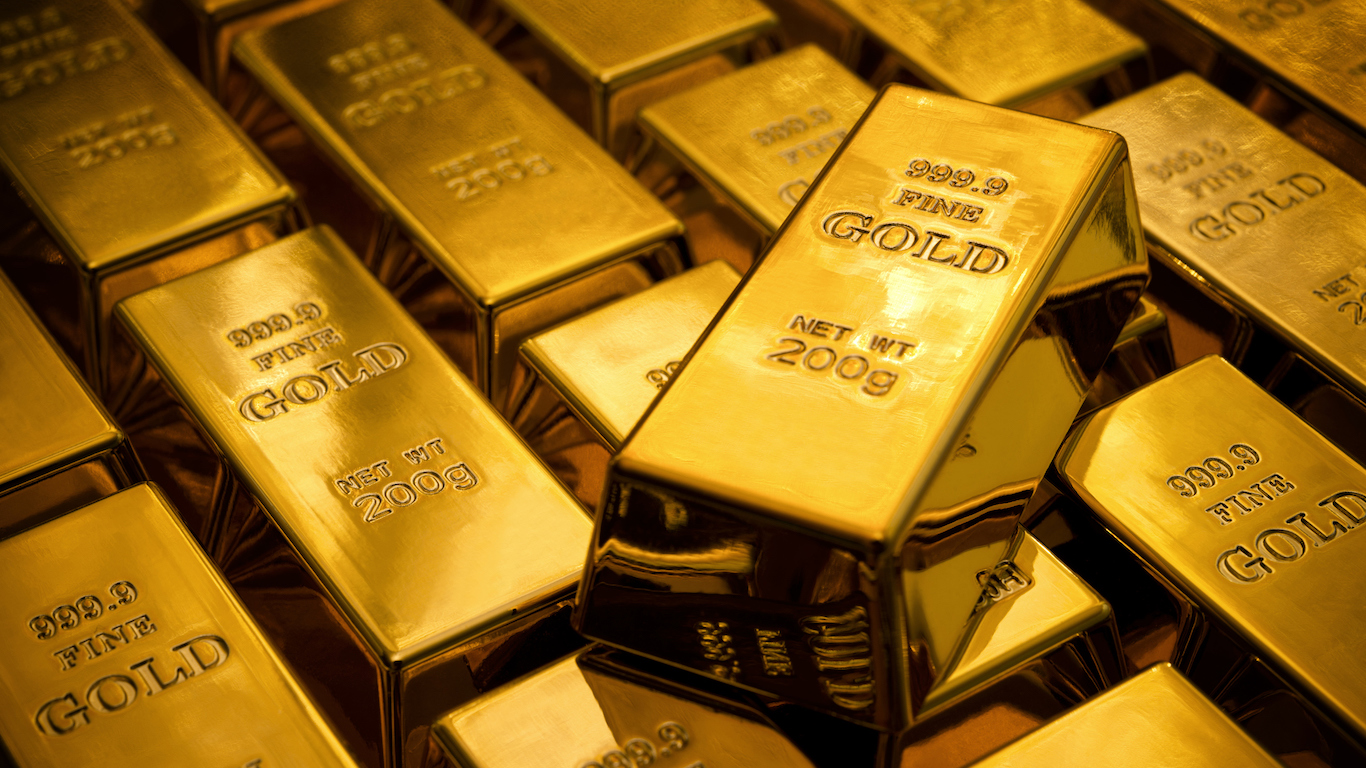
Gold pays no dividend. It throws off no interest. It just sits in a London vault. Yet if you own the most famous gold ETF on Wall Street, you are quietly paying someone every single day for the privilege of watching a bar of metal do nothing.
That fund is SPDR Gold Trust (NYSEARCA:GLD), and its marketing rarely leads with the number that matters most to your wallet.
What You Are Actually Paying
GLD’s fact sheet lists a net expense ratio of 0.40% as of March 5, 2026. Translated into dollars, that is roughly $40 a year on every $10,000 you park in the trust. It comes out of the gold, not your brokerage account, so you never see the withdrawal. The sponsor sells a sliver of bullion each period to cover fees, and your per-share claim on the vault shrinks accordingly.
Compare that with iShares Gold Trust (NYSEARCA:IAU), which charges a net expense ratio of 0.25% as of May 5, 2026. Same asset. Same vaulted gold bullion (IAU’s holdings are listed as 100% gold bullion). Roughly $25 a year per $10,000. The spread looks modest on day one, but it compounds against you every year you hold, and it never stops.
The Part the Factsheet Does Not Highlight
The bigger hidden cost is buried in the tax code. GLD is a grantor trust that holds physical metal, which means the IRS treats long-term gains as gains on a “collectible.” That caps the long-term capital gains rate at up to 28%, well above the 20% top rate on qualified stock gains. On a big multi-year run, the extra tax bill can dwarf the expense ratio.
And gold has run. GLD is up 20.85% over the past year, 121.65% over five years, and 186.88% over ten years through June 30, 2026. Every one of those gains, if you sell in a taxable account, gets taxed at the collectibles rate. The fund’s glossy materials rarely put that in bold.
There is also the opportunity cost. The 10-year Treasury yields 4.38% as of June 29, 2026. Every dollar in a non-yielding gold trust is a dollar not earning that coupon, on top of the fee drag.
The Cheaper Mirror
You do not need to give up gold exposure to escape the fee. IAU holds the same asset at 0.25% and manages roughly $68.4 billion in net assets. Over the past ten years IAU has returned 191.09% versus GLD’s 186.88%. Same metal, thinner fee, better net result.
The issuer’s own cheaper sibling, SPDR Gold MiniShares (NYSEARCA:GLDM), sells the same bullion exposure at a widely quoted 0.10% expense ratio. Over five years, MiniShares is up 124.86% versus GLD’s 121.65%. The gap reflects the fee, showing up in the returns like a slow leak.
The trade-off is minimal. GLD’s edge is liquidity: tighter spreads for institutions moving size, and a deep options market. For a buy-and-hold retail investor with a few thousand dollars, those benefits rarely justify paying the higher fee.
What This Means for You
The relevant question is whether the ticker on your statement is the cheapest way to own gold. If you have held GLD in a taxable account for years, the collectibles rate on unrealized gains complicates any switch. If you are just building the position now, ask yourself why you would pay 0.40% for the same bar of gold that the fund down the street will custody for less than half the price.
Contact [email protected] for any questions or corrections.
I am a long time investor and student of business, and believe finding good companies that can become great investments is the best game on earth. After 20 years of writing and researching the public markets it is clear that individuals have never had more tools and information to take control of their financial lives. From ETFs and $0 commissions to cryptos and prediction markets there has never been a greater democratization of access to investing.
I write to help people understand the investments available to them so they can make the best choice for their portfolio, whether they're starting out or looking for income in retirement.