The Nasdaq 100 Now Controls a Quarter of Every Growth ETF Dollar
On a recent Animal Spirits podcast titled “Talk Your Book: How SpaceX Got Into the Nasdaq 100,” Invesco’s Paul Schroeder dropped a statistic that should stop any growth investor mid-scroll. The Nasdaq 100, which you probably know through Invesco QQQ…

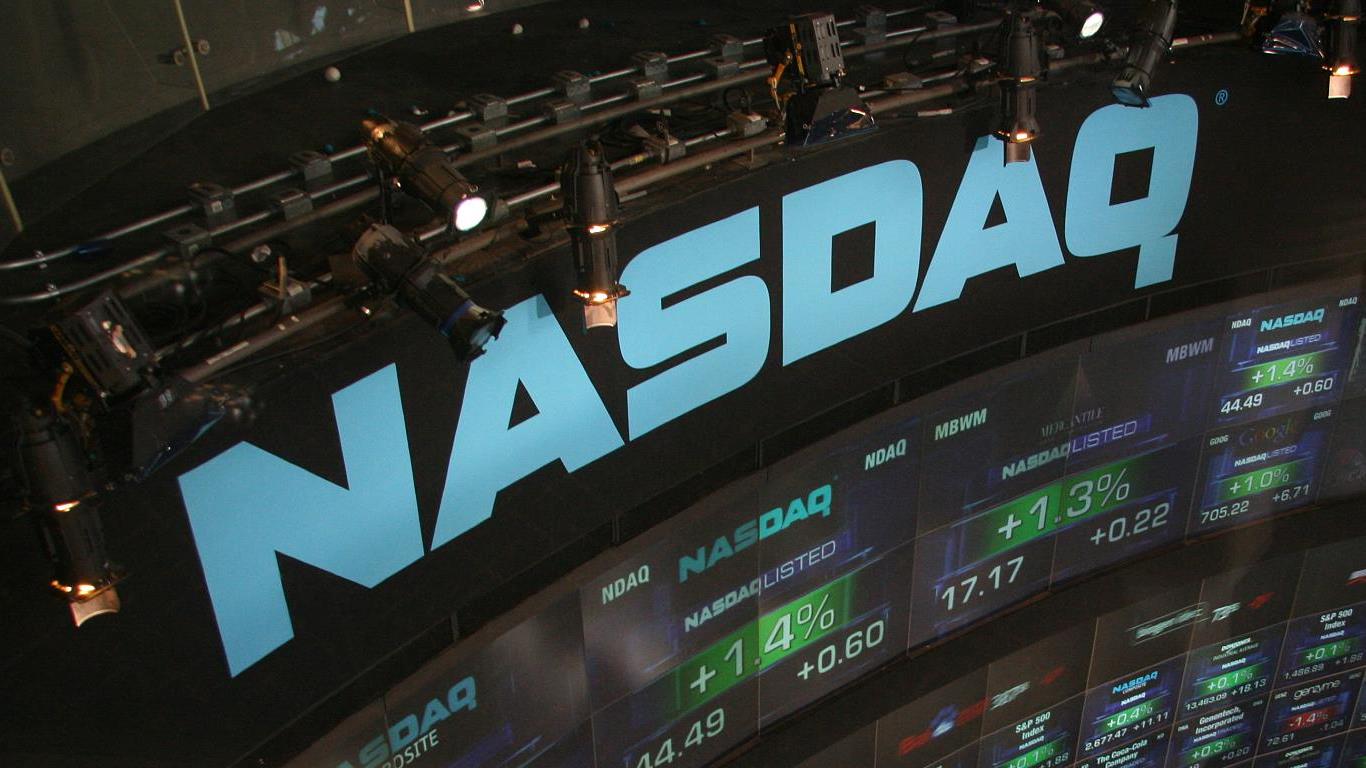
On a recent Animal Spirits podcast titled “Talk Your Book: How SpaceX Got Into the Nasdaq 100,” Invesco’s Paul Schroeder dropped a statistic that should stop any growth investor mid-scroll. The Nasdaq 100, which you probably know through Invesco QQQ Trust (NASDAQ:QQQ) and its cheaper sibling Invesco NASDAQ 100 ETF (NASDAQ:QQQM), now owns 27% of all assets under management in the entire US large-cap growth ETF category. One index. One methodology. A quarter of the money.
Schroeder called it “the 500-pound gorilla”, and he was being modest.
The 500-Pound Gorilla in Growth ETFs
Concentration inside an index is one thing. Concentration of indices is another, and much weirder. When a single benchmark controls that much of a category, price discovery starts to bend around it. Money flows into QQQ, QQQ has to buy its top holdings in proportion, and those top holdings are already the biggest companies in the world. QQQM alone holds roughly $96.8 billion in assets, and that is the smaller of the two Invesco vehicles tracking the index. The gorilla is fed daily by 401(k) auto-contributions that will not stop to ask about valuation.
Schroeder also pointed out something that quietly changes how you should think about the index. The Nasdaq 100 methodology is essentially market-cap driven with a listing requirement, so non-tech companies like Walmart or Clorox could theoretically join if they switched their listing to the Nasdaq. The name says tech. The rulebook does not.
Why the 50/50 Debate Is Already Settled
A listener wrote in asking whether splitting a core portfolio 50/50 between the S&P 500 and Nasdaq 100 was reasonable. Michael Batnick’s response was that the question felt like “an email from 2018”, because the migration of QQQ from a satellite growth bet to a core holding has already largely happened, particularly since COVID.
The math backs him up. Since the March 2020 bottom, QQQ has returned 324.04%, while SPDR S&P 500 ETF (NYSEARCA:SPY) has returned 143.06% over the same window. Over the past ten years, QQQ is up 555.32% versus 253.29% for SPY. A 50/50 mix was a bold call in 2018. In 2026, running a portfolio without meaningful Nasdaq 100 exposure is the active bet, and most investors did not consciously make it. They defaulted into it because the flows did.
Less Tech, More Return
Now for the counterintuitive twist. The Nasdaq 100 is 50 to 60% technology, which sounds heavy until you check the numerator. Schroeder noted the index has outperformed the tech sector itself while carrying roughly 40% less tech exposure. What you are actually buying inside QQQ is a barbell.
Mega-cap platforms on one side, and a growing bench of consumer, healthcare, and industrial names that happen to list on the Nasdaq on the other. That mix has beaten a pure tech benchmark. Nasdaq is now openly positioning the index as a broad large-cap US benchmark rather than a growth sleeve, which, given the flows, describes what already happened.
Should QQQ Be Your Core Holding?
The read for a reader within a decade of retirement is complicated. Using QQQ as a core is defensible on returns, and it is up 29.95% over the past year alone. It is also a hidden overweight to about seven companies whose combined weight can swing on a single earnings night.
If you already own SPY, or Vanguard Growth ETF (NYSEARCA:VUG), you are probably tripling up on the same names without realizing it. VUG has returned 292.97% since the March 2020 low, and it tracks QQQ closely because it holds the same gorilla wearing a different Vanguard-branded sweater.
Contact [email protected] for any questions or corrections.
Omor Ibne Ehsan is a writer at 24/7 Wall St. He is a self-taught investor with a focus on growth, cyclical, and dividend equities that have strong fundamentals, value, and long-term potential. He also has an interest in high-risk, high-reward investments such as penny stocks.