Micron Is In Its Most Profitable Era Ever — And the Numbers Keep Getting Bigger
AI has shattered the economics of the memory chip business, and Micron sits at the center of a supply crunch so severe that one quarter of earnings could rival a figure that took the company two decades to accumulate.


Artificial intelligence has changed the economics of semiconductors. Instead of competing primarily on volume, a handful of chipmakers now control components that every AI data center needs and few companies can supply. That shift has transformed pricing, margins, and profit expectations across the memory industry.
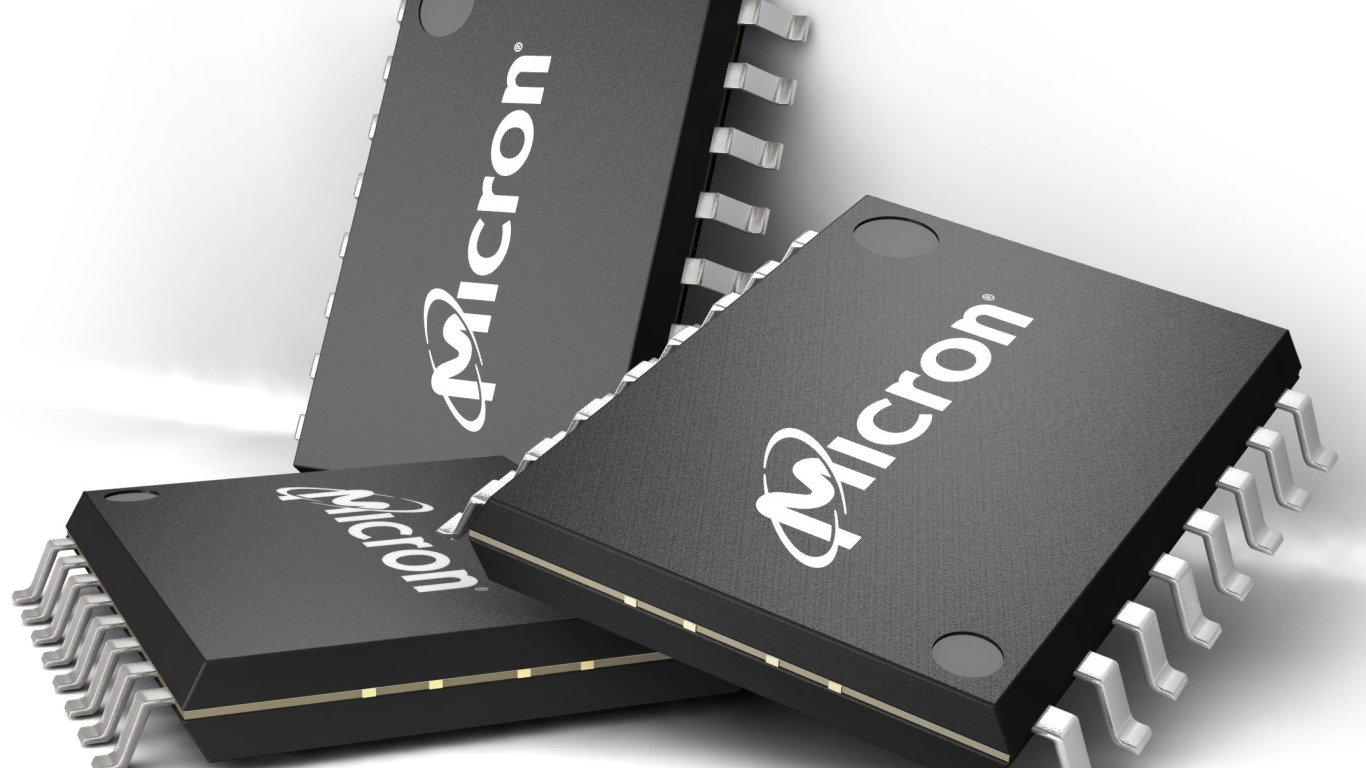
Micron Technology (NASDAQ:MU | MU Price Prediction) sits at the center of that change. After years of boom-and-bust cycles, the company is generating profits that would have seemed impossible just a few years ago. If its fourth-quarter guidance proves accurate, Micron could earn nearly as much in a single quarter as it generated over the previous two decades — combined.
AI Has Given Micron Unprecedented Pricing Power
Micron expects fourth-quarter revenue of $50 billion, plus or minus $1 billion, while forecasting GAAP operating expenses of approximately $1.86 billion. That implies operating income approaching $49 billion if revenue lands near the midpoint.
Those numbers sound almost surreal until you look at what has happened over the past year. Micron has consistently exceeded both Wall Street’s estimates and its own guidance by a wide margin as demand for AI memory has continued outpacing expectations.
Even more remarkable, Micron generated roughly $59 billion in cumulative profits over the past 20 years. One quarter could nearly match two decades of earnings. And if it crushes earnings yet again, it could equal the output of the past two decades.
The reason is simple: supply remains constrained while demand keeps climbing. Industry research firms, including SemiAnalysis, have argued that memory capacity is expanding by only about 20% to 30% annually, while AI demand is doubling. Many industry participants now expect the supply shortage to persist until 2028 at the earliest.
Margins That Look More Like Software Than Hardware
Memory has historically been viewed as a commodity business where prices swing sharply with supply and demand. That isn’t today’s market.
Micron, SK hynix, and Samsung control about 90% of global DRAM production and account for virtually 100% of high-bandwidth memory (HBM) production — the specialized memory powering Nvidia‘s (NASDAQ:NVDA) AI accelerators and other advanced AI chips. That limited competition has produced pricing power rarely seen in hardware.
According to Micron’s earnings release, its data center business generated an operating margin of 83% last quarter. Those are numbers investors normally associate with software companies — not manufacturers building physical chips.
Wall Street May Still Be Thinking Too Small
Current analyst forecasts suggest Micron could produce $90 billion to $100 billion in operating income this fiscal year, while expecting roughly $133 billion in 2027. Those projections already represent a dramatic leap from anything in Micron’s history.
Granted, there is a ceiling. Rising memory prices eventually reach levels where customers either delay purchases or look for alternatives. Every pricing cycle has limits.
That said, the supply-demand imbalance still favors suppliers. If capacity continues expanding more slowly than AI infrastructure spending, pricing could remain elevated for years, even if it eases from today’s peak levels.
In other words, margins don’t have to remain at 83% forever for Micron to generate profits unlike anything investors have seen before.
Key Takeaway
In short, Micron is benefiting from one of the strongest supply-demand imbalances the semiconductor industry has ever experienced. The memory chip maker could generate operating income approaching the total it accumulated over the past 20 years. That transformation stems from AI-driven demand, constrained memory supply, and an industry structure where just three companies control nearly all of the critical DRAM and HBM markets.
Regardless of whether pricing eventually moderates, today’s economics suggest Micron has entered a different phase of its business. For investors, the key question is no longer whether AI is boosting memory demand. It is how long this shortage — and Micron’s newfound pricing power — can last. If supply remains tight through 2028 as many industry observers expect, Wall Street’s current forecasts may prove to be only the starting point.
Contact [email protected] for any questions or corrections.
After two decades of patrolling the dark corners of suburbia as a police officer, Rich Duprey hung up his badge and gun to begin writing full time about stocks and investing. For the past 20 years, he’s been cruising the markets looking for companies to lock up as long-term holdings in a portfolio while writing extensively on the broad sectors of consumer goods, technology, and industrials. Because his experience isn’t from the typical financial analyst track, Rich is able to break down complex topics into understandable and useful action points for the average investor. His writings have appeared on The Motley Fool, InvestorPlace, Yahoo! Finance, Money Morning, and, of course, 24/7 Wall St. He has been featured in both U.S. and international publications, including MarketWatch, Financial Times, Forbes, Fast Company, and USA Today.