Is Disney or PayPal the Better Rebound Play Now?
Both Disney and PayPal sit well below their multi-year highs, and both are flashing signals that tempt bargain hunters. But for a retirement portfolio, only one of these beaten-down names actually holds up under scrutiny.


Walt Disney (NYSE:DIS | DIS Price Prediction) and PayPal (NASDAQ:PYPL) are both trading well below their multi-year highs, attracting income-oriented investors hunting for a rebound. The question for a retirement-focused investor is simple: which beaten-down name deserves the portfolio slot?
The setup looks superficially similar. Disney is down 21.3% over the past year and 46.0% over five years, a slow de-rating. PayPal has fallen harder and faster, off 38.8% in 12 months and 84.6% over five years. PayPal has bounced more forcefully lately, gaining 13.8% in the past month while Disney slipped 3.0%. That divergence may tempt contrarians, but it should not sway retirees.
Yield and Income: Advantage Disney
Disney pays a $1.50 annualized dividend, delivered as two $0.75 semi-annual installments, with the next payment landing July 22, 2026. Management raised the payout from $0.50 in 2025 to $0.75 in 2026 and lifted the fiscal 2026 buyback authorization to at least $8 billion. PayPal initiated its dividend in Q4 2025 at $0.14 per quarter, an annualized $0.56. The yields are close, but the track record is not. Disney has a decades-long dividend history, paused during COVID and now rebuilding toward its pre-pandemic $0.88 semi-annual peak. PayPal has three quarterly payments to its name. For retirees needing a reliable check, Disney wins cleanly.
Growth Trajectory: Advantage Disney
Disney is guiding to roughly 16% adjusted EPS growth in fiscal 2026, including the 53rd week, or about 12% excluding it, with double-digit growth again in fiscal 2027. Streaming has inflected: Entertainment SVOD operating income rose 88% year over year to $582 million in fiscal Q2 2026, hitting a 10.6% operating margin. Experiences posted record Q2 revenue of $9.487 billion, up 7%. Polymarket traders priced a 92.1% probability that Disney would beat that quarter, and it did, with adjusted EPS of $1.57 versus $1.50 consensus.

PayPal is moving in the opposite direction. Management is guiding fiscal 2026 non-GAAP EPS to a low-single-digit decline to slightly positive versus FY 2025’s $5.31, with Q2 non-GAAP EPS expected to decline approximately 9% year over year. In Q1 2026, GAAP operating margin contracted 182 basis points to 17.8%, and active accounts fell by 0.2 million from the prior quarter. Retirement investors should avoid a shrinking business.

Risk and Execution: Advantage Disney
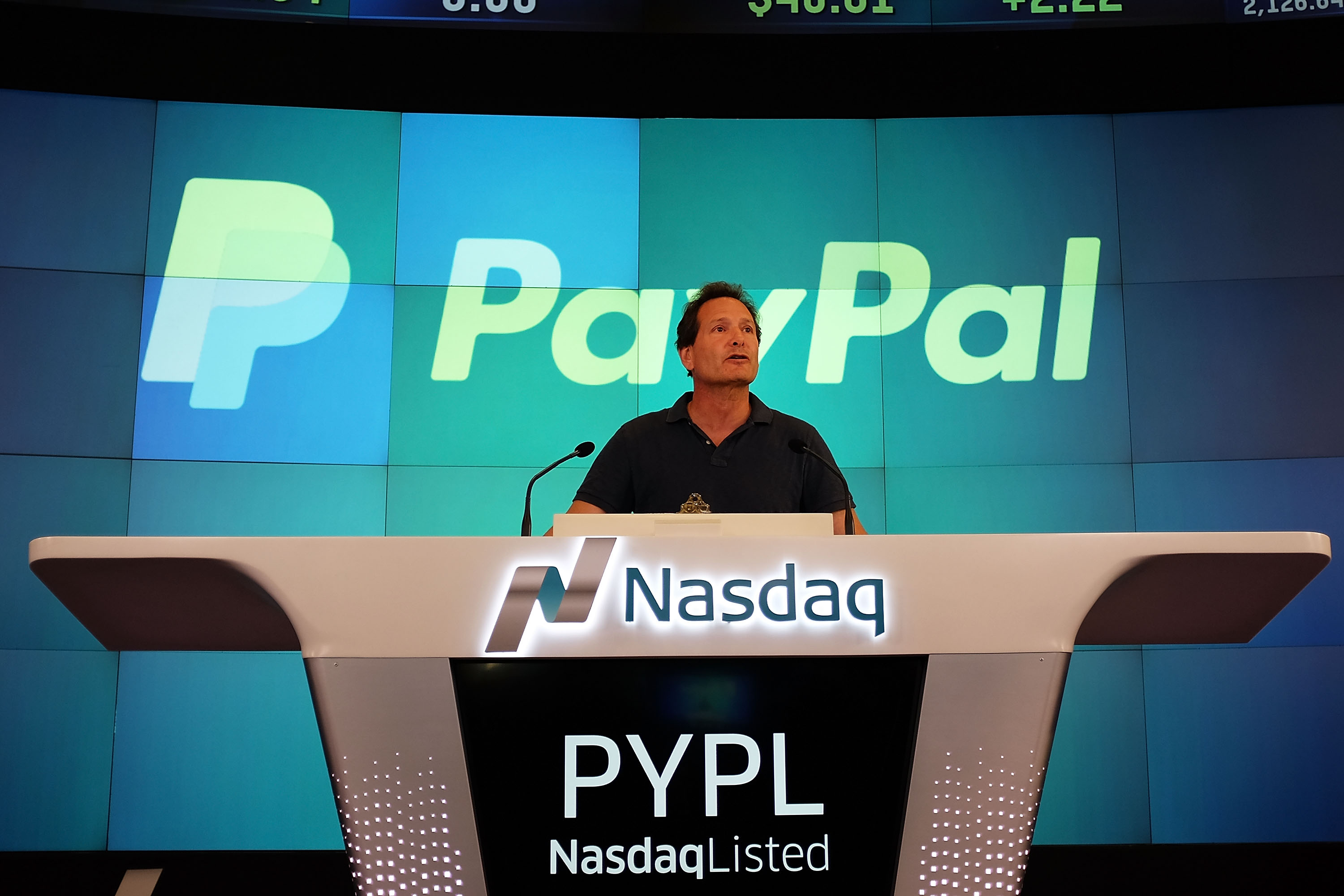
PayPal’s Q4 2025 report was telling. Non-GAAP EPS came in at $1.23 versus the $1.29 consensus, revenue missed by 1.16%, and then-interim CEO Alex Chriss conceded “our execution has not been where it needs to be, particularly in branded checkout.” That admission drew securities class action lawsuits, and the board then appointed incoming CEO Enrique Lores, who is now “taking deliberate steps to sharpen our strategy and simplify our organization.” Turnarounds under new CEOs are the wrong risk profile for a retirement account. Wall Street agrees, as analyst sentiment is mostly bearish, though the $51.38 consensus price target suggests nearly 11% upside from the $46.32 close on July 10.

Disney is diversified across parks, streaming, sports, and consumer products, trades at a trailing P/E of 15 and forward P/E of 13, and carries an analyst target of $129.67 against $95.62. PayPal appears cheaper on a trailing P/E of roughly 9, but that low multiple reflects contracting earnings rather than genuine value.
The Verdict
Disney is the better retirement holding. The dividend is established and rising, growth is accelerating on streaming and parks, and the risk profile is manageable. PayPal has a case, but it belongs in the portfolio of a value or turnaround investor willing to bet on Lores executing on branded checkout and margin repair. For a portfolio designed to fund living expenses, the choice is clear. PayPal is a bet retirees do not need to make.

Contact [email protected] for any questions or corrections.
Trey has been an editor and author at 24/7 Wall St. for more than a decade, where he has published thousands of articles analyzing corporate earnings, dividend stocks, short interest, insider buying, private equity, and market trends. His comprehensive coverage spans the full spectrum of financial markets, from blue-chip stalwarts to emerging growth companies.
Beyond 24/7 Wall St., Trey has created and edited financial content for Benzinga and AOL's BloggingStocks, contributing additional hundreds of articles to the investment community.
Trey's editorial expertise extends across multiple publishing environments. He served as production editor at Dearborn Financial Publishing and development editor at Kaplan, where he helped shape financial education materials. Earlier in his career, he worked as a writer-producer at SVE. His freelance editing portfolio includes work for prestigious clients such as Sage Publications, Rand McNally, the Institute for Supply Management, the American Library Association, Eggplant Literary Productions, and Spiegel.
Outside of financial journalism, Trey writes fiction and has been an active member of the writing community for years, moderating workshop sessions at regional conventions.