America Has Room For 714 Million Barrels Of Oil
The Strategic Petroleum Reserve sits at its lowest level in decades after record withdrawals, and President Trump is warning the US could run dry in weeks. What happens to the American economy if the world's largest emergency oil supply cannot…

This post may contain links from our sponsors and affiliates, and Flywheel Publishing may receive compensation for actions taken through them.
The press is full of articles that the US has much less oil than it should have, or maybe could have. The Wall Street Journal reports. “Frequent Oil Draws From U.S. Strategic Reserve Push Old System to Breaking Point.” The real number is in the eye of the beholder.
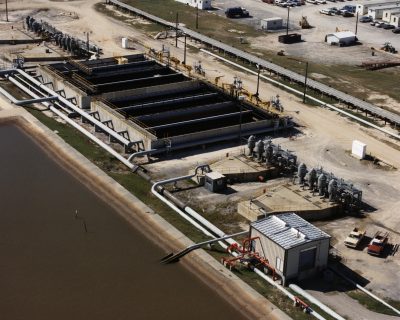
The Strategic Petroleum Reserve (SPR), which can store as much as 714 million barrels, is what the Energy Department calls “the world’s largest supply of emergency crude oil…” The oil is stored in underground salt caverns along the Gulf of Mexico. It is set up to run the crude through the Seaway, Texoma, and Capline systems, which run to refiners.
The President decides when to tap the SPR. This, in turn, is governed by the Energy Policy and Conservation Act (EPCA). Maybe. It seems the amount of oil President Trump has drawn has been based on the perception that the world’s oil flow has been disrupted by the blockade of the Strait of Hormuz. With 352 million barrels drawn out of the SPR, which is the largest amount in history, perhaps there is too little left if the US cannot produce enough oil for itself. Based on production and refinery capacity, this problem might be real.
Other nations have similar facilities. As these are replenished, the amount is so large across all nations that it could move oil prices higher. That is, however, based on calculations which may or may not be true. As a matter of fact, based on the path through the Strait of Hormuz, guesses could be right in either direction. Too little oil in the SPR? How quickly is it used or replenished?
One issue is how quickly the SPR can be replenished to its 714-million-barrel capacity. And does that need to happen, or can it be refilled to some point below this figure? Another anxiety is: if crude prices stay above $80, $90, or $100 a barrel, how much will the replacement cost? How does the US get the oil, and who sells it? America can afford the oil if it can get it.
President Trump said at the Group of Seven Summit that the US could be out of oil soon. “We run out of reserves at about four weeks. You know, there are reserves all over the world, and we would really run out, and there’ll be a time when you wouldn’t be able to get it.” If so, America’s economy could be weakened, and the price of oil would jump higher. However, the amount of anxiety is somewhat muted, at least as the Administration sees it.
Today, what happens to the SPR can’t be replentished? The answer is a guess
Contact [email protected] for any questions or corrections.
Douglas A. McIntyre is the co-founder, chief executive officer and editor in chief of 24/7 Wall St. and 24/7 Tempo. He has held these jobs since 2006.
McIntyre has written thousands of articles for 24/7 Wall St. He is an expert on corporate finance, the automotive industry, media companies and international finance. He has edited articles on national demographics, sports, personal income and travel.
His work has been quoted or mentioned in The New York Times, The Wall Street Journal, Los Angeles Times, The Washington Post, NBC News, Time, The New Yorker, HuffPost USA Today, Business Insider, Yahoo, AOL, MarketWatch, The Atlantic, Bloomberg, New York Post, Chicago Tribune, Forbes, The Guardian and many other major publications. McIntyre has been a guest on CNBC, the BBC and television and radio stations across the country.
A magna cum laude graduate of Harvard College, McIntyre also was president of The Harvard Advocate. Founded in 1866, the Advocate is the oldest college publication in the United States.
TheStreet.com, Comps.com and Edgar Online are some of the public companies for which McIntyre served on the board of directors. He was a Vicinity Corporation board member when the company was sold to Microsoft in 2002. He served on the audit committees of some of these companies.
McIntyre has been the CEO of FutureSource, a provider of trading terminals and news to commodities and futures traders. He was president of Switchboard, the online phone directory company. He served as chairman and CEO of On2 Technologies, the video compression company that provided video compression software for Adobe’s Flash. Google bought On2 in 2009.