NVIDIA CEO Jensen Haung: Our Next Product Is on Pace for “Giant” Sales Volumes
Jensen Huang just staked his credibility on a single word to silence delay concerns about Vera Rubin, and Wall Street is already reworking its price assumptions in response.

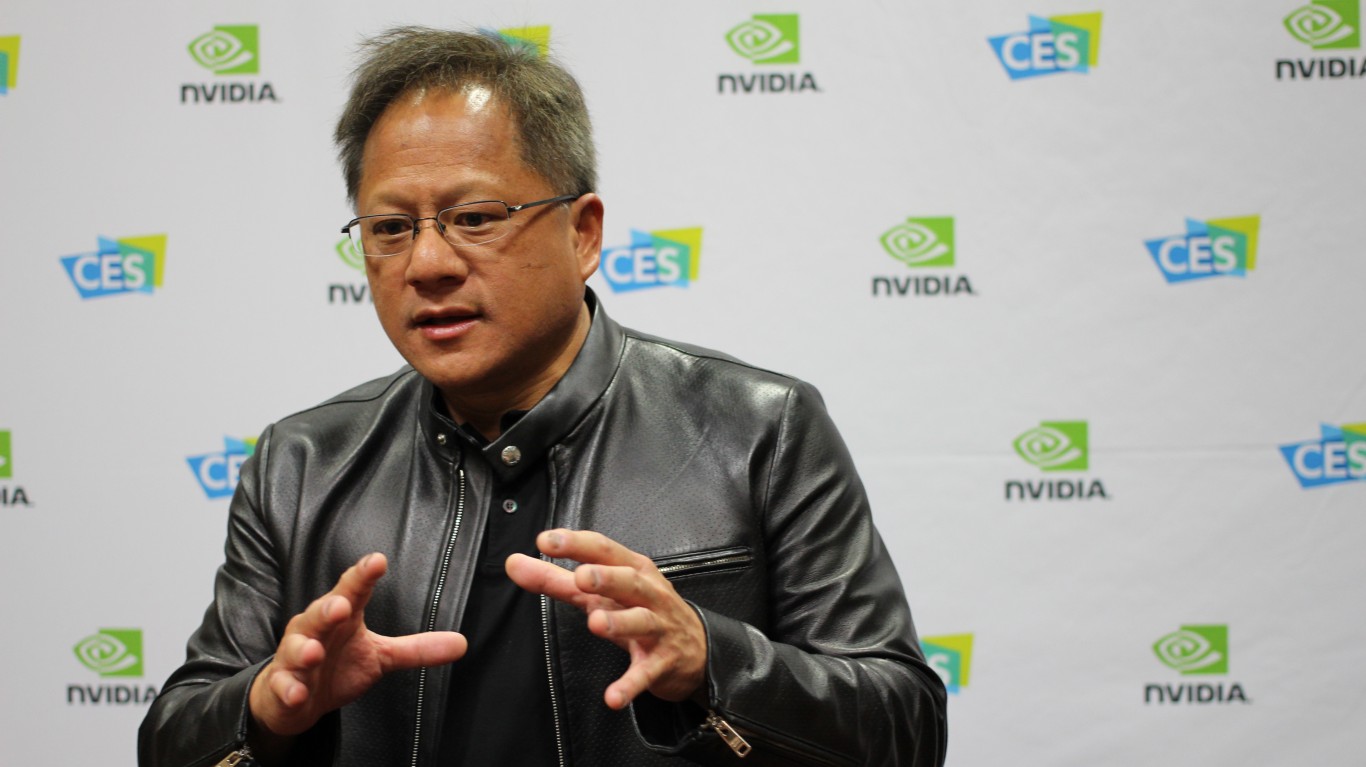
Speaking on the sidelines of a developer event in Tokyo, NVIDIA (NASDAQ:NVDA | NVDA Price Prediction) CEO Jensen Huang pushed back hard on a research report claiming his next flagship product line was slipping. “Vera Rubin is already in production. Giant amounts of production incoming,” Huang told reporters, rejecting delay concerns and dismissing a SemiAnalysis post that suggested a specialized circuit board issue could push the next-generation AI server rack into 2028.
That single word, “giant,” matters. It is the CEO staking his credibility on a product cycle that Wall Street has already begun pricing into forward numbers.
What Rubin Has to Live Up To
The bar Blackwell already set is extraordinary. Nvidia’s Q1 FY2027 revenue hit $81.615 billion, up 85.2% year over year, with Data Center alone contributing $75.246 billion and Networking revenue rising 199% YoY. Non-GAAP gross margin came in at 75.0%, and free cash flow reached $48.554 billion in the quarter.
Huang framed the buildout as generational: “The buildout of AI factories, the largest infrastructure expansion in human history, is accelerating at extraordinary speed.” He added that “We have more orders today than we did at the last time I spoke about orders at GTC” and that NVIDIA will “keep our supply chain quite busy for several many more years coming.”
Supply commitments help explain Nvidia’s confidence. The company has $119.0 billion tied to supply-related commitments and is guiding for $91.0 billion in Q2 revenue, a forecast that excludes any China Data Center compute sales. Meanwhile, H200 shipments to China and Hong Kong have reportedly begun after U.S. officials cleared roughly 10 Chinese companies to buy the chips, but deliveries remain minimal so far.
The Rubin Pricing Bombshell
The delay narrative that surfaced in early July collided with a more bullish Wall Street read this morning: Morgan Stanley raised its Vera Rubin rack-system price assumption to about $49 billion per gigawatt, implying materially higher customer spending per deployment than Blackwell.
In NVIDIA’s fiscal Q4 commentary, Huang said “Vera Rubin will extend that leadership even further” on cost per token. The distinction matters: customers may pay more upfront for Rubin systems if the platform lowers the cost of running AI models at scale. If pricing power holds and volumes are truly “giant,” the mix shift lifts NVIDIA’s average selling price base heading into fiscal 2028.
Manufacturing partner Taiwan Semiconductor Manufacturing (NYSE:TSM) is signaling similarly robust demand. June revenue jumped 67.9% YoY to NT$442.68 billion, and TSMC is adding three new advanced packaging facilities in Chiayi Science Park Phase II to relieve CoWoS bottlenecks.
Valuation Math
NVDA trades at $211.54, with a trailing P/E of 32x and a forward P/E of 24x. The consensus analyst target sits at $301.62, with 48 Buy and 10 Strong Buy ratings against just 2 Holds.
Prediction markets are more restrained, pricing a 73% probability NVDA hits $216 in July but only 31.5% odds of a $220+ close. If Huang’s “giant” volumes materialize on Rubin at Morgan Stanley’s higher ASPs, current forward estimates likely understate FY2028 earnings power.


Contact [email protected] for any questions or corrections.
Gerelyn Terzo is the author of dividend investing handbook "Dividend Investing Strategies: How to Have Your Cake & Eat It Too." A veteran financial journalist, she covers agri-finance for outlets like Global AgInvesting and the broader stock market and personal finance for 24/7 Wall Street. She began at CNBC and later helped launch Fox Business in New York. Gerelyn currently resides in Woodland Park, Colorado and dabbles in nature photography as a hobby.