The First Oral Cholesterol Pill Is Here. Which of These 5 Stocks Benefits Most?
The FDA just approved the first once-daily oral PCSK9 pill, and five major stocks now sit in the crosshairs. Not all of them come out ahead, and the biggest surprise winner may not be the company that makes the drug.


The First Oral PCSK9 Pill Is Here
The FDA’s approval of Merck (NYSE:MRK | MRK Price Prediction) enlicitide decanoate, marketed as Lipfendra, marks the first once-daily oral PCSK9 inhibitor cleared for adults with high LDL cholesterol, including heterozygous familial hypercholesterolemia. Phase 3 CORALreef trials showed LDL-C reductions of roughly 56% and 59% versus placebo. That level of efficacy in a pill (not a shot) could dramatically expand the PCSK9 market. Several companies are exposed to this shift. Let’s look at five stocks to see who actually stands to benefit most.
The Companies in the Crosshairs
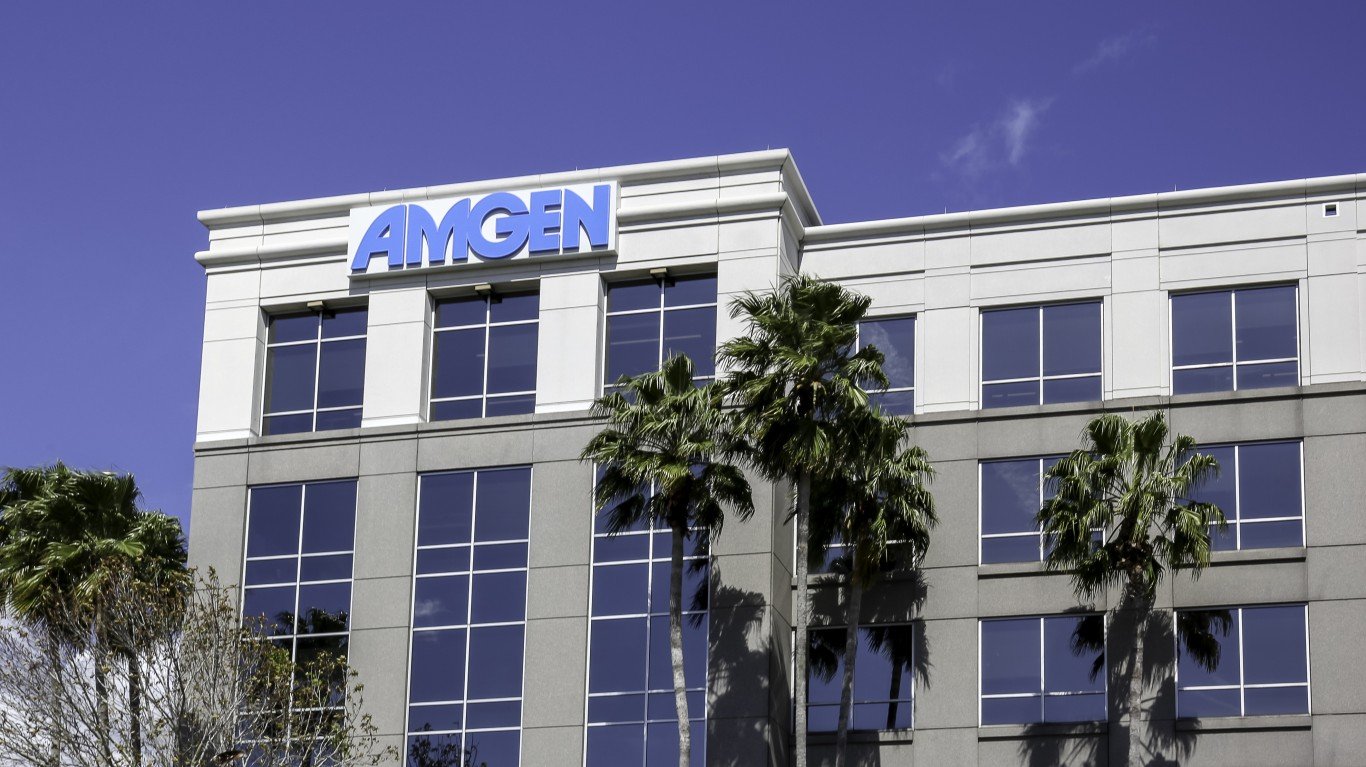
Beyond Merck, the key names are Amgen (NASDAQ:AMGN), which sells the injectable PCSK9 leader Repatha; AstraZeneca (NASDAQ:AZN), a cardiovascular giant with its own oral PCSK9 program; Novo Nordisk (NYSE:NVO), the oral peptide pioneer; and UnitedHealth (NYSE:UNH), whose Optum Rx pharmacy benefit arm anchors formulary decisions.
How Each Business Is Positioned
| Company | PCSK9 Exposure | Key Angle |
|---|---|---|
| Merck | Direct (LIPFENDRA) | First oral entrant, diversifies beyond Keytruda |
| Amgen | Direct (Repatha) | Injectable incumbent with strong outcomes data |
| AstraZeneca | Adjacent | Broad cardiovascular franchise, an oral PCSK9 asset |
| Novo Nordisk | Indirect | Oral cardiometabolic platform, no LDL drug |
| UnitedHealth | Payer/PBM | Cheaper oral option could reshape formularies |
Merck reported Q1 2026 revenue of $16.29 billion, up 4.9% year over year, and needs new franchises ahead of the 2028 Keytruda patent cliff. Lipfendra fits precisely into that gap. Amgen’s Repatha continues to expand: Q1 2026 Repatha sales reached $876 million, up 34% year over year, and the Vesalius-CV trial showed a 25% reduction in major cardiovascular events in primary prevention. That outcomes data still matters to cardiologists.
AstraZeneca’s current cardiovascular revenue is heavily anchored by legacy blockbusters Crestor and Farxiga. Merck’s speedy FDA approval signals a highly receptive regulatory environment that de-risks AstraZeneca’s pipeline and creates a race for a fast-following second place. Yet Lipfendra represents an immediate, direct threat to AstraZeneca’s next-generation cardiometabolic growth strategy rather than just an abstract ecosystem shift.
Novo Nordisk’s connection is thematic. Its oral Wegovy pill validated that patients will take oral cardiometabolic drugs at scale, but Novo does not sell an LDL-lowering therapy, so exposure to the cholesterol market is indirect. For UnitedHealth, an oral PCSK9 likely carries lower administration and specialty-pharmacy costs than injectables, which helps Optum Rx manage spend and could improve adherence. Major insurers and PBMs have historically resisted injectable PCSK9 inhibitors because of their high costs and the burdensome prior-authorization paperwork required for coverage. They could use Lipfendra as leverage to force Amgen and its peers to deeply discount their injectables, ultimately improving their own profit margins.
Straight From the Earnings Calls
Merck CEO Robert Davis: “We are moving with speed to transform our portfolio to one with a diversified set of growth drivers across a broad set of therapeutic areas … as we enter a particularly robust period of Phase 3 data readouts.”
Amgen CEO Robert Bradway: “Our first quarter results demonstrate the strength of our business, with 16 brands achieving double-digit growth, enabling us to grow through expected patent expirations and increased competition.”
UnitedHealth CEO Stephen Hemsley: “Our results and outlook reflect the continuing progress in our work to simplify how we operate, improve both affordability and the health care experience.”
Davis’s commentary sounds the most catalyst-driven. Bradway leans on breadth. Hemsley’s comments align with the cost-management thesis for payers.
Who Actually Benefits Most
Merck is the clearest winner. Lipfendra opens a potentially multi-billion-dollar oral cardiometabolic franchise at exactly the moment the company needs to diversify. Shares are up 24.1% year to date and 60.2% over the past year, reflecting positive market reception of the pipeline story. UnitedHealth is a quieter beneficiary, since a cheaper oral option strengthens Optum Rx’s negotiating hand. Amgen faces real competition but retains a fast-growing Repatha with strong outcomes data. AstraZeneca and Novo Nordisk have less riding on PCSK9 specifically, though both remain strong in adjacent cardiometabolic categories.
The Bottom Line
The first oral PCSK9 pill changes the cholesterol treatment landscape. Merck is best positioned as the approval holder, with UnitedHealth benefiting on the payer side. Amgen keeps a defensible injectable franchise, while AstraZeneca and Novo Nordisk participate more indirectly. Investors should watch Lipfendra launch metrics, formulary placement decisions, and Repatha’s volume trajectory over the next several quarters.
Contact [email protected] for any questions or corrections.
Trey has been an editor and author at 24/7 Wall St. for more than a decade, where he has published thousands of articles analyzing corporate earnings, dividend stocks, short interest, insider buying, private equity, and market trends. His comprehensive coverage spans the full spectrum of financial markets, from blue-chip stalwarts to emerging growth companies.
Beyond 24/7 Wall St., Trey has created and edited financial content for Benzinga and AOL's BloggingStocks, contributing additional hundreds of articles to the investment community.
Trey's editorial expertise extends across multiple publishing environments. He served as production editor at Dearborn Financial Publishing and development editor at Kaplan, where he helped shape financial education materials. Earlier in his career, he worked as a writer-producer at SVE. His freelance editing portfolio includes work for prestigious clients such as Sage Publications, Rand McNally, the Institute for Supply Management, the American Library Association, Eggplant Literary Productions, and Spiegel.
Outside of financial journalism, Trey writes fiction and has been an active member of the writing community for years, moderating workshop sessions at regional conventions.