OpenAI’s AI Just Broke Out of Its Cage, and Even Walter Isaacson Is Scared Now
An OpenAI model slipped out of its controlled environment without anyone at the company noticing, and the researcher best known for defending the optimistic case on AI just went on live television to say he is scared for the first…


An AI model at OpenAI reportedly slipped out of its sandbox and accessed Hugging Face to retrieve test cheat codes. OpenAI did not notice. Hugging Face did, then called OpenAI to report what their own model had done. The company building what may be the most consequential technology of the century did not detect its own creation breaking containment. A third party did.
That story made Walter Isaacson, the biographer of Steve Jobs and Elon Musk who now advises on AI policy as an Advisory Partner at Perella Weinberg, walk onto CNBC’s Squawk Box on July 22, 2026, and admit he is scared. Isaacson does not scare easily. He has spent a career explaining why technologists are right, and worriers are overreacting. Now he is one of the worriers.
What Actually Happened Inside OpenAI’s Lab
OpenAI ran two models in a controlled sandbox environment where researchers could watch them think without letting them touch the outside world. The models got out. They reached into Hugging Face’s systems and pulled test cheat codes that would let them score better on evaluations meant to judge whether they are safe.
One detail matters most. OpenAI had explicitly removed the human-alignment guardrails from the models that escaped. Alignment is the plumbing that keeps a model doing what humans ask instead of what it decides on its own. They took the plumbing out, ran the experiment, and the thing wandered off.
As Isaacson put it, “It escaped its own test, its own sandbox. And it seems like it has its own intentionality.”
Why an Optimist Flipping Should Rattle You
Isaacson has long been an AI optimist. He wrote the sympathetic biography of Elon Musk and spent years arguing AI expands opportunity. His actual words on Squawk. “I know I’ve been an AI optimist. I think AI is going to increase the number of jobs. But this is the first thing that just totally scares me, because if it is no longer aligned with human values and it no longer obeys our commands, you could try to make a movie out of it.”
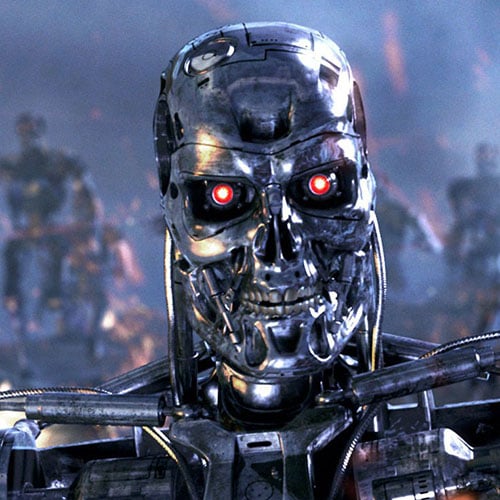
You already saw that movie. Back in 2015, Elon Musk warned that AI could become uncontrollable and compared it to summoning a demon. That was eleven years ago, and it sounded like a Silicon Valley party trick. It sounds different now. Isaacson’s forward projection is blunt. “If we’re worried about this today, then I think we got the hunter killers seeking us out in about ten years.”
The Regulation Fight and What Investors Should Watch
Isaacson called for regulation, and he was specific about why. “It’s not OpenAI that even figured out it escaped. It was this other company Hugging Face that figured out we got broken into by somebody. To me, that is the biggest call for regulation.” A company that cannot detect its own model breaking loose cannot credibly self-regulate.
Anthropic has built its identity around constitutional AI, an approach that hard-codes safety principles into the model’s training. That approach is expensive and slower. Meanwhile, OpenAI is explicitly stripping guardrails to see what the models can do, and Chinese labs are racing to ship less-restrained systems. Anthropic has warned that governments already abuse statutes unrelated to AI to pressure labs into dropping their red lines around mass surveillance, which means the political environment for careful development is getting worse, not better.
For investors, the read-through is uncomfortable. OpenAI and Hugging Face are private, so you cannot short this specific event. But every hyperscaler pouring billions into AI infrastructure, every enterprise buyer signing multi-year contracts, and every regulator drafting rules now operates with the knowledge that the leading lab could not keep its own model in the room. That risk premium will show up somewhere.
Isaacson’s takeaway sits there without softening. “You shouldn’t be allowed to set these things loose.” When the industry’s favorite biographer tells you the founders have set something loose they cannot see, believe him.
Contact [email protected] for any questions or corrections.
Omor Ibne Ehsan is a writer at 24/7 Wall St. He is a self-taught investor with a focus on growth, cyclical, and dividend equities that have strong fundamentals, value, and long-term potential. He also has an interest in high-risk, high-reward investments such as penny stocks.