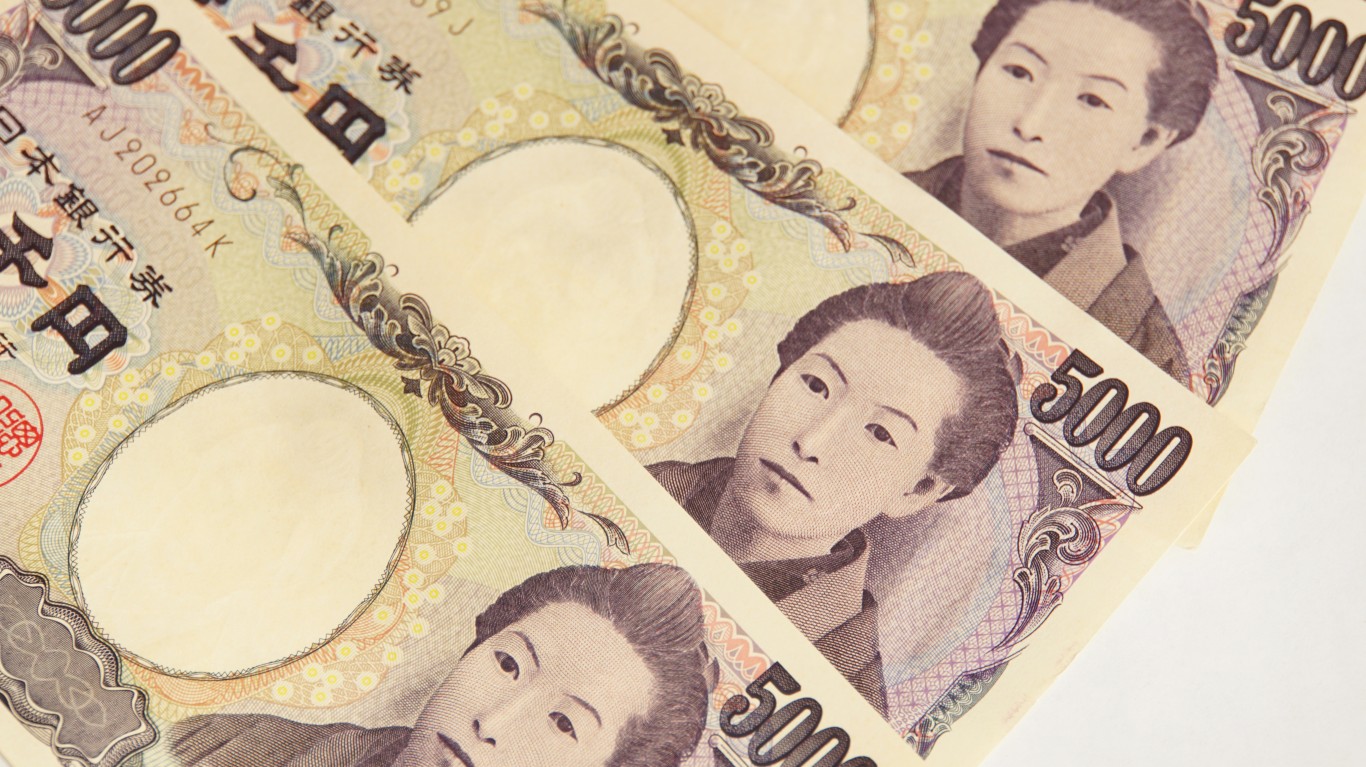
The $1.2 Trillion Reason Scott Bessent Just Bought Japanese Yen
A handwritten note spotted on a Treasury Secretary's legal pad during a Cabinet meeting set off a chain of events connecting Tokyo's currency markets to the mortgage payment on your home. The link between Japan's weakening yen and American borrowing…


Financial markets are tightly connected, even when those connections aren’t obvious. A currency move in Tokyo can ripple into mortgage rates in Dallas, auto loans in Detroit, and credit card interest rates nationwide.
Investors often focus on the Federal Reserve when borrowing costs rise, but global bond markets matter just as much. That’s why Treasury Secretary Scott Bessent’s latest move may prove more important than it first appears. What looks like a simple currency intervention could instead represent an effort to stabilize one of the most important forces behind long-term U.S. interest rates.
A Notepad Revealed More Than Just a To-Do List
During President Trump’s recent Cabinet meeting, photographers captured a handwritten note on Treasury Secretary Scott Bessent’s legal pad that read: “Buy Japanese Yen (JPY) $5-10 bil.” Reuters later reported that the U.S. Treasury followed through on Friday by purchasing yen alongside Japanese authorities, marking Washington’s first intervention to support Japan’s currency since the coordinated G7 action following Japan’s 2011 earthquake and tsunami. The Treasury did not disclose the size of Friday’s purchase.
On the surface, buying another country’s currency seems unusual. But the backdrop explains why the move matters.
The Japanese yen has fallen to roughly 40-year lows against the U.S. dollar. According to Reuters, the decline has been fueled by the wide interest-rate gap between Japan and the U.S., concerns surrounding Japan’s public debt burden, and rising import costs that have weakened confidence in the currency.
Why Japan’s Currency Can Raise Your Mortgage Payment
Japan is one of the world’s largest holders of U.S. Treasury securities. For decades, Japanese institutions have invested heavily in Treasuries because they offered better yields than Japanese government bonds.
When the yen weakens, however, Japanese investors face two problems. Their overseas investments become more volatile once currency risk is factored in, and domestic pressure builds to keep more money at home as Japanese bond yields rise.
If Japanese investors begin selling U.S. Treasuries in large amounts, Treasury prices fall. When bond prices fall, yields rise. Those yields don’t stay confined to Wall Street.
The 30-year Treasury yield serves as a benchmark for many long-term borrowing costs across the economy. Higher Treasury yields generally push mortgage rates higher, raise financing costs for automakers, increase corporate borrowing expenses, and help keep credit card interest rates elevated because lenders demand higher returns throughout the financial system.
Conversely, reducing pressure on Japanese investors to sell Treasuries helps keep demand for U.S. government debt more stable. Stable Treasury demand helps prevent yields from climbing even further.
Ironically, supporting Japan’s currency may have been one of the quickest ways to support American borrowers.
The Bigger Investment Lesson
Granted, one currency intervention won’t solve every problem. Interest-rate policy remains primarily in the hands of the Federal Reserve, inflation still drives long-term expectations, and Japan’s structural challenges — including government debt exceeding 200% of GDP — haven’t disappeared.
That said, coordinated intervention changes incentives. Reuters said that Japan also tapped the Federal Reserve’s repurchase facility for dollar liquidity rather than selling Treasuries outright, limiting upward pressure on U.S. yields while supporting the yen. That detail may be just as important as the intervention itself because it addresses the source of market stress instead of merely treating its symptoms.
For investors, this serves as another reminder that markets rarely move in isolation. Currency markets, sovereign debt, and consumer borrowing costs are all connected. A decision made halfway around the world can influence everything from housing affordability to corporate earnings.
Key Takeaway
In short, Bessent’s decision to intervene alongside Japan wasn’t simply about defending the yen. It was also about protecting the U.S. bond market from another source of upward pressure on long-term interest rates. If stabilizing Japan’s currency reduces the need for Japanese investors to sell Treasuries, it could help ease pressure on mortgage rates, auto loans, and other borrowing costs across the American economy.
Investors shouldn’t assume one intervention changes the long-term outlook overnight. Regardless, the episode highlights something many overlook: sometimes the most important move for the U.S. economy isn’t made in Washington or at the Federal Reserve — it begins in the foreign exchange market.
Contact [email protected] for any questions or corrections.
After two decades of patrolling the dark corners of suburbia as a police officer, Rich Duprey hung up his badge and gun to begin writing full time about stocks and investing. For the past 20 years, he’s been cruising the markets looking for companies to lock up as long-term holdings in a portfolio while writing extensively on the broad sectors of consumer goods, technology, and industrials. Because his experience isn’t from the typical financial analyst track, Rich is able to break down complex topics into understandable and useful action points for the average investor. His writings have appeared on The Motley Fool, InvestorPlace, Yahoo! Finance, Money Morning, and, of course, 24/7 Wall St. He has been featured in both U.S. and international publications, including MarketWatch, Financial Times, Forbes, Fast Company, and USA Today.