High Beta Runners Up: Why AMD and Marvell Technology Now Command Attention
AMD and Marvell have both crushed earnings while lapping NVIDIA and Broadcom on year-to-date returns, but their strategies for capturing AI infrastructure spending point in completely opposite directions, and only one of them fits every type of investor.


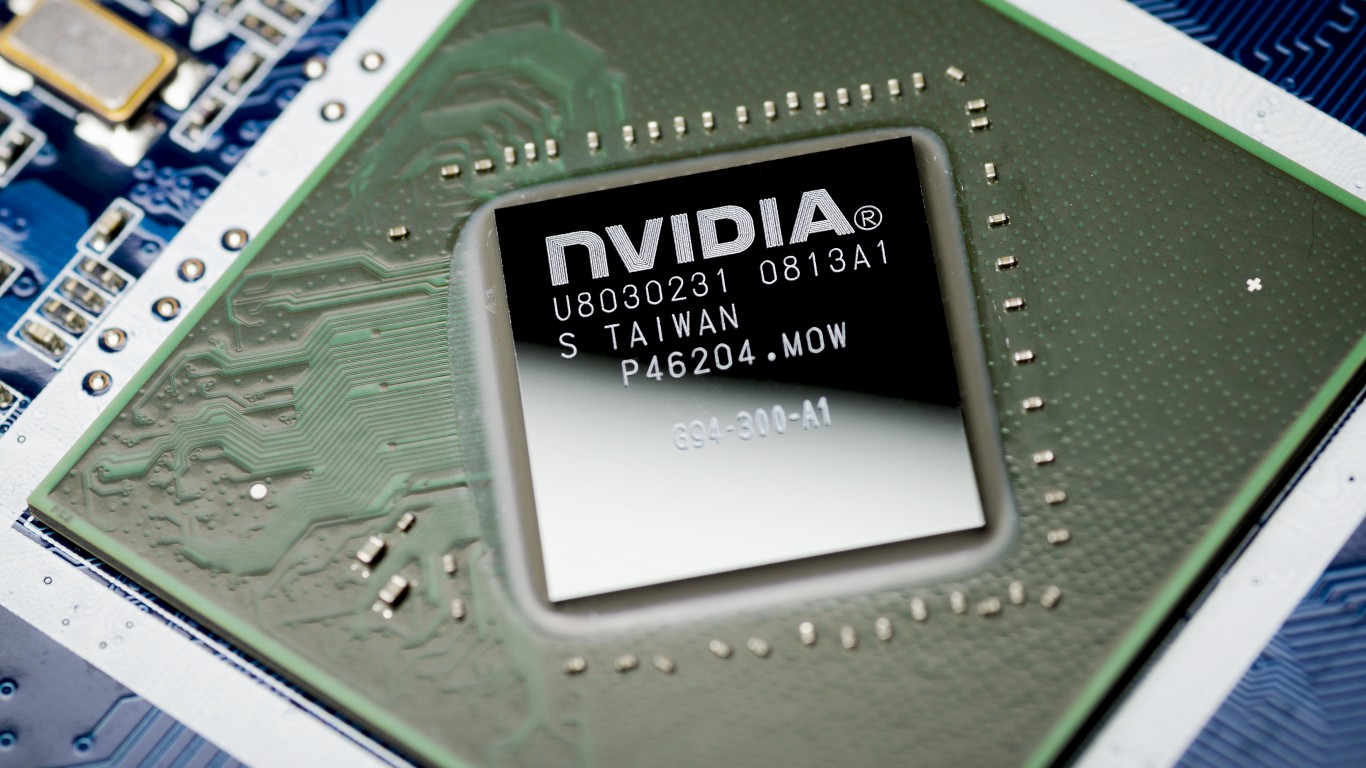
Advanced Micro Devices (NASDAQ:AMD | AMD Price Prediction) and Marvell Technology (NASDAQ:MRVL) have cleared their most recent earnings, deepening the case for treating them as the market’s preferred high beta alternatives to NVIDIA (NASDAQ:NVDA) and Broadcom (NASDAQ:AVGO). They are the sector’s second relief valves, and their quarters show why.
Data Center Doubles at AMD, Optics and XPUs Power Marvell
AMD’s Q2 showed Lisa Su’s Instinct roadmap has traction. Revenue hit $11.54 billion, up 50.11% year over year, with the Data Center segment landing at $6.72 billion, a 107% jump that flipped a year ago operating loss into $2.10 billion of segment income. Su told investors the second half will lean on “EPYC demand accelerating, Instinct deployments scaling and Helios beginning to ramp”. Gaming stayed a drag at negative 31%, a reminder the AI story is not yet lifting every segment.
Marvell’s Q1 FY2027 leaned into a single theme: hyperscaler custom silicon and optical interconnect. Revenue reached $2.418 billion, with data center at $1.83 billion, or 76% of total revenue. Matt Murphy described “exceptional AI-related bookings” spanning 800G and 1.6T optics, 51.2T Ethernet switches, and custom XPU silicon.
| Business Driver | AMD | Marvell |
| Main Growth Engine | Instinct GPUs, EPYC, Helios racks | Custom XPUs, optical interconnect |
| Data Center Mix | 58% of revenue | 76% of revenue |
| Key Partners | Anthropic, Microsoft, Cisco, Cerebras | NVLink Fusion collaboration, hyperscaler custom programs |
Merchant Alternative vs. Custom Silicon Partner
The strategies diverge sharply. AMD wants to be the credible merchant alternative to NVIDIA, and the Anthropic deal for up to 2 gigawatts of MI450 GPUs in Helios racks is the loudest evidence hyperscalers want optionality. Marvell is embedding itself in customer designs, even collaborating with NVIDIA through NVLink Fusion and silicon photonics, which is unusual for a supposed rival.
The stocks reflect that intensity. AMD is up 142.15% year to date, and Marvell has run 157.6%, while NVIDIA sits at 13.78% and Broadcom at 21.26%. High beta cuts both ways, and concentration risk is real.
The Next Test Is Guidance Follow Through
Watch whether AMD’s Q3 guide of roughly $13 billion, about 41% YoY, holds up as Helios ships in volume. For Marvell, the number that matters is the $2.70 billion Q2 guide, roughly 35% YoY, plus whether design wins convert into revenue before hyperscalers vertically integrate. Reddit’s r/wallstreetbets tagged Marvell’s earnings report as “Very Bullish” at 88, while AMD’s post report thread stayed neutral around 45 despite the beat.
Why I Lean Toward Marvell for Pure AI Beta
For the cleanest expression of AI infrastructure spend, Marvell fits better. The revenue mix is more concentrated and the custom silicon flywheel is compounding, though the $331.8 million contingent consideration charge and rising integration risk from Celestial AI and XConn remain concerns. If you prefer a broader platform with CPU cash flow cushioning the GPU push, AMD is sturdier, though its P/E near 162 leaves little room for stumbles. Investors should weigh whether the second half accelerates as smoothly as the guides suggest before assuming further upside.
Contact [email protected] for any questions or corrections.
Alex Sirois is a financial writer with experience spanning both retail and institutional investing. He has written for InvestorPlace and held roles at BNY Mellon and Bernstein, giving him a perspective that bridges Main Street portfolios and Wall Street analysis.
Alex holds an MBA from George Washington University and has built his career across multiple industries, including e-commerce, education, and translation — a breadth of experience that informs how he breaks down complex financial topics for everyday investors. His writing is conversational, actionable, and grounded in long-term, buy-and-hold investing principles.
At 247 Wall St., Alex focuses on delivering analysis that is both accessible and useful, with a clear emphasis on helping readers make more informed decisions with their money.