AMD Vs. Broadcom: Why Broadcom is Actually Nvidia’s Biggest Problem
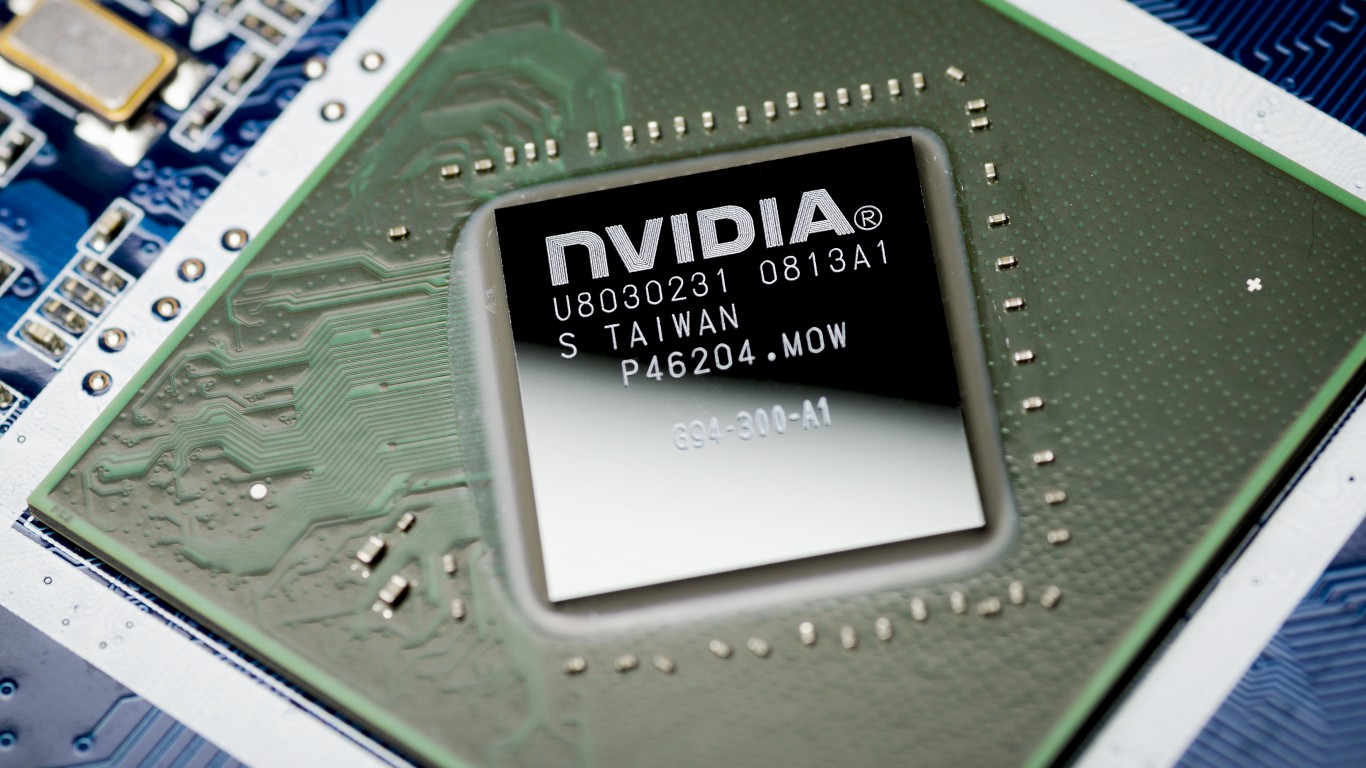
AMD just posted data center revenue that more than doubled, yet one rival may pose a far greater existential threat to Nvidia without ever competing directly for a single GPU sale.

Broadcom (NASDAQ: AVGO | AVGO Price Prediction) and AMD (NASDAQ: AMD) both closed earnings season with data center results that force a rethink of Nvidia’s real competition. Broadcom’s Q2 FY2026 landed June 3 with AI semi revenue up 143%. AMD reported yesterday, with Data Center revenue more than doubling. Same tailwind, opposite playbooks.
Custom Silicon Carries Broadcom. GPUs Carry AMD.
Broadcom posted revenue of $22.19 billion (+47.9% YoY) and non-GAAP EPS of $2.44, an 8th consecutive beat. The engine was AI semiconductor revenue of $10.8 billion, above Hock Tan’s own forecast. He then guided Q3 AI revenue to $16 billion, a 200%+ jump. That looks like hyperscaler capex funneling straight into one supplier.
AMD’s quarter hit $11.54 billion in revenue (+50.11%) with EPS of $1.66. Data Center brought in $6.72 billion, up 107%, swinging segment operating income from a $155 million loss to $2.10 billion. Lisa Su called it “an excellent quarter.” Gaming fell 31%, a reminder the console cycle still bites.
One Skips the GPU Fight. The Other Runs Straight at It.
Broadcom’s AI franchise sidesteps merchant GPUs entirely. It designs custom XPUs for Google, Meta, OpenAI, and Anthropic, and sells the Ethernet fabric (Tomahawk 6, Jericho 4) that stitches 100,000-GPU clusters together. Networking alone was almost 40% of Q2 AI revenue. Every hyperscaler build pays a Broadcom toll whether the compute is Nvidia, AMD, or in-house silicon. Backlog tells the story: AI bookings above $30 billion against $10.8 billion shipped.
AMD is doing the hard thing: challenging Nvidia head-on. The Anthropic collaboration covers up to 2 gigawatts of MI450 in Helios racks, and Microsoft is scaling Helios on Azure. Impressive wins, but AMD still fights for design slots Nvidia usually locks up.
| Lens | Broadcom | AMD |
| Core Bet | Custom ASICs plus AI networking | Merchant Instinct GPUs |
| Q2 AI Revenue | $10.8B | Data Center $6.72B (blended) |
| Key Risk | Customer concentration | Direct Nvidia rivalry |
What I’m Watching Into Q3
Broadcom guided Q3 revenue near $29.4 billion (+84%) and reiterated $56 billion in full-year AI semi revenue. Visibility extends into 2028. AMD guided Q3 to roughly $13 billion (+41% YoY). I want to see Instinct’s dollar mix inside that number, because EPYC strength alone will not settle the Broadcom-versus-Nvidia debate.
Why I Think Broadcom Is the Bigger Nvidia Threat
I lean Broadcom for structural reasons. Hyperscalers are actively engineering around the Nvidia tax, and Hock Tan is the partner they call. Lisa Su has executed brilliantly, but AMD still needs Nvidia’s customers to pick it. Broadcom is already inside the customer. If you want defensive AI exposure with a dividend and 15 straight annual raises, Broadcom fits my profile. If you want higher-beta upside and can stomach a rich forward multiple, AMD offers the sharper shot. After AMD’s 193.35% one-year run, I would keep an eye on the stock through the next earnings report.
Contact [email protected] for any questions or corrections.
Alex Sirois is a financial writer with experience spanning both retail and institutional investing. He has written for InvestorPlace and held roles at BNY Mellon and Bernstein, giving him a perspective that bridges Main Street portfolios and Wall Street analysis.
Alex holds an MBA from George Washington University and has built his career across multiple industries, including e-commerce, education, and translation — a breadth of experience that informs how he breaks down complex financial topics for everyday investors. His writing is conversational, actionable, and grounded in long-term, buy-and-hold investing principles.
At 247 Wall St., Alex focuses on delivering analysis that is both accessible and useful, with a clear emphasis on helping readers make more informed decisions with their money.