Semis Surge, Michael Burry’s Shorts Feel the Pressure — But Don’t Expect Him to Run for Cover After His Latest “1987-Style” Crash Warning
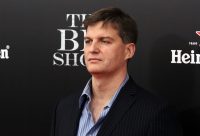
Michael Burry just doubled down on his bearish AI bets even as semiconductors roar back, but one short in his portfolio stands out as a head-scratcher that may reveal a flaw in his entire thesis.


After a strong recovery bounce for the semiconductors and most other names tied to the AI trade that Dr. Michael Burry is betting against by way of bearish put options, the big question is whether Dr. Burry has gotten the timing wrong or perhaps the whole bearish thesis about the AI trade as a whole. Undoubtedly, valuations on a number of names are certainly hard to justify. Whether we’re talking about Palantir (NASDAQ:PLTR | PLTR Price Prediction), Tesla (NASDAQ:TSLA), or even Caterpillar (NYSE:CAT), it’s easy to see why Dr. Burry has set his sights on such names.
At the same time, overvaluation and overbought conditions don’t necessarily mean that a short will be a walk in the park. Overvalued stocks can stay the way for quite a while and, what’s more, they can become even more overvalued. In the case of Palantir and the many AI names that are shrouded in uncertainty, I do think that it’s just as risky to bet against as it is to go long, especially with put options where timing is everything.
Dr. Burry is onto something, but the big question is whether he’s too early
While Dr. Burry’s track record speaks for itself, the big question this time around is whether he’s early. And, if he is, how long it’s going to take before the names on his radar finally do implode. It’s been a wild ride for AI stocks this summer. And it’s easy to get startled at the first signs of heightened volatility. Of course, volatility works in both directions, which is what makes following Dr. Burry’s shorts unadvisable.
With Dr. Burry recently bringing up 1987 and the potential for a market top, questions linger as to how things will end for the AI high-flyers that have been met with heightened expectations and increasing skepticism about the longevity of their glorious runs, which, in the case of semiconductors, tends to be cyclical. At least that’s what history suggests.
Though, things may very well be different this time around with the AI revolution. Regardless, I think bearish bets against Micron (NASDAQ:MU), Nvidia (NASDAQ:NVDA), and more aren’t going to be covered so easily, especially now that Dr. Burry doesn’t have to answer to anybody else. It’s not like he’s running the show over at Scion Asset Management anymore.
Michael Burry must short, but you most certainly shouldn’t
As leverage piles up and more Situational Awareness (margin call unwinds) hit at scale as volatility stays heightened, perhaps the next big correction could be a painful one, maybe one that goes deep into bear market territory before a bottom can be put in. With a Substack to update everyone on, my guess is that he’ll be true to his word: he’ll short, even though most shouldn’t follow. Indeed, perhaps such a dangerous stunt is best left to the professionals.
While the leverage is piling up and it could make the eventual downfall so much more painful, time will tell when the unwind happens and whether AI innovation can somehow live up to or even surpass expectations. That’s the big upside risk that Dr. Burry is taking.
Oracle is Dr. Burry’s most confusing short
For the most part, Dr. Burry’s bearish bets seem to make a lot of sense. He’s mostly betting against momentum and frothy multiples, perhaps with the exception of Oracle (NYSE:ORCL), in which he initiated a new bearish bet last week.
That’s the one AI short that I don’t get. Yes, excessive leverage to go all-in on the AI buildout is never a good idea. But, at the same time, the stock has already crashed, and it’s starting to look dirt-cheap, even with all that debt, dilution, and, more recently, a credit downgrade.
There’s a price at which even the unappetizing company in the world becomes a buy. And with the OCI backlog coming for cheap (or even close to “free”), I’d much rather go long in Oracle than short at 16.0 times forward price-to-earnings (P/E), especially as the RPOs convert and OpenAI improves its financial footing.
Even if a 1987-esque crash hits, I think it’ll be a great opportunity to pick up quality that’s dragged into the wreckage. While the 1987 stock market crash hit fast and hard, those who held on for the next two years ended up just fine. As such, I don’t think there’s any sense racing to the hills just yet.
Contact [email protected] for any questions or corrections.
Joey is a 24/7 Wall St. contributor and seasoned investment writer whose work can also be found in publications such as The Motley Fool and TipRanks. Holding a B.A.Sc in Computer Engineering from the University of British Columbia (UBC), Joey has leveraged his technical background to provide insightful stock analyses to readers.
Joey's investment philosophy is heavily influenced by Warren Buffett's value investing principles. As a dedicated Buffett disciple, Joey is committed to unearthing value in the tech sector and beyond.