Meta Facing $1.4 Trillion in Damages: Inside the Trial That Could Redefine Big Tech
A seven-week trial against Meta carries a headline damages figure that most investors are anchoring to for the wrong reasons, and the part of the case that could actually reshape the apps barely makes the news.


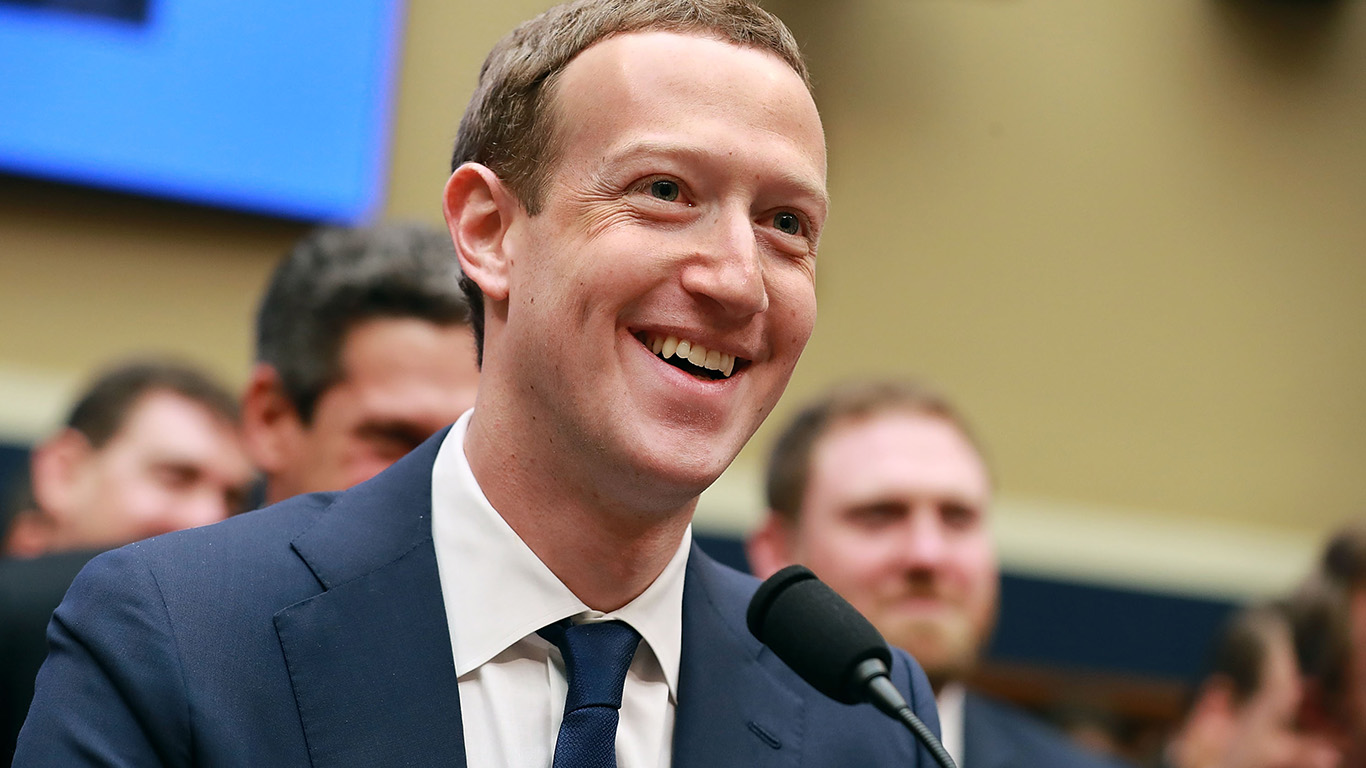
Opening arguments have begun in Oakland in the youth-safety trial brought by California and other state attorneys general against Meta Platforms (NASDAQ:META | META Price Prediction), which is expected to run for about seven weeks. Mark Zuckerberg and Adam Mosseri are expected to testify. The allegations center on data collection from children under 13, design choices that drove excessive use, and public statements about Facebook and Instagram safety that the states say were misleading.
California seeks up to $1.4 trillion, while Meta contends the correct figure is closer to $200 billion.
What matters to shareholders is whether the court orders structural changes to algorithms and age gating, and whether this trial becomes a template for future cases. Pending school district suits and other state cases, Meta stock closed at $543.67, down 28.92% over the past year, while covering analysts remain at an average target of $754.14, with 55 buy ratings, 7 holds, and 0 sell ratings.
That gap is what this trial forces investors to price.

Why the Headline Damages Are the Wrong Anchor
The $1.4 trillion ceiling is a statutory maximum that sets the outer legal boundary, not a probable outcome. Meta’s own math produces a different number, and neither figure will be what the company ultimately pays if it loses. Anchoring on the biggest possible outcome is how retail investors panic, and how sophisticated ones lose focus.
CNBC correspondent Julia Boorstin framed the stakes clearly: “Today’s opening arguments in Oakland will be watched closely in this very high stakes case. In addition to demanding changes to Meta’s algorithms, Meta says the state AGs are asking for $1.4 trillion.” The demand for algorithmic changes deserves at least as much attention as the dollar figure, because that is the part of a verdict that would follow Meta into every future quarter.
Meta argues that “the AGs offer no proof anyone in their states was misled, claimed benign features like having an Instagram account somehow harmed their residents and attempt to penalize Meta for industry wide challenges like age verification.”
The age verification point deserves serious weight. Every major consumer platform relies on self-reported ages, and no scalable identity system exists that satisfies privacy law, parents, and regulators simultaneously. If Meta loses on that theory, every peer platform inherits the same exposure.
What a Court Could Actually Do to the Apps
The injunctive piece is where investors should focus. A judgment reshaping default settings for minors, restricting recommendation ranking for under-18 accounts, or mandating a specific age-verification standard would affect the 3.6 billion daily active users across the family of apps in ways a cash payment never would.
California Attorney General Rob Bonta positioned the case in those terms: “As the home of great innovators and Silicon Valley, California has a particular opportunity and obligation to be a catalyst for change.” Change here means product change alongside any monetary award.
The template risk is significant. The New Mexico Attorney General told CNBC that “California judgment by itself could be gargantuan enough that it changes the ability of this company to do what it needs to finance into the future.” Even discounting that for advocacy, a plaintiff-friendly verdict gives the next set of AGs and school districts a playbook they do not currently have.
Meta told investors this year that outcomes could be material. Management flagged “ongoing youth-related legal and regulatory matters, including several U.S. trials scheduled for the year that may result in material losses,” and Q2 2026 already carried $2.4 billion in legal charges that flowed through the 8-K filing.
Reading the Analyst Buy Wall Against a Broken Chart

The disconnect between sentiment and price action is where investors should form a view. Analysts covering the stock are almost uniformly positive, yet shares are down 17.5% year to date and 15.84% over the past month. Something reflected in the share price is not captured by models built on ad revenue growth.
The market has begun to price in the litigation overhang but has not yet priced in the template scenario. A pure damages hit, even a large one, is survivable for a company with $228 billion in trailing revenue and a 22x P/E. A structural remedy limiting algorithmic personalization for minors, and that other courts copy, would justify the current gap between price and target.
Insider behavior does not suggest panic. Zuckerberg’s July 31 transactions were zero-price reclassifications rather than open market sales, and COO Javier Olivan’s disposals follow a recurring pattern consistent with a pre-established 10b5-1 plan. The risk remains real, but the people closest to it are behaving as though this trial is manageable rather than company-ending.
What to watch over the next seven weeks is the injunctive language the AGs are pressing for and the judge’s receptiveness to it, because that is the part of this case that could reshape the apps and the earnings power that the buy ratings depend on.
Contact [email protected] for any questions or corrections.
Omor Ibne Ehsan is a writer at 24/7 Wall St. He is a self-taught investor with a focus on growth, cyclical, and dividend equities that have strong fundamentals, value, and long-term potential. He also has an interest in high-risk, high-reward investments such as penny stocks.