Rupert Murdoch Made A Simple Mistake When Constructing His Trust. It Cost Him $3.3 Billion to Fix. Here’s What Estate Planners Say You Should Do Instead.
A single architectural flaw buried inside a 25-year-old family trust set off a legal battle that nearly tore the Murdoch empire apart, and the fix that finally ended it offers a cautionary lesson for anyone who thinks a signed trust…

This post may contain links from our sponsors and affiliates, and Flywheel Publishing may receive compensation for actions taken through them.
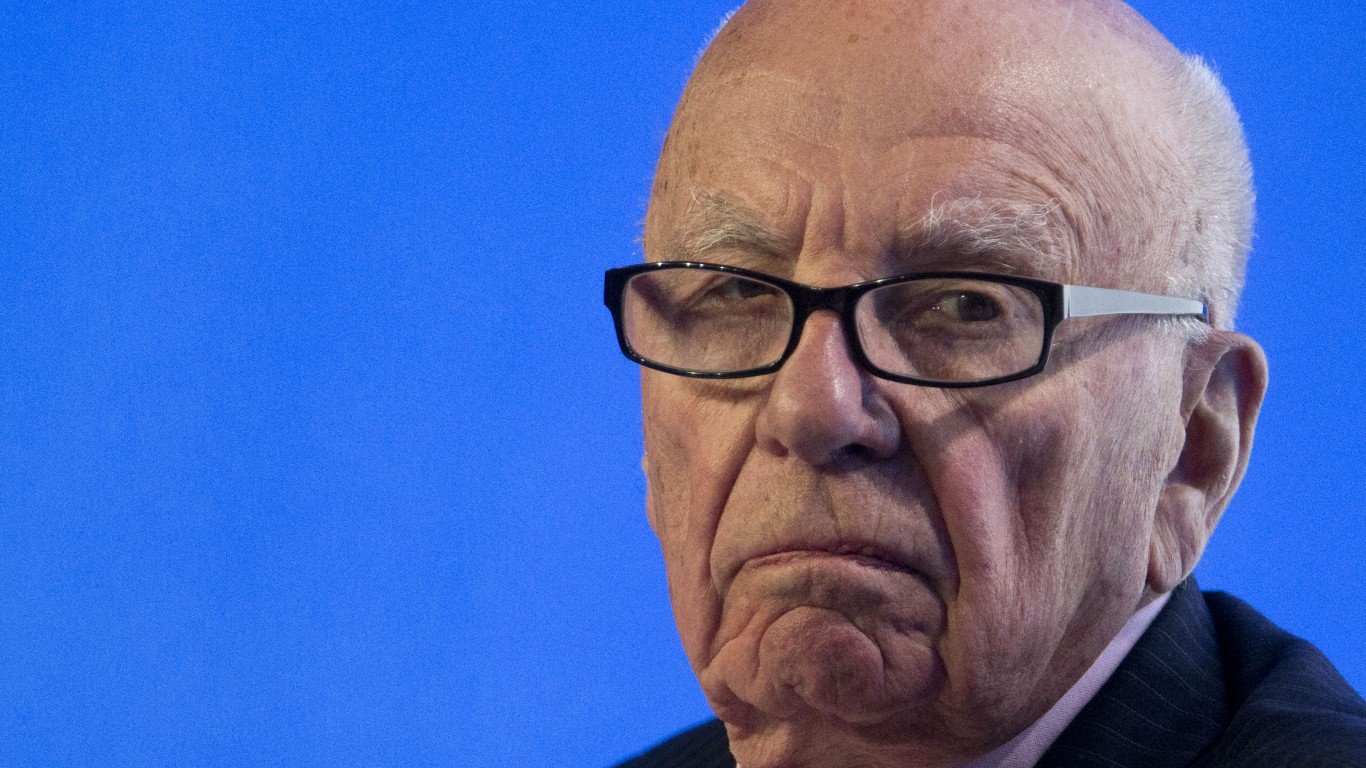
Rupert Murdoch and family ranked #112 on the 2026 Forbes Billionaires List with a fortune of $22.1 billion as of July 8, 2026, a figure that moves daily with the share prices of Fox Corp Class A (NASDAQ:FOXA | FOXA Price Prediction) and News Corp A (NASDAQ:NWSA). Fixing one structural flaw in a 25-year-old trust cost the family $3.3 billion.
How the Empire Is Wired
The fortune sits inside two public companies. News Corp holds The Wall Street Journal, The Times of London and the New York Post, which Murdoch acquired in 1976. Fox Corp holds Fox News and the broadcast, cable news, business and sports networks that stayed home after the 2019 sale of most of Fox’s film and TV studio and international assets to Disney for $71.3 billion. Fox Corp carries a market capitalization of roughly $29 billion; News Corp trades near $15.5 billion.
The control layer is the Murdoch Family Trust, created in 1999 as part of Rupert’s divorce settlement with his second wife, Anna Murdoch Mann. It holds roughly 40% of the voting stakes in both News Corp and Fox Corp. Four children, Lachlan, James, Elisabeth and Prudence, were designated equal beneficiaries with equal voting power, meaning no single heir would automatically inherit control. Two younger daughters from his marriage to Wendi Deng, Grace and Chloe, are beneficiaries but were never given voting rights. In 1999, splitting votes four ways looked like fairness. It was also a latent fault line.
The Bad-Faith Ruling
In 2023 Lachlan was named sole CEO and successor across both companies. In 2024 Rupert moved to amend the trust reportedly referred to internally as “Project Family Harmony,” arguing sole voting control for Lachlan was needed to preserve Fox’s conservative editorial line after his death. James had publicly broken with the family over the outlets’ climate coverage during Australia’s 2019 to 2020 bushfires, and the ideological rift shaped the fight.
On December 9, 2024, Nevada probate commissioner Edmund J. Gorman Jr. rejected the proposed change, ruling that Rupert and Lachlan had acted in “bad faith”. The original equal-voting structure survived intact.
The family bought its way out. On September 8 and 9, 2025, Prudence, Elisabeth and James each agreed to accept $1.1 billion, a combined $3.3 billion, to exit the trust and relinquish their voting stakes. Lachlan became sole decision-maker. He called the settlement “great news for investors,” per The Hollywood Reporter on September 10, 2025.
What Estate Planners Say You Should Do Instead
The Murdoch flaw was architectural: an irrevocable trust with four co-equal beneficiaries holding equal voting power and no built-in mechanism for resolving disagreement. As one planner put it, a trust “with 4 equal owners almost never works as there is usually a fight on who is in control and how much they are paid.” Georgetown law professor Naomi Cahn said settlors should “build in lots of flexibility for unanticipated circumstances so the family does not need to go to court.”
Attorneys commenting on the case point to several fixes:
- Trust protector provisions: an independent third party with authority to approve modifications without court involvement. An escape valve built in from day one.
- Decanting: transferring trust assets into a newly drafted trust with updated, more flexible terms. Attorneys caution this must be handled carefully to avoid unintended tax consequences.
- Nonjudicial settlement agreements: allowing the trustee and all beneficiaries to agree to modifications without going to court.
- Special powers of appointment: giving a designated party flexibility to determine which descendant ultimately receives what, without rewriting the whole document.
- Sub-trusts for each beneficiary: dividing a family trust into separate sub-trusts per child, reducing the shared-control friction that fueled the Murdoch fight.
- Scheduled periodic reviews: revisiting terms every few years or after major life events rather than treating the original document as permanent.
None of the above is legal advice. Consult a qualified estate attorney about your own situation.
The Murdochs could afford a $3.3 billion fix. Most families cannot, which is why flexibility must be built into a trust at the outset. The rigidity of the document is what matters, regardless of estate size (we put the full estate checklist, beneficiary forms and titling included, in a free report here).
Contact [email protected] for any questions or corrections.
AJ spent 10 years writing about financial markets at The Motley Fool. His coverage centers on technology stocks and the broader macroeconomic trends, from interest rates to geopolitics, that shape where markets are headed next. AJ is drawn to the stories where big-picture economics and individual companies collide.