




On any Saturday, the parking lot at a Buc-ee’s off Interstate 10 tells a story no spreadsheet can match.
About 120 fuel pumps are packed. The brisket line snakes past rows of branded t-shirts and novelty coolers. No 18-wheeler is anywhere in sight, because Buc-ee’s explicitly bans commercial trucks.
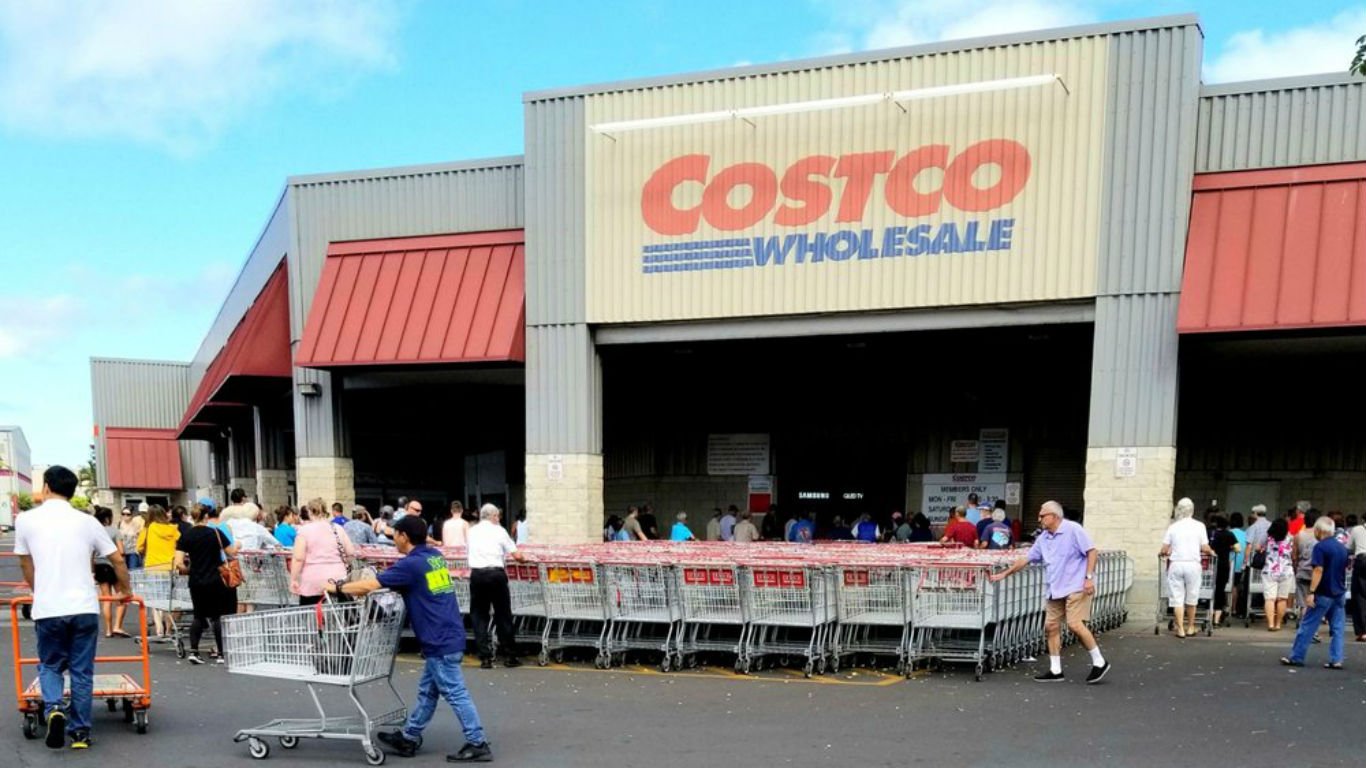
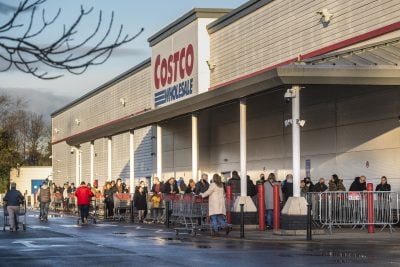
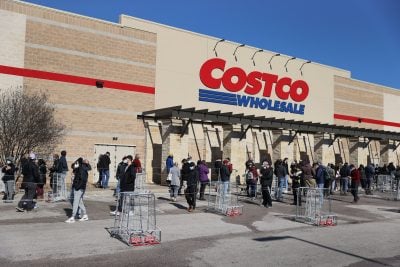
Fifteen miles down the road, a Costco (NASDAQ: COST | COST Price Prediction) warehouse is just as crowded. But its real profit engine is invisible: the annual fee card sitting in the customer’s wallet.
Two of the most emulated retail formats in America look nothing alike on a balance sheet. Comparing them on gross margin alone misses how both actually make money.
Costco built an empire on austerity. Buc-ee’s built one on impulse.
Membership Fees vs. the Brisket Counter
Costco’s Q3 fiscal 2026 numbers, reported May 28, show the model in action.
Revenue reached $70.527 billion, gross profit hit $9.008 billion, and operating income came in at $2.815 billion. The figure that matters most is smaller and far more predictable: membership fee income of $1.373 billion, up 10.7%, with a worldwide renewal rate of 89.7%.
Those fees are almost pure operating profit.
They explain why Costco can cap markups at 14% on national brands and 15% on Kirkland Signature items while generating billions in cash. CFO Gary Millerchip’s team maintains a blended gross margin near 11%, kept low by cheap gasoline and aggressive price cuts. On the earnings call, management repeated the company’s long-standing rule: “the first to lower prices and the last to raise them.”

Buc-ee’s operates on the exact opposite logic.
Privately held by co-founders Arch “Beaver” Aplin III and Don Wasek, the company files no public financial statements. Every figure is a third-party estimate. Non-fuel gross margin sits near 35%, with proprietary snacks and private-label merchandise running between 50% and 60%. A single new store costs an estimated $40 million to $60 million across roughly 30 acres, houses about 75,000 square feet of retail floor, and produces an average receipt near $80. Hourly pay is reported at $18 to $21, with store managers making over $200,000.
Comparing these margin figures is an apples-to-oranges mistake.
Costco’s 11% blends in cheap commodity fuel and excludes membership dues. Buc-ee’s 35% covers in-store merchandise only.
Costco built a membership moat; Buc-ee’s built an experience moat. Each decided which margin to give away to protect the core business.
Why This Matters Now
The macroeconomic backdrop plays directly into both strategies.
Retail sales in July 2026 came in at $763.6 billion, down 0.6% from June. University of Michigan consumer sentiment sits at 49.5, well below the survey’s historical recession cutoff. National regular gasoline averages $4.05 per gallon, up 5.0% from a month ago.
Budget-conscious shoppers are hunting for cheap fuel, which is what both formats provide.
Costco management noted that gasoline set successive all-time company volume records throughout the quarter. Cheap gas gets drivers to pull off the highway. What happens next depends on the business model.
Costco treats gas as a loyalty perk for subscribers. Buc-ee’s treats gas as cheap customer acquisition for road-trippers.
Costco uses fuel to protect an annual subscription. Buc-ee’s uses fuel to sell $15 brisket sandwiches and beaver hats.
Costco’s Stock and the Signal to Watch
Costco shares closed at $933.51 on August 20, down 5.59% over the past year despite a 114.54% gain over five years, putting its market cap near $414 billion.
The company operates 931 warehouses, including 639 in the US and Puerto Rico, and stocks roughly 4,000 SKUs compared to 30,000 at a typical grocery store. It raised its US starting wage to $21 in March 2026 against an economy-wide average hourly wage of $37.62 in July 2026, using high employee retention to keep store productivity high.

For investors, the number to watch next quarter is simple: the renewal rate.
If renewals hold near 89.7% while executive member sign-ups rise, the moat is solid and recent share price weakness is just market noise.
If that rate slips by even 40 basis points, the model begins to leak.
When cardholders stop renewing, a low-margin retail engine loses its footing. At that point, the brisket counter’s pricing freedom looks a lot more resilient than a subscription shoppers can simply choose to drop.
Contact [email protected] for any questions or corrections.









 Top Gaining Stocks
 Top Losing Stocks