10 Gambling Disasters That Turned Millions Into Debt, Fraud, and Lawsuits
Some lost their own fortunes. Others gambled with money that belonged to investors, employers, or one of the biggest names in professional sports. All ten watched a losing bet spiral into fraud charges, federal prison, or nine-figure debt.

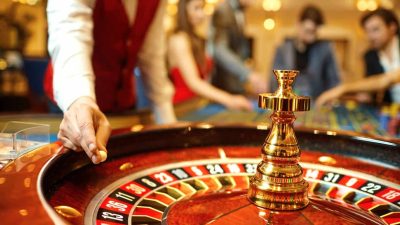
There is a big difference between taking a calculated financial risk and simply gambling with money you cannot afford to lose. The cases below sit on the extreme end of that spectrum, where casino losses collided with borrowed money, stolen funds, questionable credit, fraud, and eventually the courts.
The dollar amounts are eye-opening, but that is only part of the story. Some of these people had enormous incomes or access to millions in credit. Others controlled investor money or corporate accounts. In several cases, the real financial damage came not from one losing bet, but from what happened next: chasing losses, borrowing more, hiding the shortfall, or taking money that belonged to someone else.
For investors, there is a familiar lesson running through all 10 stories. Money can disappear remarkably fast when risk controls vanish. Leverage magnifies losses, liquidity problems can become legal problems, and even a large fortune offers little protection when someone keeps doubling down instead of accepting a loss.
10. Jey González-Díaz
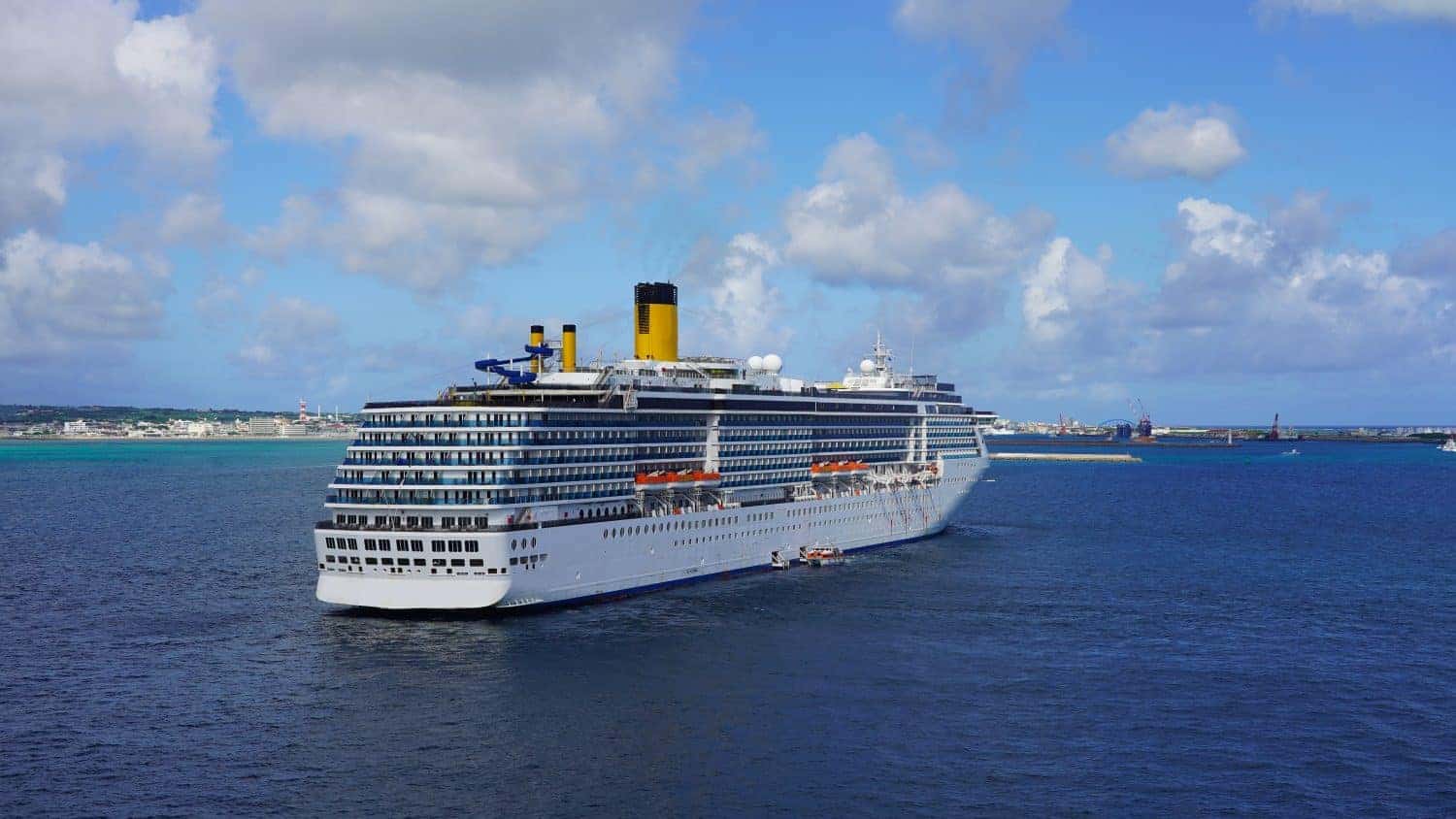
- Location: Near Port of San Juan, Puerto Rico (Royal Caribbean’s Rhapsody of the Seas)
- Amount: $16,710.24 owed to Royal Caribbean, mostly for casino and gaming expenses
Jey González-Díaz’s case involved a relatively modest sum compared with the multimillion-dollar losses farther down this list, but it is a striking example of how a gambling bill can create much larger problems. González-Díaz boarded Royal Caribbean’s Rhapsody of the Seas in San Juan on August 31, 2025, and returned on September 7. During disembarkation and a U.S. Customs and Border Protection inspection, he jumped from the ship and was eventually brought ashore by people on jet skis.
Officers later found him near the Puerto Rico Capitol Building carrying $14,600 in cash, two phones, and five identification documents. According to the federal criminal complaint, Royal Caribbean said he owed $16,710.24, almost entirely for casino and gaming expenses. González-Díaz said he jumped because he did not want to report the cash he was carrying. He later pleaded guilty to failing to report transporting more than $10,000 into the United States and was sentenced in April 2026 to two years of probation. A five-figure gambling bill had turned into a federal case.
9. Marcus Morris Sr.
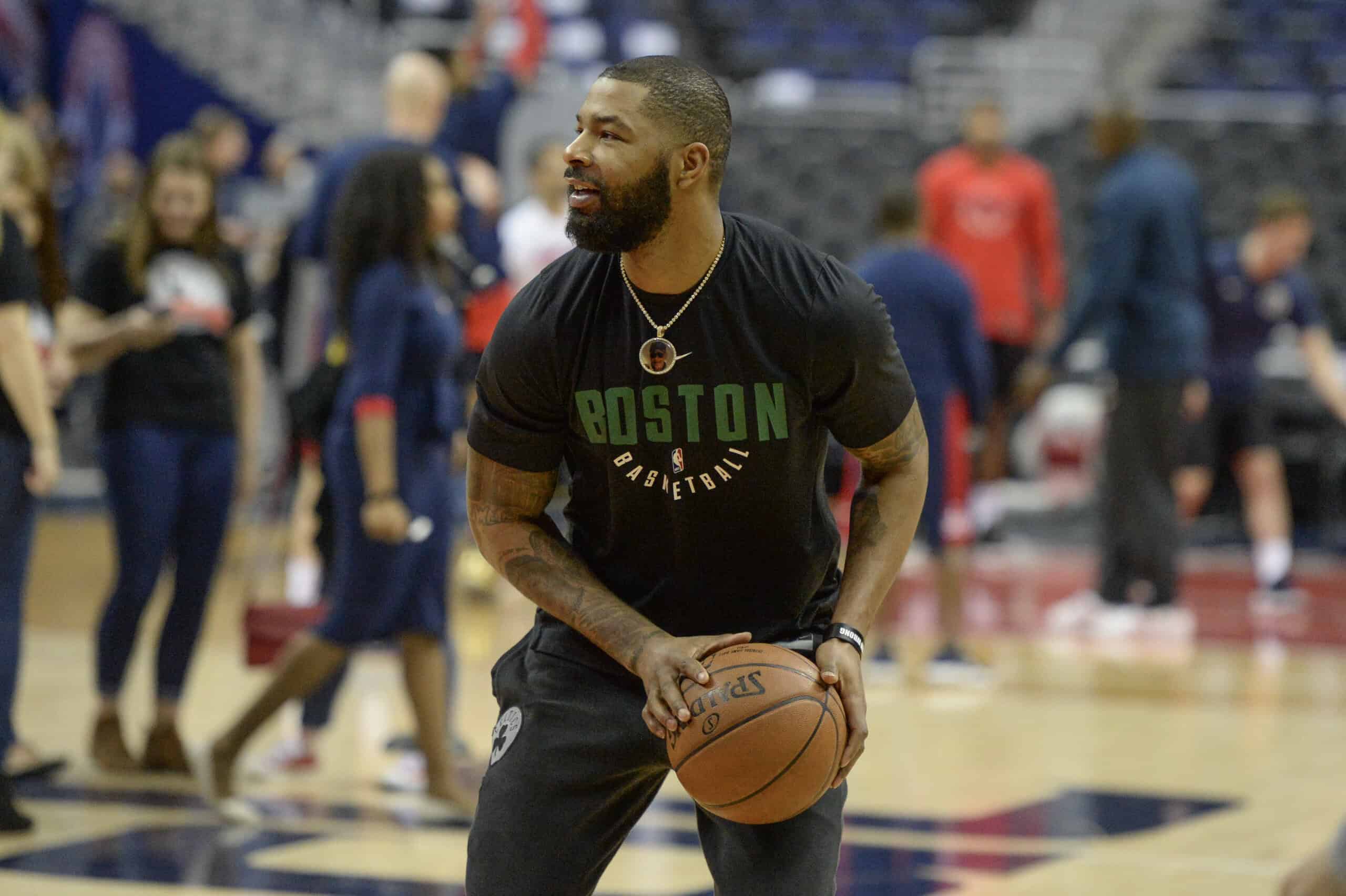
- Location: Las Vegas, Nevada
- Amount: $265,000 in casino markers
Professional athletes can earn salaries most people will never see, but a high income does not eliminate liquidity problems. Marcus Morris Sr., a longtime NBA forward and former first-round draft pick, became the subject of two Nevada cases involving casino markers. Reports on the cases said Morris obtained $115,000 in gambling credit from the MGM Grand in May 2024 and another $150,000 from Wynn Las Vegas the following month.
Nevada authorities alleged that the checks backing those markers could not be covered, leading to Morris’s arrest at Fort Lauderdale-Hollywood International Airport in July 2025. Morris disputed the suggestion that he had committed fraud. After the full $265,000 owed to the two casinos was paid, prosecutors dismissed the fraud and theft charges in August. The episode is a useful reminder that net worth and cash flow are not the same thing: even wealthy borrowers can get into trouble when short-term obligations come due.
8. Art Schlichter

- Location: Columbus, Ohio
- Amount: Approximately $2.15 million taken from investors
Art Schlichter’s story shows what can happen when gambling losses stop being a personal financial problem and begin consuming other people’s money. The former Ohio State quarterback and No. 4 overall NFL draft pick had a well-documented gambling problem that helped derail his football career. Years later, federal prosecutors said Schlichter began soliciting money for what investors were told was a ticket-resale business involving Ohio State and NFL games.
Instead, prosecutors said the money was used for personal expenses, gambling, or paying earlier obligations. That structure should sound familiar to anyone who studies financial fraud: new money comes in, old holes get filled, and the underlying problem keeps growing. Schlichter pleaded guilty in 2011 to wire fraud, bank fraud, and filing a false tax return. In 2012, a federal judge sentenced him to 127 months in prison for defrauding 55 investors of approximately $2.15 million.
7. Sara Jacqueline King

- Location: Newport Beach, California — Las Vegas, Nevada
- Amount: At least $8.785 million in victim losses
Sara Jacqueline King’s case is less a story about a gambler losing her own fortune than about investors being told their money was going somewhere it wasn’t. King, a Newport Beach lawyer who operated King Family Lending LLC, solicited money for what she described as short-term, high-interest loans to wealthy borrowers. Investors were told the loans would be backed by assets such as luxury cars, watches, yachts, and other valuable property.
According to her federal plea agreement, the promised loans were never funded. Instead, King admitted using investor money for gambling at Las Vegas casinos and to support an expensive lifestyle. Five investors lost at least $8.785 million. King pleaded guilty to wire fraud and money laundering and was sentenced in May 2025 to 21 months in federal prison, along with an order to repay $8,785,045. For investors, the case is a blunt example of why collateral claims and unusually attractive returns still need to be independently verified.
6. Ippei Mizuhara

- Location: Southern California
- Amount: Nearly $17 million stolen from Shohei Ohtani
Ippei Mizuhara’s gambling losses became enormous enough that even access to the finances of one of the highest-paid stars in sports was not enough to keep the situation hidden. Mizuhara, Shohei Ohtani’s former interpreter and de facto manager, began betting with an illegal bookmaker in September 2021. Federal prosecutors said he eventually gained unauthorized access to Ohtani’s bank account, altered security information, and impersonated Ohtani when speaking with the bank.
Mizuhara fraudulently obtained more than $16.975 million from Ohtani. Prosecutors later disclosed that he had placed at least 19,000 bets between September 2021 and January 2024, with losses exceeding winnings by approximately $40.68 million. He pleaded guilty to bank fraud and filing a false tax return and was sentenced to 57 months in federal prison. He was also ordered to pay $16,975,010 to Ohtani and $1,149,400 to the IRS. Few examples illustrate the danger of chasing losses more clearly: a huge deficit eventually became theft on an even larger scale.
5. Phil Ivey

- Location: London, UK — Crockfords Casino & Atlantic City, New Jersey — Borgata Casino
- Amount: £7.7 million withheld at Crockfords; $10.13 million Borgata judgment
Phil Ivey’s case is different from most of the others on this list because it was not about unpaid gambling debts or stolen money. It was about whether a sophisticated player could legally keep millions won by exploiting a weakness in the cards themselves. Ivey and professional gambler Cheung Yin Sun used a technique called edge sorting during high-stakes baccarat sessions in London and Atlantic City in 2012. Tiny asymmetries on the backs of certain cards helped them distinguish valuable cards from others.
Ivey won approximately £7.7 million at Crockfords in London, but the casino withheld the money. Britain’s Supreme Court ultimately ruled that the technique amounted to cheating under English law. At Borgata in Atlantic City, Ivey and Sun won $9.626 million playing baccarat, but a federal court later entered a $10.13 million judgment for Borgata, including $504,000 Ivey had won playing craps. For investors, there is an interesting parallel: spotting an edge is one thing; whether the rules, contracts, or regulators allow you to monetize it can be another question entirely.
4. Wong Yew Choy

- Location: Gold Coast, Queensland, Australia — The Star Gold Coast
- Amount: A$43.21 million claimed by The Star
The bigger the credit line, the bigger the potential dispute. Singapore citizen Wong Yew Choy gambled at The Star Gold Coast in Queensland, Australia, from July 26 through August 2, 2018. The casino said Wong accumulated approximately A$43.21 million in losses under a credit arrangement and later stopped payment on a replacement cheque. Wong disputed liability, citing dealer errors and an alleged oral agreement with casino management.
The resulting legal fight shows that collecting a debt can depend on much more than whether money was actually lost. The Star sued in Singapore, but the Singapore International Commercial Court dismissed the action in July 2020, finding that Singapore law prevented the court from entertaining an action to recover those foreign gambling losses. The decision did not establish that the underlying transactions were invalid. It was a jurisdiction and enforceability problem, the same kind of distinction that can matter enormously in international lending and investment contracts.
3. Ausaf Umar Siddiqui (Omar Siddiqui)

- Location: San Jose, California & Las Vegas, Nevada
- Amount: More than $65 million stolen through the kickback scheme
Ausaf Umar Siddiqui’s case is what can happen when someone with control over corporate purchasing uses that position to create a private stream of cash. Siddiqui, who goes by Omar, was vice president of merchandising and operations at Fry’s Electronics in San Jose. Federal investigators said he arranged secret deals in which selected vendors paid unusually large commissions to a company he controlled while Fry’s purchased their products at inflated prices.
Authorities tied more than $65 million to the kickback scheme, while court filings also documented Siddiqui’s enormous gambling activity in Las Vegas. He pleaded guilty in 2011 to wire fraud and money laundering and was sentenced to six years in federal prison. He also agreed to restitution or forfeiture exceeding $65 million. For shareholders and investors, the lesson goes well beyond gambling: weak internal controls around purchasing, vendors, and executives with authority over company money can create enormous hidden liabilities.
2. Chia Teck Leng

- Location: Singapore; casinos in Australia, the United Kingdom, Hong Kong, Malaysia, Cambodia, and the Philippines
- Amount: S$62 million lost at casinos
Chia Teck Leng took the combination of corporate access, fraudulent borrowing, and gambling losses to an extraordinary level. As finance manager of Asia Pacific Breweries in Singapore, Chia used forged company documents to obtain unauthorized loan and credit facilities from four foreign banks. Singapore court records say he cheated the banks of approximately S$117.1 million between 1999 and 2003.
Much of that money moved through accounts Chia controlled before being sent to casinos in Australia, the United Kingdom, Hong Kong, Malaysia, Cambodia, and the Philippines. Investigators determined that approximately S$62 million was lost through gambling. Chia was arrested in September 2003 and later pleaded guilty to 14 charges, with another 32 taken into consideration. Singapore’s High Court sentenced him to 42 years in prison. The case is an extreme example of counterparty and verification risk: lenders believed they were extending credit to a legitimate corporation when the person arranging the transactions was acting for himself.
1. Terrance Watanabe

- Location: Las Vegas, Nevada — Caesars Palace & Rio casinos
- Amount: Nearly $127 million in reported 2007 losses; $14.75 million later disputed as unpaid casino debt
Terrance Watanabe’s 2007 run in Las Vegas shows how quickly even extraordinary wealth can be consumed when there is virtually no limit on the amount at risk. Watanabe, the former head and part-owner of Oriental Trading Company, reportedly wagered more than $825 million at Caesars Palace and the Rio during the year and lost nearly $127 million. Harrah’s later sought roughly $14.75 million in unpaid casino markers, leading to criminal charges in Nevada.
Watanabe disputed the debt and countersued, alleging that casino employees supplied him with alcohol and prescription medication and continued allowing him to gamble while impaired. Harrah’s denied wrongdoing. The civil and criminal cases ended with a confidential settlement in July 2010, and the criminal case was dismissed. The numbers are so large that they almost stop feeling real, but the financial principle is simple: wealth can absorb losses only for so long when the size and frequency of the bets keep increasing.
Contact [email protected] for any questions or corrections.