




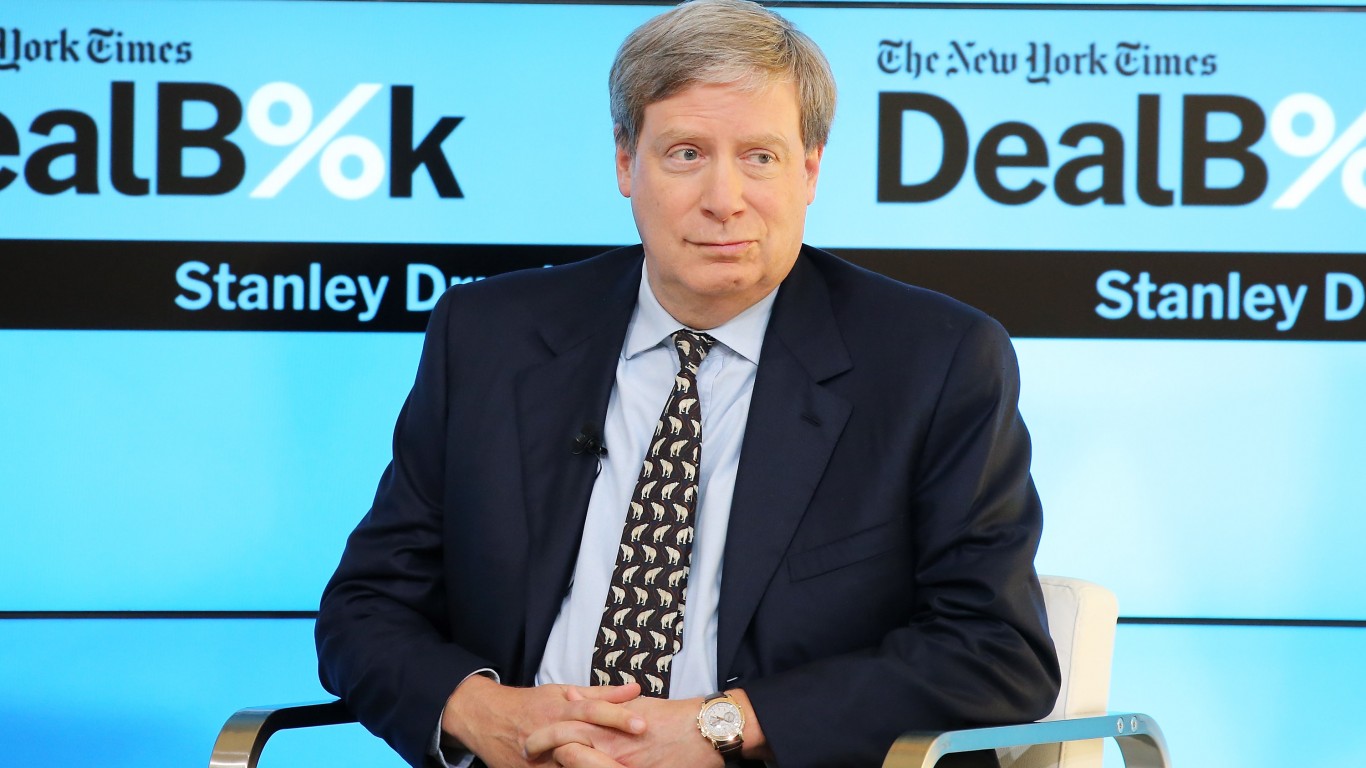
Stanley Druckenmiller went public against his former protégé this week. In a Wall Street Journal op-ed titled “Let the Bond Market Speak” published Monday, August 24, 2026, the billionaire investor accused Treasury Secretary Scott Bessent of undermining what he called “the only fiscal disciplinarian the U.S. has left”: the long-term Treasury yield. The immediate target was Bessent’s decision to double the size of the government’s long-dated bond buybacks.
What Treasury Did
On August 19, 2026, Treasury announced it would double long-dated buybacks from $2 billion to $4 billion per operation in the 10-to-30-year sector. The expanded purchases were scheduled to begin September 9 and had not yet occurred. The announcement followed a $25 billion 30-year auction on August 14 that cleared at 5.216%, described in coverage as the costliest government bond sale since 2001. Behind it sits an ugly backdrop: the national debt crossed $40 trillion around August 19, and the current fiscal year deficit is on track to exceed $2 trillion, roughly 6% of GDP at full employment, a deficit level normally seen in recessions. Federal debt now stands at 122.59% of GDP on FRED’s series.
Druckenmiller’s Argument
When Treasury buys back its own long-dated bonds, it lifts prices and pushes yields down. That reduces the government’s borrowing signal even as the debt keeps growing. “This wasn’t liquidity management, it was price management,” Druckenmiller wrote. “Every basis point of artificial yield suppression is a subsidy to procrastination.” His bottom line: “If the 30-year must trade at 5.5% to clear, that isn’t a crisis. It is an invoice.” Suppress the invoice, and Congress never pays it.
Mentor Versus Protégé
Druckenmiller and Bessent worked together at Soros Fund Management in the early 1990s, and both were part of the 1992 trade that famously “broke the Bank of England” by shorting the British pound. The dispute frames the mentor applying the same playbook for spotting unsustainable government positions that he once taught his protégé, now aimed at the protégé’s department.
Market Response
On Treasury’s official constant-maturity series, the 30-year yield sat at 5.28% on August 18, the last reading before the announcement, then fell to 5.19% on August 19, before climbing to 5.23% on August 20 and 5.27% on August 21. Friday’s reading remained below the pre-announcement level. Yields then drifted lower to 5.23% on August 24 and 5.17% on August 25, the lowest in the window. Since no purchases have occurred under the expanded program, these moves reflect expectations, not buying. 24/7 Wall St. laid out the initial policy stakes in its August 19 explainer and the market pushback in its August 24 follow-up.
Fiscal Picture in Focus
Apollo chief economist Torsten Slok’s Daily Spark, published alongside the op-ed, added its own numbers. Since 2006, federal gross debt has grown by roughly $32 trillion while nominal GDP has grown by about $19 trillion, meaning debt has compounded at roughly 1.7x the pace of the economy. Debt held by the public has risen from under 40% of GDP two decades ago to about 99% at the end of fiscal 2025. The Congressional Budget Office’s February 2026 extended baseline projects that ratio rising to 108% by 2030, 129% by 2040, and 175% by 2056 under current law.
Contact [email protected] for any questions or corrections.












 Top Gaining Stocks
 Top Losing Stocks